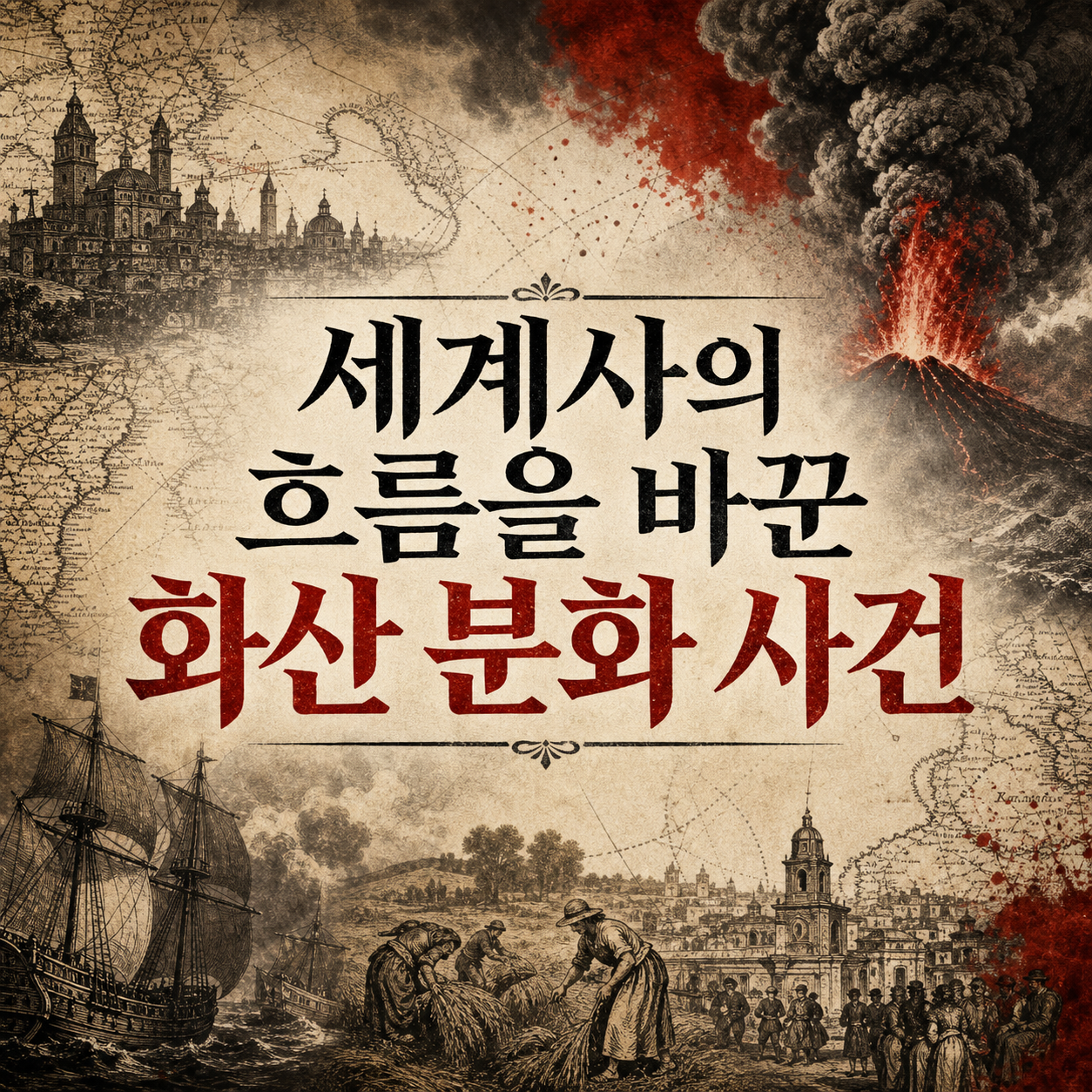
The biggest eruptions aren't always the deadliest; terrain, warnings, and the response often shape the outcome more than raw magnitude.
Does the biggest volcano cause the biggest disaster? Not necessarily. Ranking eruptions by death toll makes for a tidy story, but it hides the routes the damage actually took. The single word "eruption" covers ash, pyroclastic flows, tsunamis, lahars, and climate disruption, and each plays out in very different ways.
This list moves chronologically through ten eruptions, from Vesuvius in 79 CE to Iceland in 2010, and focuses on how the harm happened in each one. Casualty figures keep being revised as sources and research change, so read for process rather than for any one number.
How to read it
- Separate direct damage from the famine and disease that followed
- Don't judge the past by monitoring tools that didn't exist yet
- Check how warnings and evacuations actually worked
- If warnings are your interest, start with #8 and #9
Mount Vesuvius, 79 CE

Laki fissure eruption, 1783–1784

Mount Tambora, 1815

Krakatoa, 1883

Mont Pelée, 1902

Novarupta, 1912

Mount St. Helens, 1980

Nevado del Ruiz, 1985

Mount Pinatubo, 1991

Eyjafjallajökull, 2010

How to choose where to start
If you want the story of a city buried in moments, start with #1 and #5. For climate and food problems, read #2 and #3 first. If warning and evacuation systems interest you, go to #8 and #9, and #10 is the closest link to air-travel safety today.
When you compare cases, look beyond magnitude: the path the damage took, whether warnings existed, and what happened afterward. The information reflects the time of research and may change, so check official agencies and recent studies before you cite or rely on it.
Frequently asked questions
Does a bigger eruption always mean more deaths?
Not necessarily. Novarupta (1912) was the 20th century's largest eruption but caused few deaths because of its remote location, while Nevado del Ruiz (1985) was comparatively small yet melted ice into a lahar and became a major disaster. Where people live, the terrain, and whether warnings reached them matter as much as scale.
Why does volcanic ash ground aircraft?
Ash particles can melt inside jet engines and re-solidify, damaging them, so the standard is particle properties and concentration along flight paths, not how much ash is visible. That is why European airspace was so heavily restricted during the 2010 Eyjafjallajökull eruption. Follow current aviation authority advisories for real risk.
Does volcanic damage end when the eruption stops?
No. Laki (1783) is a case where gas contamination and famine lasted long after the eruption. Tambora (1815) led to the "Year Without a Summer" the next year, with effects felt around the world. Read each event as direct damage plus the chain of consequences afterward.
How are pyroclastic flows different from lava?
Lava is molten rock that flows relatively slowly. A pyroclastic flow is a fast current of hot gas and volcanic particles, leaving almost no time to flee. In this list, Vesuvius (79) and Mont Pelée (1902) are the standard examples.
What is a lahar?
A lahar is a volcanic mudflow in which ash and rock fragments mix with water. At Nevado del Ruiz (1985), summit ice and snow melted into a lahar that buried the town of Armero. They can also form after an eruption has ended, for example in heavy rain, so follow local authorities' guidance.
Can eruptions affect the climate?
When a large eruption lofts aerosols into the stratosphere, they can reduce sunlight and cool temperatures for a time. Tambora (1815) leading to the "Year Without a Summer" is the standard example. Still, it is hard to explain every weather anomaly of an era with a single volcano.
Get new lists before anyone else
Once a week — only the new lists worth your time.
No spam · unsubscribe in one click
You may also like
Footprints Tell You More Than Bones Do — 10 Dinosaur Fossil Sites in Korea
Korea's dinosaur fossils are mostly footprints and egg nests, not bones. Ten sites, sorted by what they show, for reading 100 million years of history through those traces.
Why Volcanoes Stay Under Watch Even When Nothing Is Erupting Today
Ten volcanoes under constant watch — not for today's eruption count, but for recurring activity, nearby population, or aviation risk.
When Volcanoes Redraw the Map: Ten Cities That Had to Choose
Some cities came back from the ash. Others never did — here's what decided which.