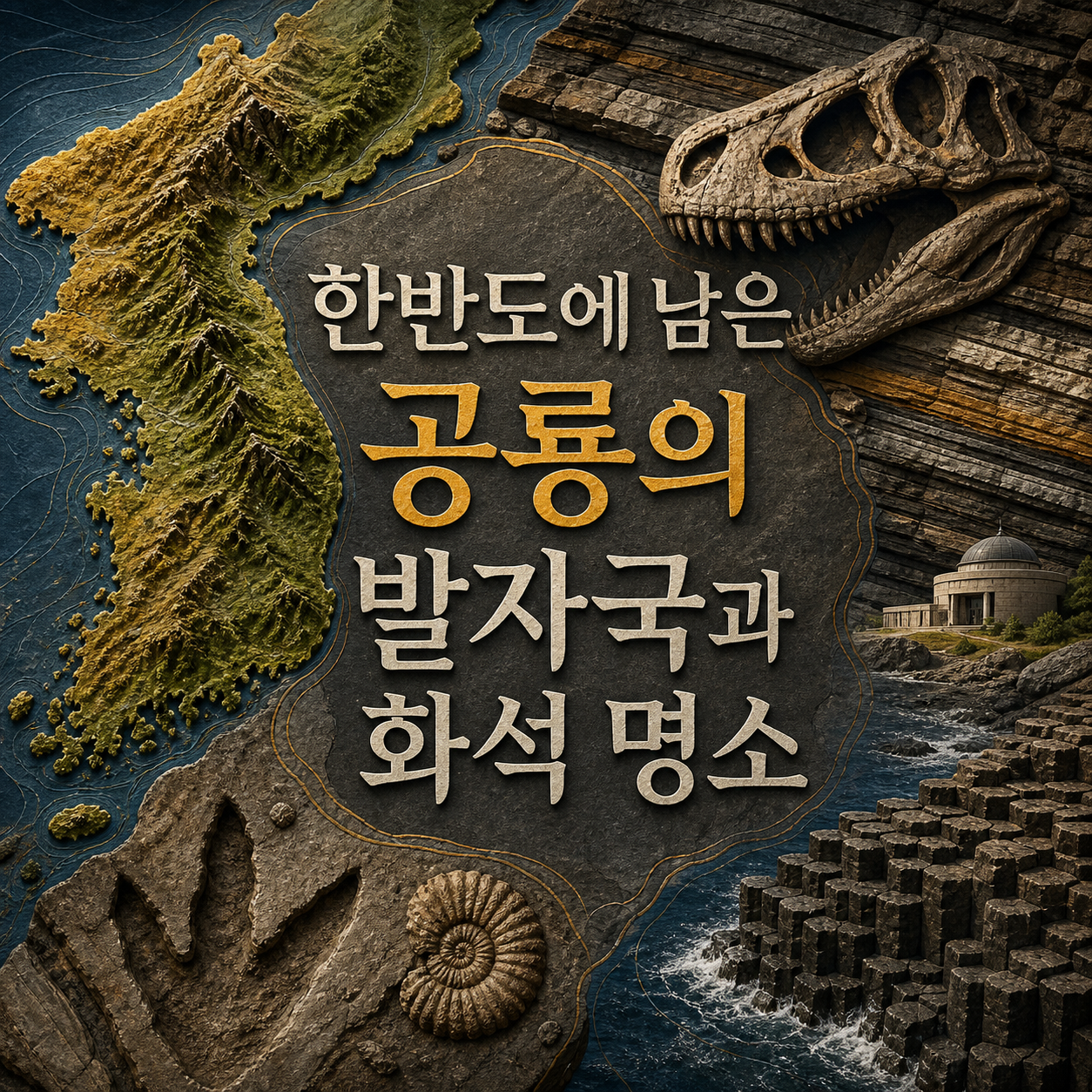
Korea's dinosaur fossils are mostly footprints and egg nests, not bones. Ten sites, sorted by what they show, for reading 100 million years of history through those traces.
Search “dinosaur fossils in Korea” expecting bones, and you’ll likely be surprised: almost everything found here is footprints and egg nests, not skeletons. First-time visitors often assume a “fossil site” means bone specimens, then find only footprints pressed into rock once they arrive — footprints, egg nests, and bones are different kinds of evidence, and they tell you different things.
This list sorts ten sites by that distinction: how dense and well-preserved the footprints or trackways are, whether the site holds something rarer like an egg nest or actual bones, and how much on-site infrastructure supports understanding what you're looking at. First visit, start with #1 or #2 (Goseong, Namhae). Want egg nests, go to #5 (Boseong); want actual bones, #8 (Dangjin). Save #10, the Gwacheon museum, for after you've seen a site in person.
How These Were Selected
- Preservation and density of footprints and trackways
- Presence of rarer evidence — egg nests, bone fossils
- On-site museums and interpretive infrastructure
- Accessibility and nearby points of interest
Goseong Dinosaur Footprint Site, South Gyeongsang

Sangju Eunmorae Beach, Namhae, South Gyeongsang

Uiseong Dinosaur Footprint Site, North Gyeongsang

Yeosu Dinosaur Footprints, South Jeolla

Boseong Dinosaur Egg Nest Site, South Jeolla

Jecheon Fossil Site, Chungcheong

Bulguksa Area Fossil Site, Gyeongju

Dangjin Dinosaur Bone Fossil Site

Uhangri Dinosaur Footprints, Haenam

Dinosaur Exhibit, Gwacheon National Science Museum

Picking by Situation
For the lowest-effort first visit, #2 Sangju Eunmorae Beach in Namhae is hardest to beat — a beach walk and fossil viewing in one stop. Traveling with kids, pick a site with an on-site museum, like #1 Goseong or #3 Uiseong. Want egg nests, go to #5 Boseong; want actual bone fossils rather than footprints, #8 Dangjin is the one here.
When comparing sites, weigh footprint density, whether a museum backs up the visit, and how stops fit into one route. Coastal sites are tide-dependent, so check tide times beforehand. All information here reflects the time of research and details like hours or access conditions can change, so confirm with each site's official channel before you go.
Frequently asked questions
What's the most famous dinosaur trace found in Korea?
The standouts are the large sauropod tracks in Goseong, South Gyeongsang; the small theropod tracks in Uiseong, North Gyeongsang; and the large sauropod tracks in Yeosu, South Jeolla. The size and shape of the footprints alone reveal something about the body size and herd behavior of the dinosaurs that made them.
Which site is easiest to get to?
Sangju Eunmorae Beach in Namhae is the most low-effort option — you can combine a beach walk with fossil viewing in one stop. Yeosu and Uiseong also have solid tourist infrastructure, so first-timers can navigate them without much trouble.
What's the best season to visit?
Spring and fall offer the most comfortable weather. At beach sites, trackways sometimes show up more clearly in summer when low water exposes more of the rock. Winter is cold but draws far fewer visitors, which makes for a quieter, more contemplative visit.
What's the difference between footprints, egg nests, and bone fossils?
Footprints are traces left when a living dinosaur walked across mud that later hardened into rock — you'll find these at Goseong, Namhae, Uiseong, Yeosu, and Haenam, among others. Egg nests, like the one at Boseong, are the rarer case where eggs were found grouped together rather than scattered. Bone fossils, like those at Dangjin, are actual skeletal remains. Each type reveals different information, so which one you want to see determines where you should go.
Which sites work best for a family with kids?
Goseong and Uiseong, both of which have on-site museums, are solid choices since kids get context before seeing the actual tracks. Sangju Eunmorae Beach in Namhae is especially low-pressure for families with young children, since it combines a beach outing with fossil viewing. If you need an indoor option, the dinosaur exhibit at the Gwacheon National Science Museum works well too.
Get new lists before anyone else
Once a week — only the new lists worth your time.
No spam · unsubscribe in one click
You may also like
Why Volcanoes Stay Under Watch Even When Nothing Is Erupting Today
Ten volcanoes under constant watch — not for today's eruption count, but for recurring activity, nearby population, or aviation risk.

When Volcanoes Redraw the Map: Ten Cities That Had to Choose
Some cities came back from the ash. Others never did — here's what decided which.