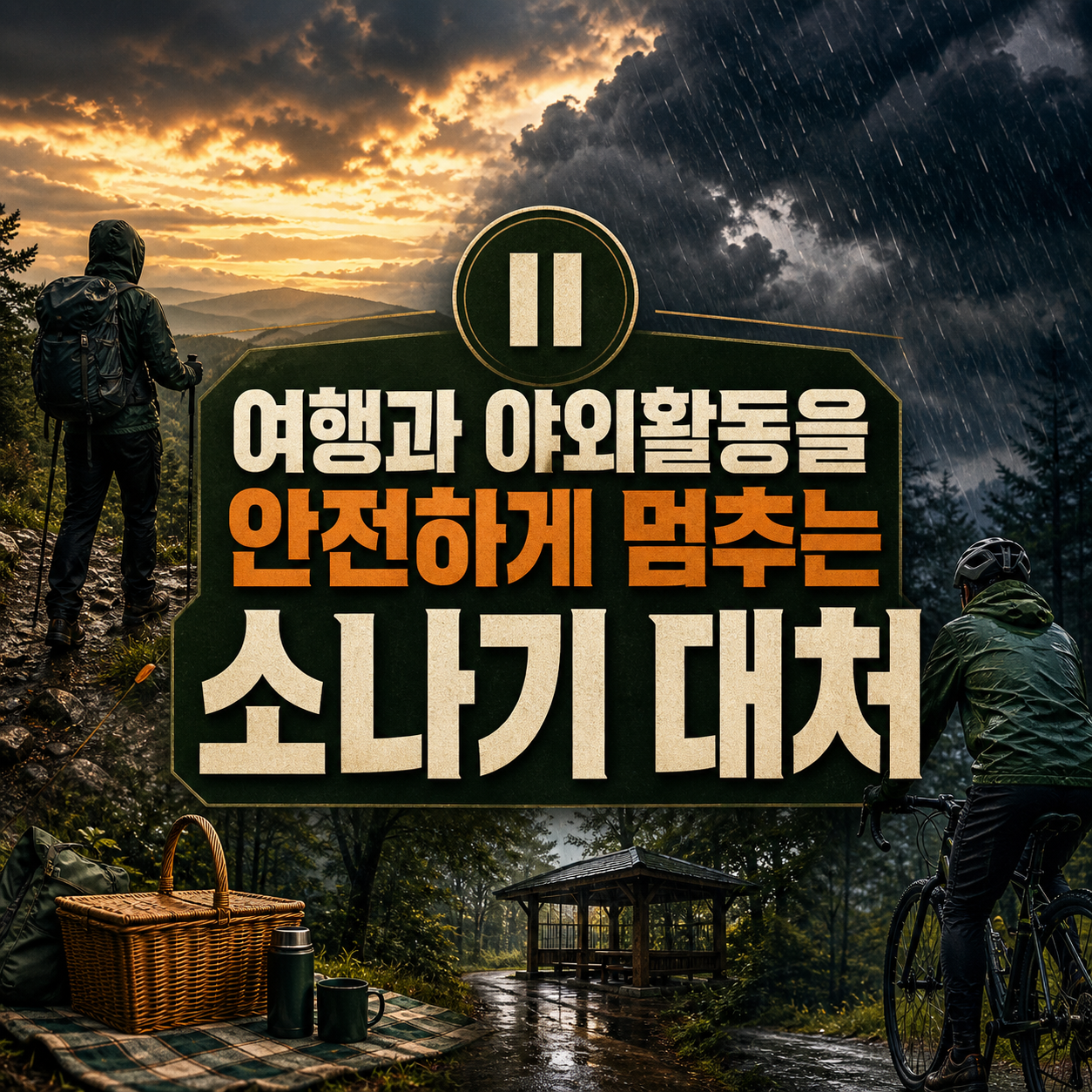
When a shower hits during a hike, camp, or swim, go by what you can see and hear right now, like thunder, water color, and wind, and move at once.
When a sudden downpour hits, the sky, the water, and the wind in front of you tell you more than a weather app does. App forecasts average conditions over hours, so they often miss a short, intense burst over a small area.
What confuses most people is how long it is safe to keep going. This list organizes the signals to watch and the moment to retreat by place: ridgelines, valleys, beaches, concert venues, and bike paths. We ranked the situations where one wrong call is hardest to undo, such as lightning and fast water, at the top, followed by crowds, gear, and backup plans.
How to read this list
- Start with the item closest to where you are right now.
- If even one signal appears, do not wait for a second one.
- People before bags, and moving before one more photo.
If someone is swept away or hurt, call 119 first instead of jumping in yourself. Entering fast water without rescue gear puts the rescuer at risk too.
Reading lightning signals on a ridge
Watching drainage at a valley campsite
Tracking wave changes at beaches and lakes
Handling sudden crowds at outdoor shows and theme parks
Catching reduced visibility while shooting outdoors
Planning an evacuation route at outdoor concerts
Pulling over on a bike
Putting down golf and fishing gear
Protecting camera gear
Switching to an indoor backup plan
How to choose
If you are on a mountain or ridge, start at rank 1; at a campsite, rank 2; near water, rank 3. Concert venues and theme parks map to ranks 4 and 6, bikes to rank 7, and fishing or golf to rank 8. If you are shooting photos, read ranks 5 and 9 together.
What every item shares is simple: when a signal shows up, move without hesitating. Even if you hate to give up the day, choosing an indoor backup in advance, as in rank 10, makes retreating much easier. In an emergency, call 119 first.
This is general safety guidance and conditions on site can change, so check the latest advice from the Korea Meteorological Administration and the facility's official channels before you go.
Frequently asked questions
How fast should I leave a mountain once I hear thunder?
Move as soon as you hear it. Thunder means you are already within range of lightning. Prioritize descending even if the summit is near, and avoid tall trees and rock overhangs.
What should I do if a valley stream suddenly gets stronger?
Muddy water or a rising level means rain has already fallen upstream. Move people to high ground before gear, and let go of anything that floats away.
The app says clear but the sky looks wrong. Which do I trust?
Trust what you see. App forecasts average over hours and can miss a short, intense downpour over a small area. If wind picks up and the sky darkens fast, follow on-site guidance.
What should I do with fishing or golf gear when lightning strikes?
Lay long metal gear down away from your body and head straight for a building or car. Staying in the open to pack up is the most dangerous choice.
Can I keep biking when a shower starts?
Wet pavement plus wind lengthens braking distance, so waiting under an awning is safer. Avoid bridges, riverside paths, and tall trees.
If someone is swept into fast water, should I go in after them?
Avoid entering without rescue gear. Call 119 first, and if you have a rope or a floating object, find a way to pass it from the shore.
Get new lists before anyone else
Once a week — only the new lists worth your time.
No spam · unsubscribe in one click
You may also like
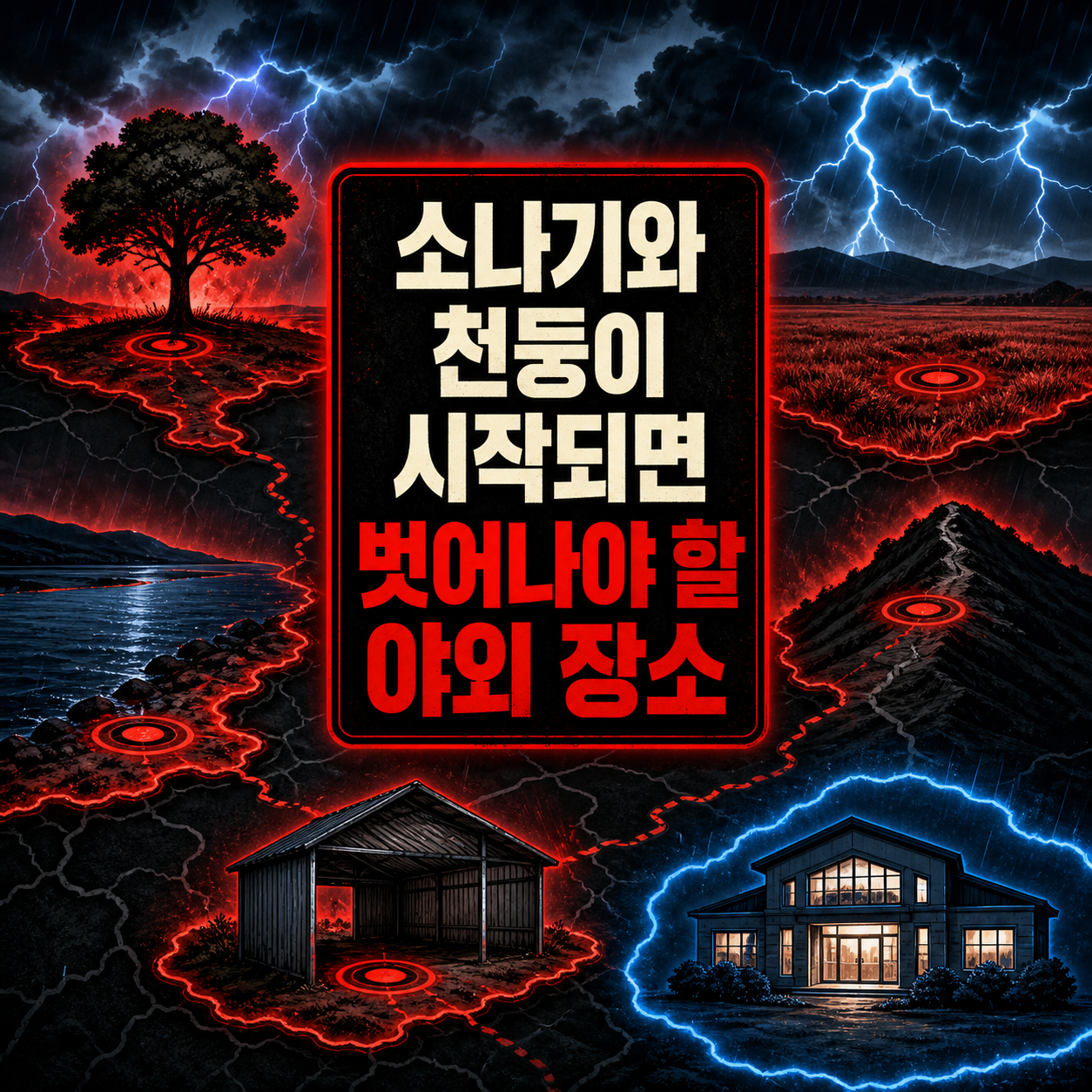
10 Outdoor Spots to Leave the Moment You Hear Thunder
During a shower, avoid tall trees, open hilltops, waterside paths, and underpasses, which carry lightning, flash-flood, and flooding risk, and move into a building or car as soon as you hear thunder.
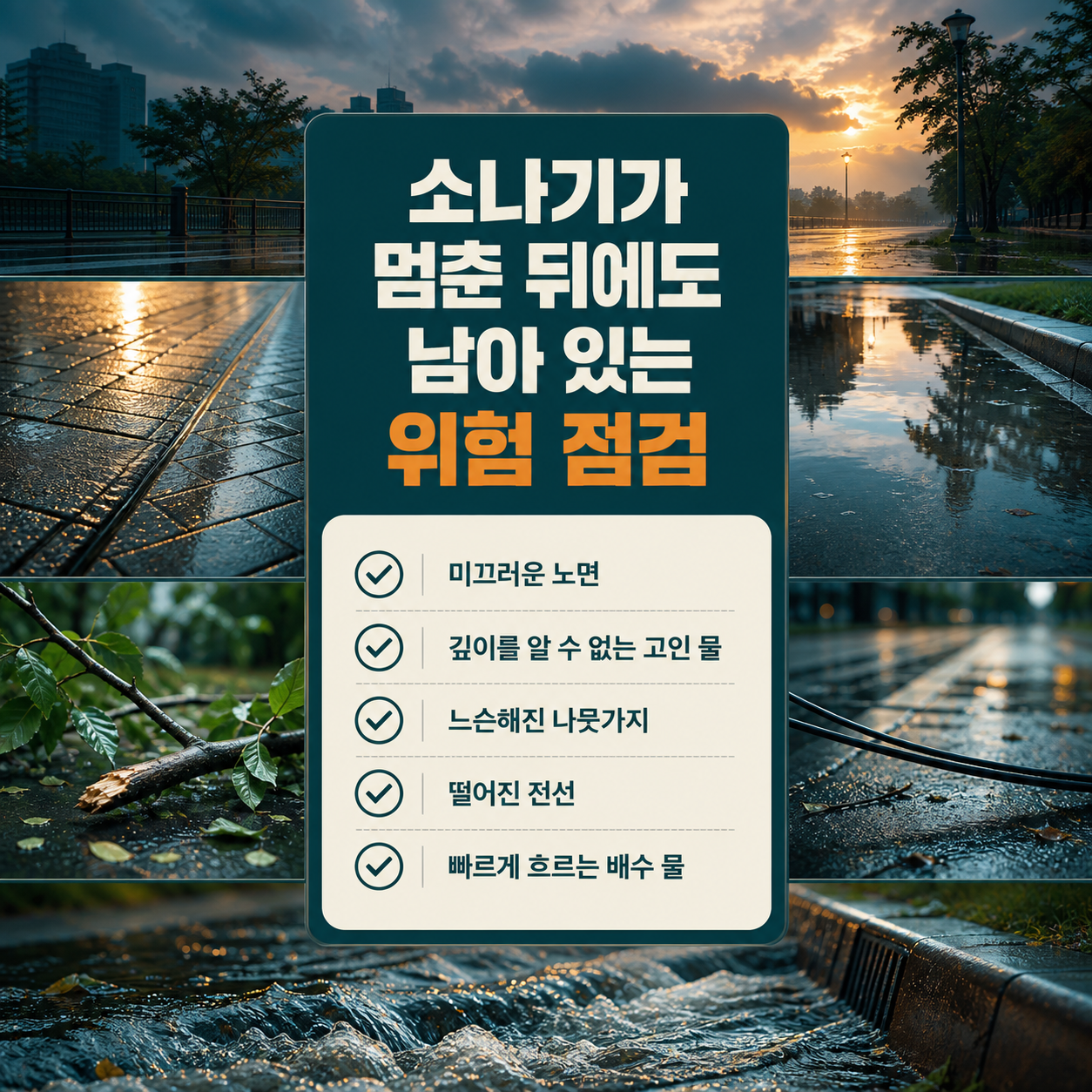
Blue Sky Doesn't Mean Safe: 10 Checks Before You Go Back Out
The real danger arrives in the quiet after the rain, not during it—here's the order to check things.

Route Before Umbrella: A Rain-Day Order of Operations for the Commute and School Run
From packing before you leave to checking gear once you're home, here's a ten-step order of operations for getting through a rainy commute or school run safely.
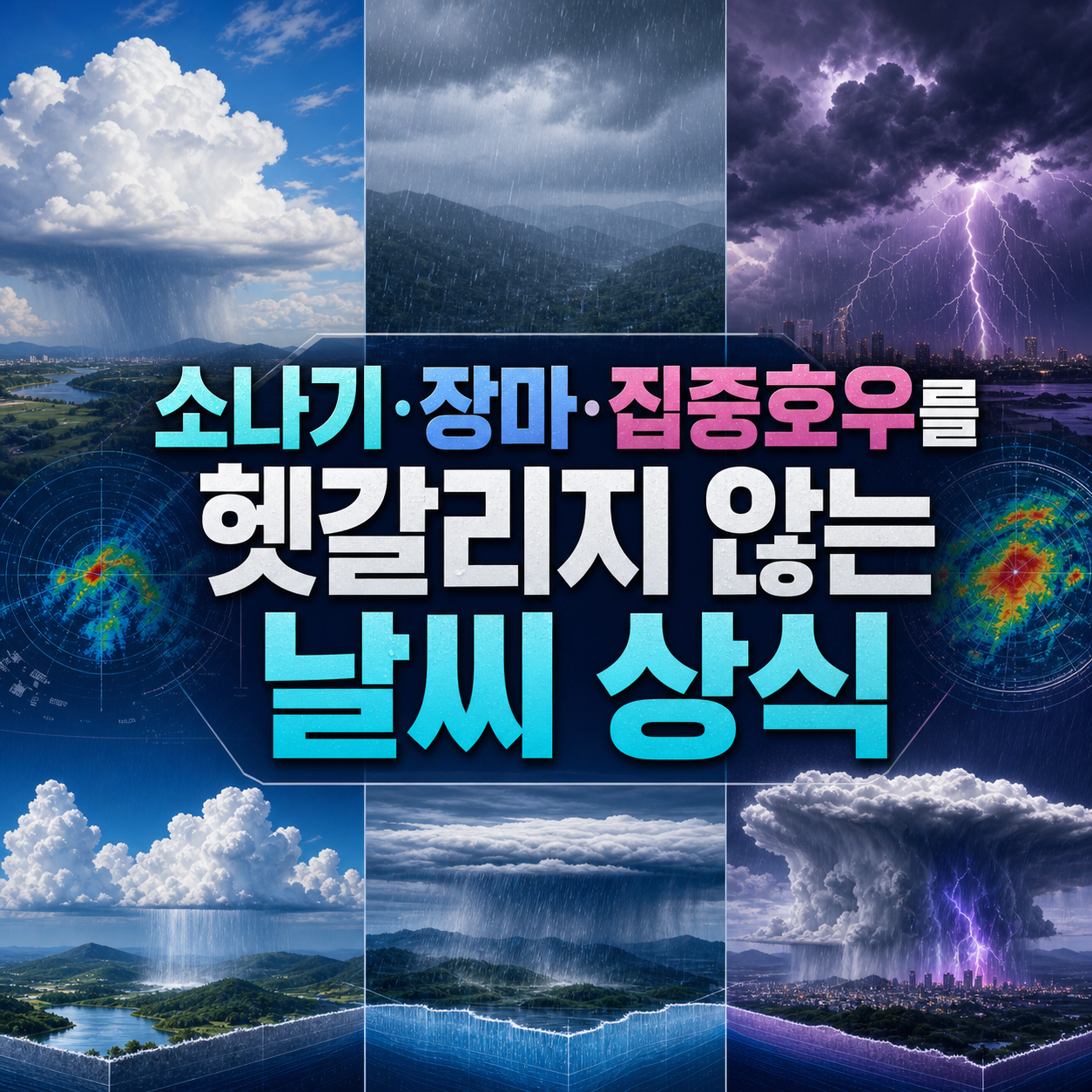
Forget the Weather Terms, Watch the Warnings Instead
Naming it a shower, monsoon, or heavy rain matters less than the warnings, lightning, and water levels in front of you — here's the check order, radar to alerts.