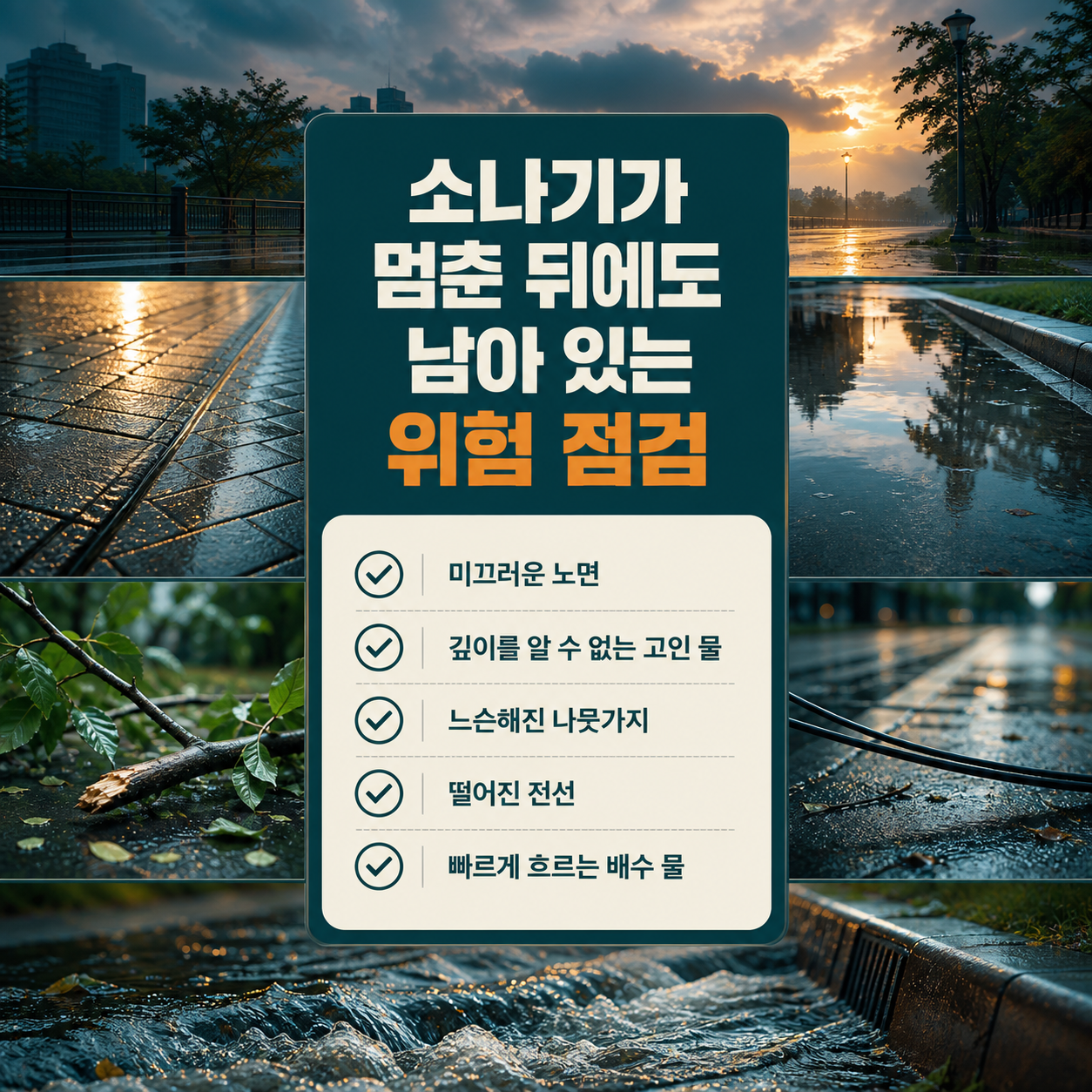
The real danger arrives in the quiet after the rain, not during it—here's the order to check things.
The moment the rain stops and the sky clears, instinct says it's over. It isn't. Water flowing down from higher ground can take hours to raise a stream's level downstream. Lightning keeps striking well after the clouds brighten, and branches loosened by wind gusts fall on a delay. That gap between how things look and how safe they actually are is what this list is built around.
These ten hazards are ordered the way you should actually check them: risks like rivers and lightning that need time to resolve on their own, risks like slippery surfaces and falling debris that need care while you're moving, risks like electrical hazards and leaks that need a professional's eyes, and finally whether transit and outdoor plans are safe to resume.
How this list was built
- Prioritized hazards you can verify through official channels—weather services and local authorities
- Weighed both how often each hazard occurs and how severe it gets when it does
- Separated what you can judge yourself from what needs a report or expert check
- Ordered everything chronologically, from right after the rain stops to full daily resumption
River and stream levels

The 30-minute lightning window

Slippery stairs and decking

Falling branches and signage

Manholes and road damage

Flooded vehicles

Wet electrical hazards

Indoor leaks and ceiling damage

Public transit resuming

Deciding to head back outside

After the rain, safety is about order, not speed
Ranks 1-2, rivers and lightning, resolve only with time. Ranks 3-5, slippery surfaces, falling debris, and road damage, need your eyes and feet while moving. Ranks 6-8, flooded cars, wet electrical systems, and leaks, are not calls to make alone—report them and wait for a professional. Ranks 9-10, transit and resuming outdoor plans, come last, only once everything above has been officially confirmed.
This information reflects conditions at the time of research and can vary by location and situation, so always defer to the latest updates from weather services and local authorities.
Frequently asked questions
The rain stopped—can I head out right away?
Not yet. Wait at least 30 minutes from the last audible thunder, and use that time to confirm through official weather radar that lightning activity has genuinely stopped, plus check whether local authorities have lifted any flood advisories. Near a stream or valley, wait longer, since upstream water takes time to arrive.
Everything looks fine—why is the area still closed?
Because visible dryness and actual safety move at different speeds. Water levels rise gradually as upstream flow arrives, branches can hang precariously without looking dangerous, and a road's surface can look fine while the ground underneath has washed out. A closure means officials have already assessed the risk—trust it rather than your own read of the scene.
What do I do if I spot a downed power line or a flooded car?
Don't approach either one. Note the location, move to a safe distance, and call emergency services or the relevant road authority immediately with precise details. A downed line can carry a shock risk even if it looks inert, and flooded vehicles combine unpredictable currents with internal electrical hazards—leave both to professionals.
What should I do about a leaking or bulging ceiling?
Don't press on or poke a bulging section, and don't switch on a fixture that got wet. Move furniture and appliances underneath to a safe spot first, then notify building management right away. Whether the structure needs repair is a call for a professional inspection, not a guess.
When does public transit actually go back to normal after rain?
The rain stopping and service resuming are two separate events. Check the transit operator's official announcements and station closures rather than trusting a map app's estimated schedule. Underground sections that flooded can take longer to return to normal.
Get new lists before anyone else
Once a week — only the new lists worth your time.
No spam · unsubscribe in one click
You may also like
Route Before Umbrella: A Rain-Day Order of Operations for the Commute and School Run
From packing before you leave to checking gear once you're home, here's a ten-step order of operations for getting through a rainy commute or school run safely.
Forget the Weather Terms, Watch the Warnings Instead
Naming it a shower, monsoon, or heavy rain matters less than the warnings, lightning, and water levels in front of you — here's the check order, radar to alerts.