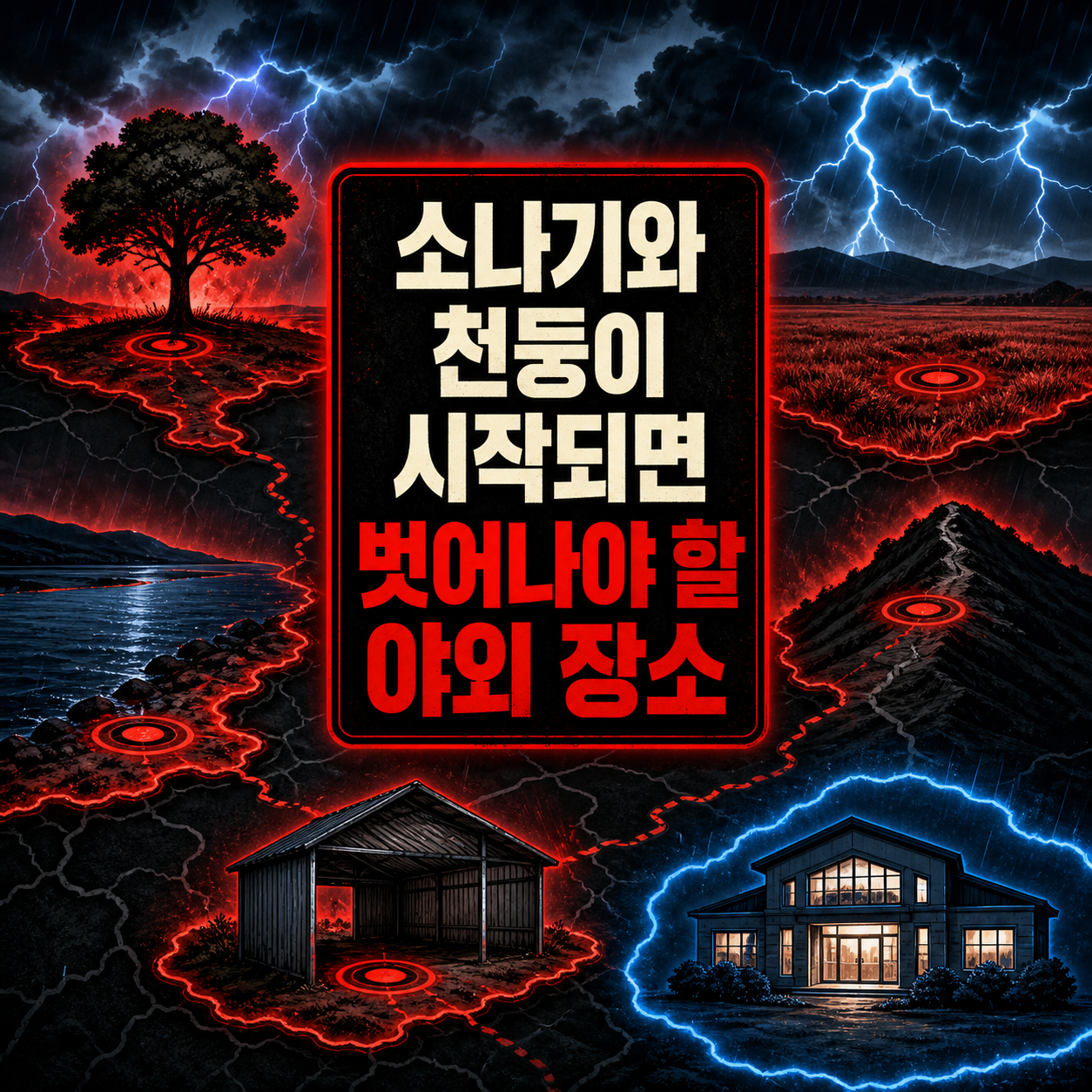
During a shower, avoid tall trees, open hilltops, waterside paths, and underpasses, which carry lightning, flash-flood, and flooding risk, and move into a building or car as soon as you hear thunder.
When a shower hits, the safest place is inside a building or a car with the roof closed, and the riskiest are under trees, on open hilltops, beside water, and on low roads. Ducking under the nearest eave or tree is instinct, but that choice often raises your risk of lightning and flooding instead. This list picks 10 outdoor spots that look safe but aren't, and explains why each is risky and where to go instead.
The order follows how likely you are to run into each spot during outdoor activity, not severity. If you're standing in one of these right now, don't read on. Move first, and use the list later to plan your escape routes.
How we chose
- Lightning: is it the tallest or most exposed point nearby?
- Water: can flash floods or flooding arrive in moments?
- Structures: could it be blown away or collapse in a gust?
- Misjudgment: is it easy to mistake for a safe place?
If someone is hurt by lightning or fast water, call 119 right away and wait for rescuers from a safe spot rather than going in yourself.
Under a Tall Tree
Open Fields and Hilltops
Riverside Walking Paths
Valleys and Steep Slopes
Underpasses and Low Ground
Near Construction Sites
Around Metal Structures
Beaches and Breakwaters
Tents and Open-Air Pavilions
Already-Flooded Roads
How to choose
If you hear thunder, the rule is the same anywhere: get into a building or a car with the roof closed. If you're under a tree (No. 1), on an open field or hill (No. 2), or on a beach (No. 8), lightning is the most urgent risk. If you're by a river (No. 3), in a valley (No. 4), in an underpass (No. 5), or on a flooded road (No. 10), get to higher ground before the water rises.
Metal objects (No. 7) don't attract lightning, but the longer they are in your hand, the taller you are, so set them down. Remember that tents and pavilions (No. 9) and the area near construction sites (No. 6) aren't safe just because there's a roof. In an emergency, call 119. Information reflects the time of research and may change with conditions, so check Korea Meteorological Administration warnings and on-site guidance.
Frequently asked questions
Is it safe to use an umbrella during a thunderstorm?
Not if lightning is involved. A long metal umbrella frame raises your height, so when you hear thunder, close the umbrella and head for a car or building instead of relying on it for cover.
What should I do if a storm hits while I'm hiking?
Stop moving along a ridge or summit, crouch low, and head for the nearest shelter. A tent or trekking poles won't protect you from lightning, so look for the indoor space your park office points you to.
How should I judge the risk near a river or valley?
Even light rain where you stand can mean upstream rain is raising the water fast. Don't wait it out by the water. Move to higher ground right away, and never try to cross on stepping stones or shallow water.
Why is a big tree riskier than an awning?
Lightning tends to hit the tallest object nearby. If a big tree is struck, current can travel through the trunk and jump to a person next to it, so at the first thunder move away from the tree to a building or car.
Can I walk across a flooded road?
It isn't recommended. Standing water hides its depth and current, and a manhole cover may be open. Take a detour if there is one, and follow any traffic officer's instructions.
What should I do if someone is hurt by lightning or fast water?
Call 119 immediately. Going into the water or a dangerous spot yourself puts the rescuer at risk too, so it's better to wait for responders from a safe place.
Get new lists before anyone else
Once a week — only the new lists worth your time.
No spam · unsubscribe in one click
You may also like
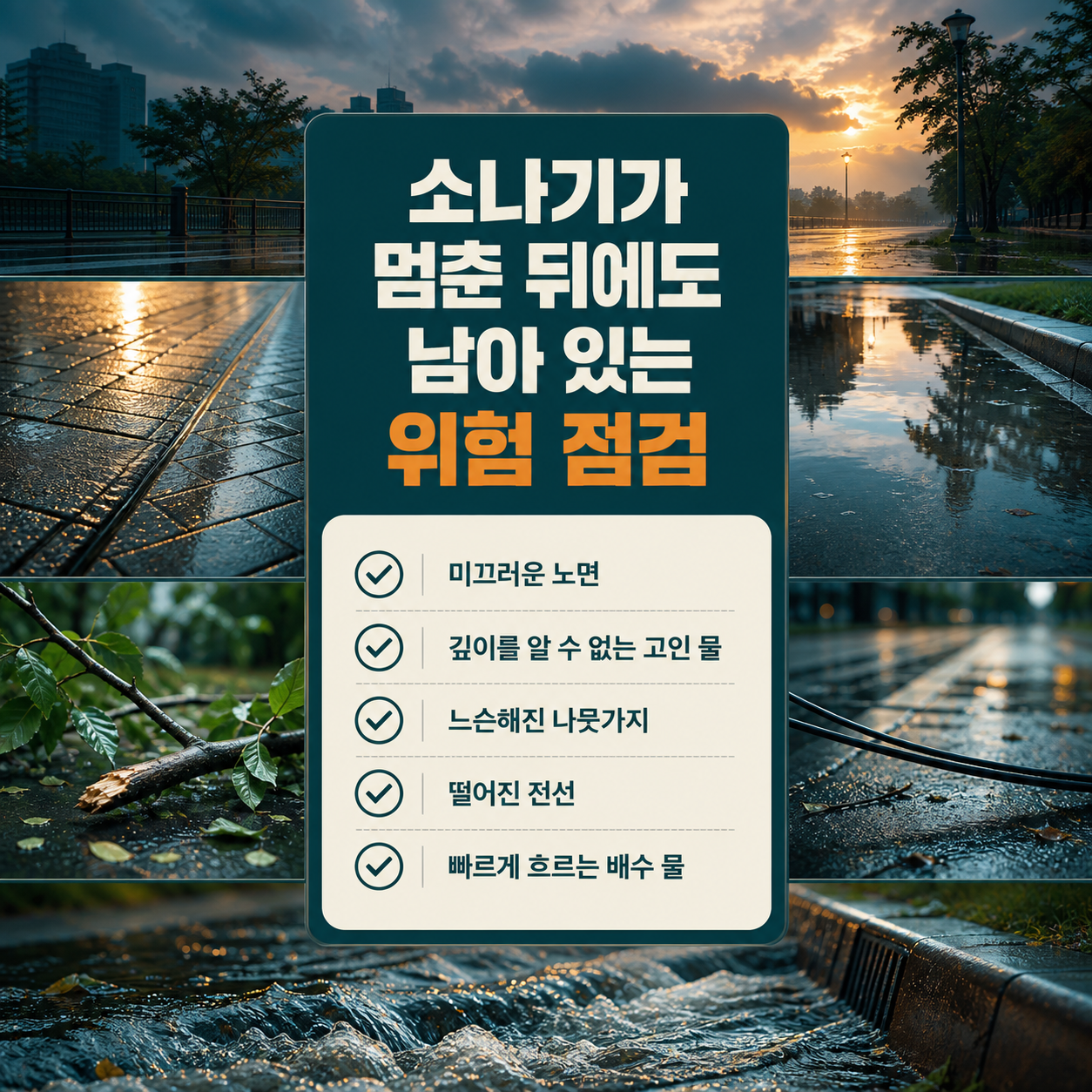
Blue Sky Doesn't Mean Safe: 10 Checks Before You Go Back Out
The real danger arrives in the quiet after the rain, not during it—here's the order to check things.
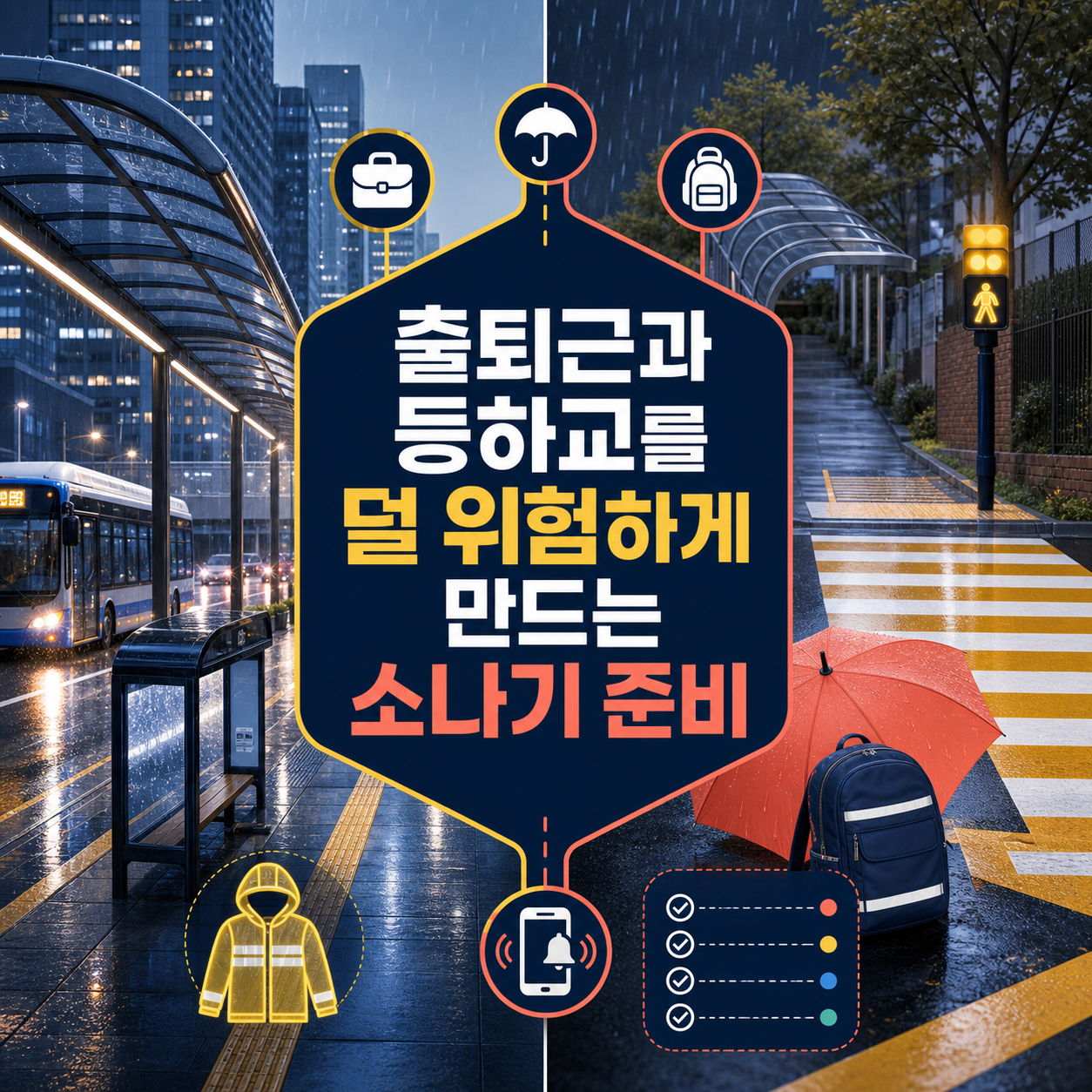
Route Before Umbrella: A Rain-Day Order of Operations for the Commute and School Run
From packing before you leave to checking gear once you're home, here's a ten-step order of operations for getting through a rainy commute or school run safely.
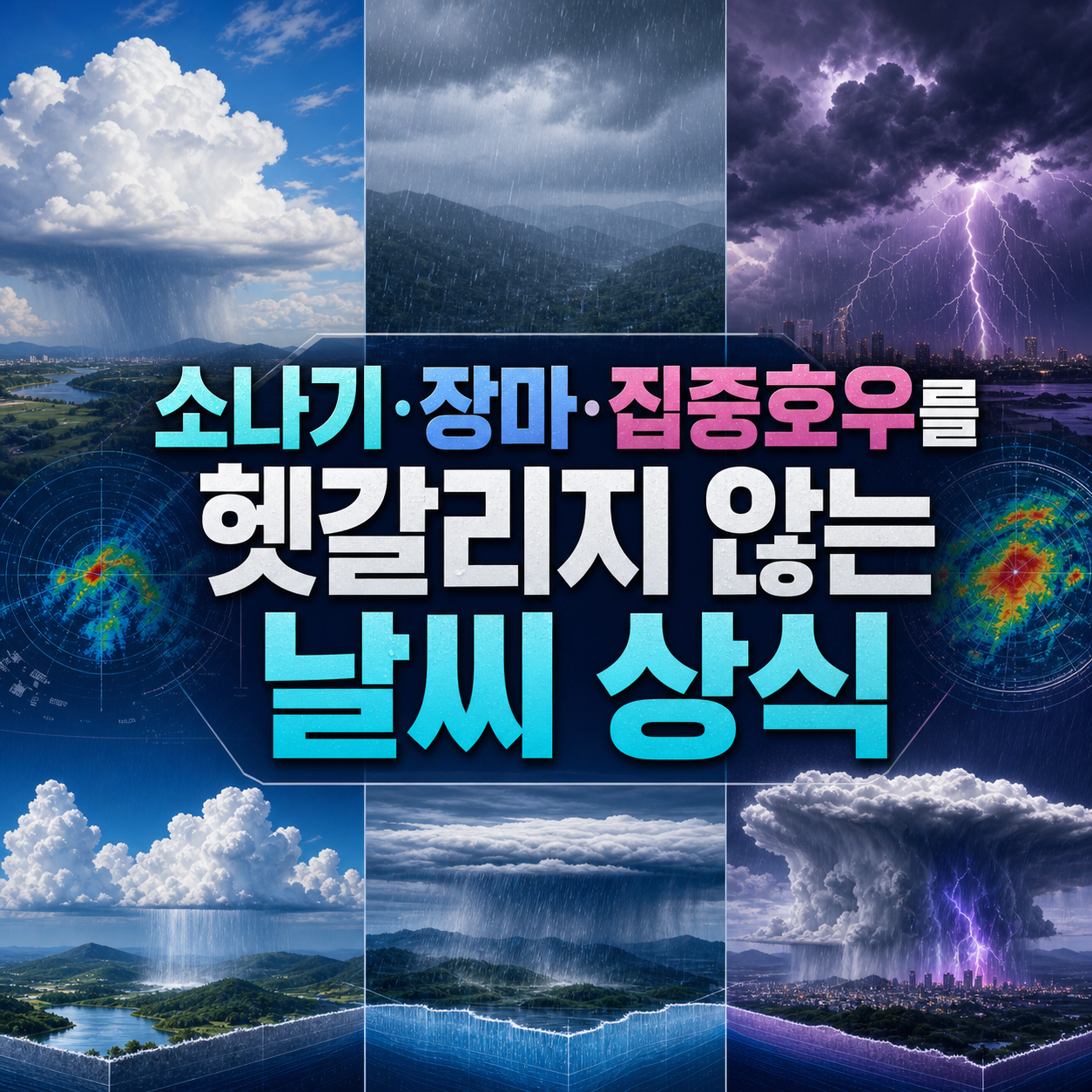
Forget the Weather Terms, Watch the Warnings Instead
Naming it a shower, monsoon, or heavy rain matters less than the warnings, lightning, and water levels in front of you — here's the check order, radar to alerts.