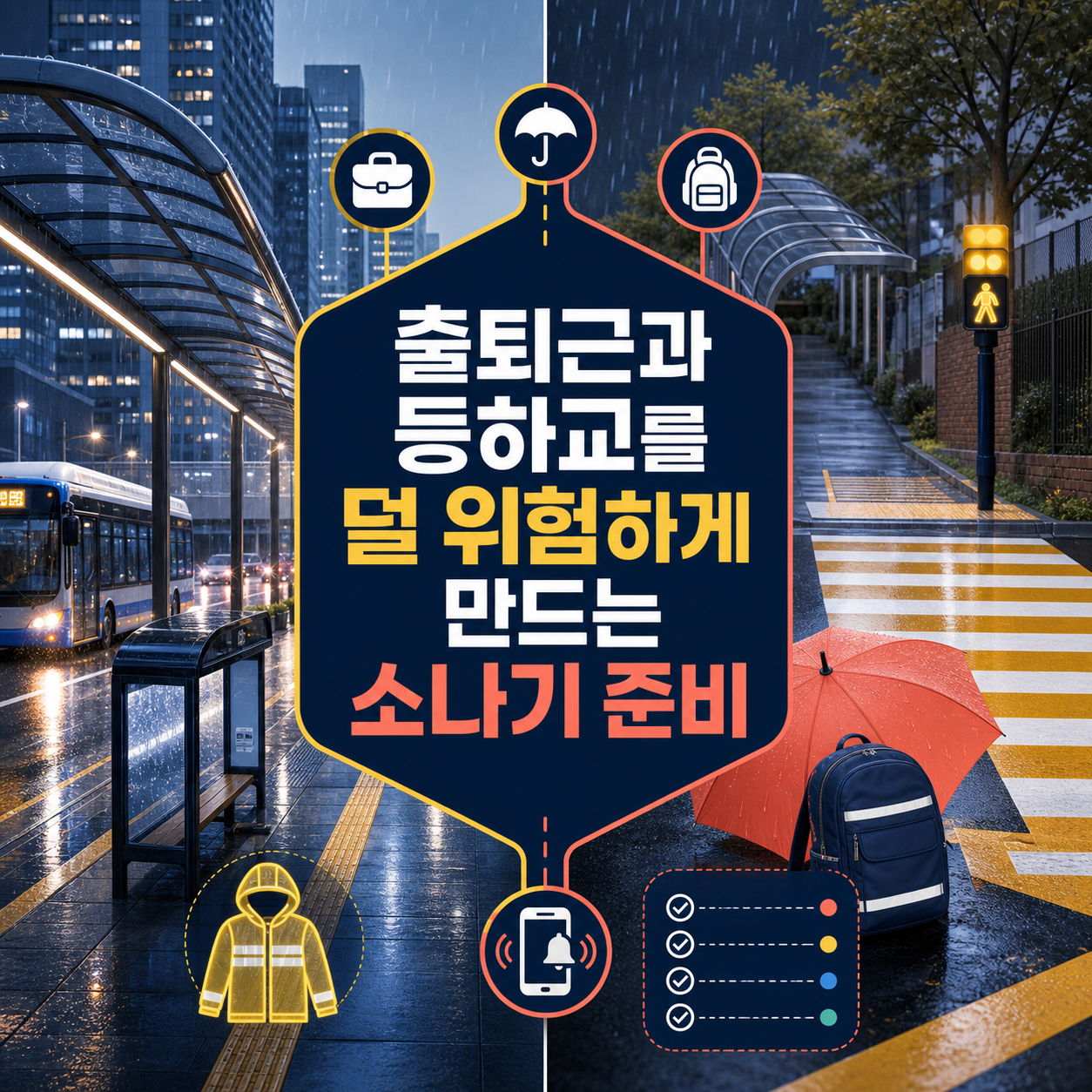
From packing before you leave to checking gear once you're home, here's a ten-step order of operations for getting through a rainy commute or school run safely.
The most common question on a rainy commute morning is whether an umbrella is all you need. In practice, the risky moments show up all along the route — slick stairs, an umbrella blocking your sightline at a crosswalk, a transit schedule thrown off by the weather, a car swerving around a puddle. This list lines those moments up in order, from before you leave the house to after you're back, so you know what to check and when.
How we picked these
- Points where accidents or friction actually happen most, broken out by how you're getting around — on foot, by transit, or driving
- Separated what needs handling before you leave from what needs judgment calls mid-route
- Included the extra steps a parent needs for a child's school run
- Carried through to post-arrival gear care that sets up the next day
The order follows how a trip actually unfolds. Walking a short distance today, start with #1-3. Taking transit, check #4-6. Driving, #7 is the one that matters. Parents sending a kid to school alone should look at #8, and everyone should hit #9-10 once they're home. If a heavy rain warning is in effect or you see flooding or lightning risk, do not push on; follow official guidance from the weather agency and local government, and call 119 in an emergency.
Separate folding umbrella from rain gear

Pack a waterproof pouch

Have a backup for wet shoes

Check transit service alerts

Choose safe boarding and alighting spots

Keep sightlines clear while walking

Slow down and add following distance while driving

Share the walk-home route with kids

Mind wet-floor etiquette at entrances

Check electronics once you're home

How to choose
If you're walking a short distance, #1 (umbrella vs. rain gear) and #6 (keeping sightlines clear) cover most of it. Riding transit, check #4 (service alerts) and #5 (safe boarding) first. Driving, #7 (slowing down and following distance) is the one that matters most, and if a child is walking home alone, #8 (sharing the route) should come first.
When comparing options, weigh whether your hands stay free, how much it actually reduces slipping, and how fast you can adapt if transit gets delayed or rerouted.
This information reflects conditions at the time of writing — weather and transit schedules can change, so check official transit alerts and forecasts again before you head out.
Frequently asked questions
What should I do if it starts raining and I forgot my umbrella?
Prioritize a safe walking pace over speed. Duck under a storefront awning if you need a break, and keep checking whether your shoes are gripping the ground. Buy or borrow an umbrella once you arrive if you need one — a few minutes late beats a fall or a close call with a car.
Transit is delayed — should I keep waiting?
If a delay looks like it'll run past five minutes, start considering alternatives right away — a taxi, a different route, or walking. Having those options in mind ahead of time makes the call faster. If your child is commuting to or from school, share contact info so you can check in until they've arrived.
How should I prepare if my child walks home alone and it starts raining?
Agree in advance on a building or convenience store they can duck into. Make sure their phone is charged and they've memorized a parent's number. If the rain is heavy, tell them to wait it out at school or take a taxi rather than push through on foot.
What's the most important thing to watch for when driving in the rain?
Stopping distances get longer on wet roads, so slow down and leave extra room ahead of you. Don't swerve sharply to dodge a puddle, and keep in mind pedestrians or cyclists in the right lane can be harder to spot in the rain.
Is it a problem to spend the whole day in wet shoes?
It raises the risk of skin breakdown between your toes and gets uncomfortable fast. Keep a spare pair of shoes or slippers at work or school, and airing them out even briefly at lunch helps.
Get new lists before anyone else
Once a week — only the new lists worth your time.
No spam · unsubscribe in one click
You may also like
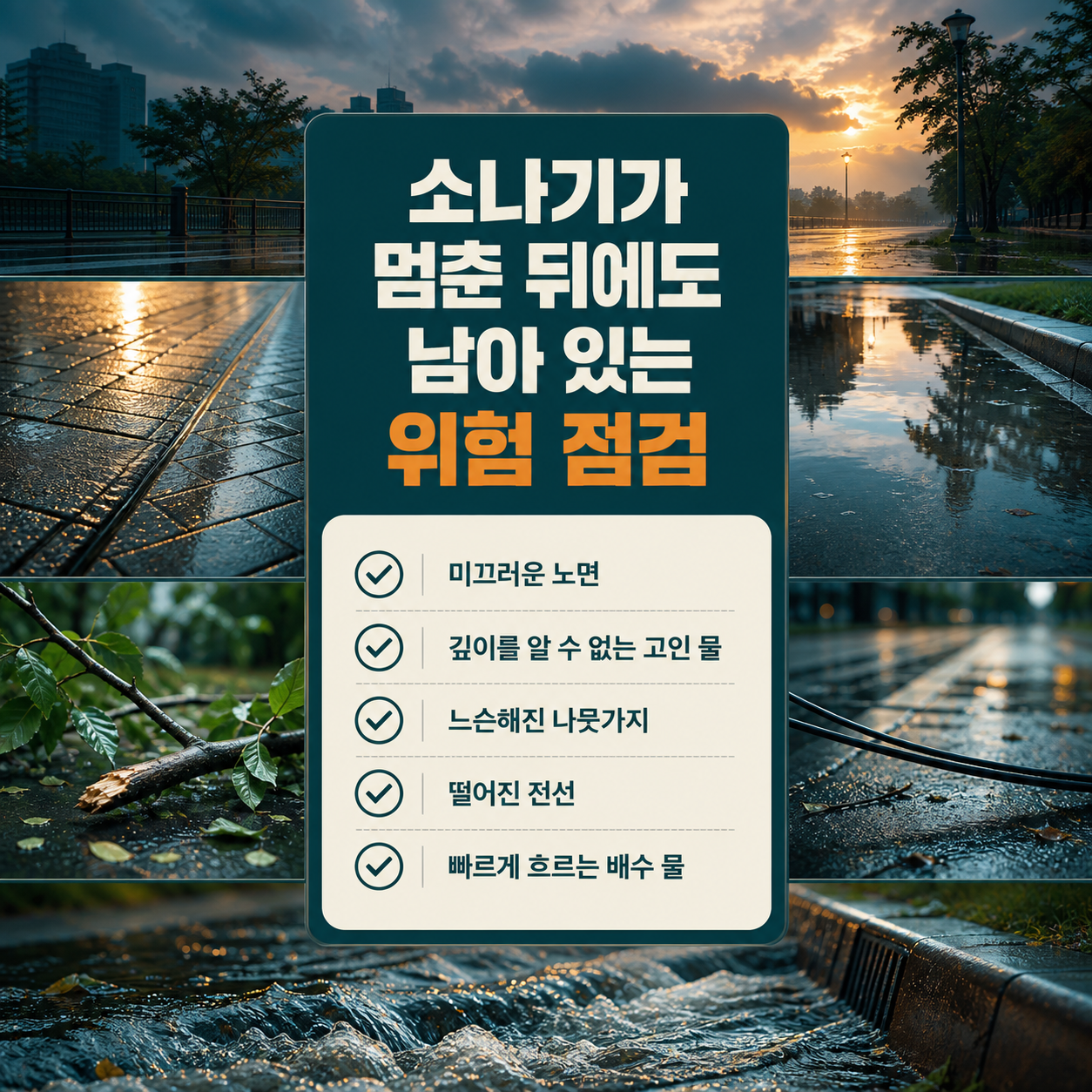
Blue Sky Doesn't Mean Safe: 10 Checks Before You Go Back Out
The real danger arrives in the quiet after the rain, not during it—here's the order to check things.
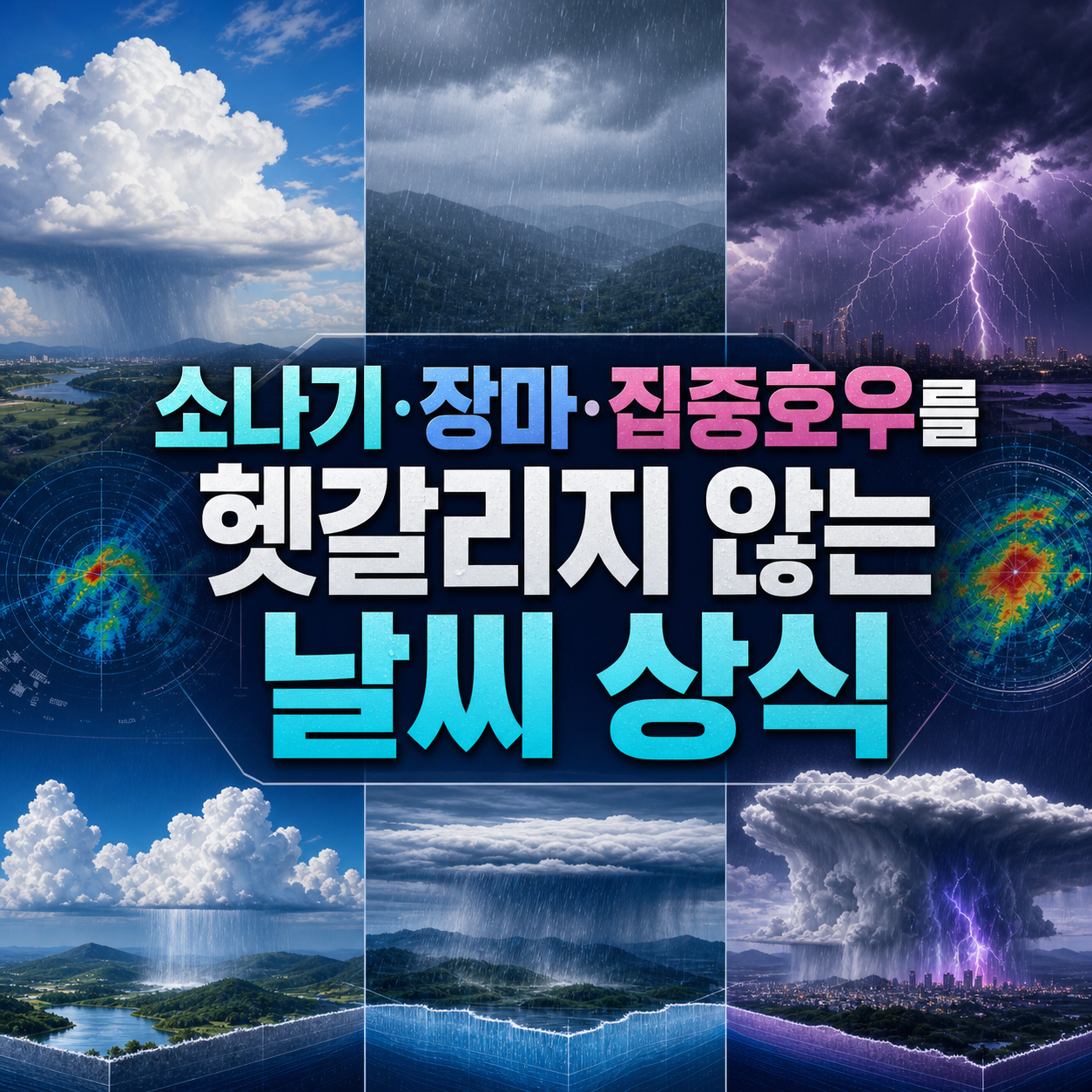
Forget the Weather Terms, Watch the Warnings Instead
Naming it a shower, monsoon, or heavy rain matters less than the warnings, lightning, and water levels in front of you — here's the check order, radar to alerts.