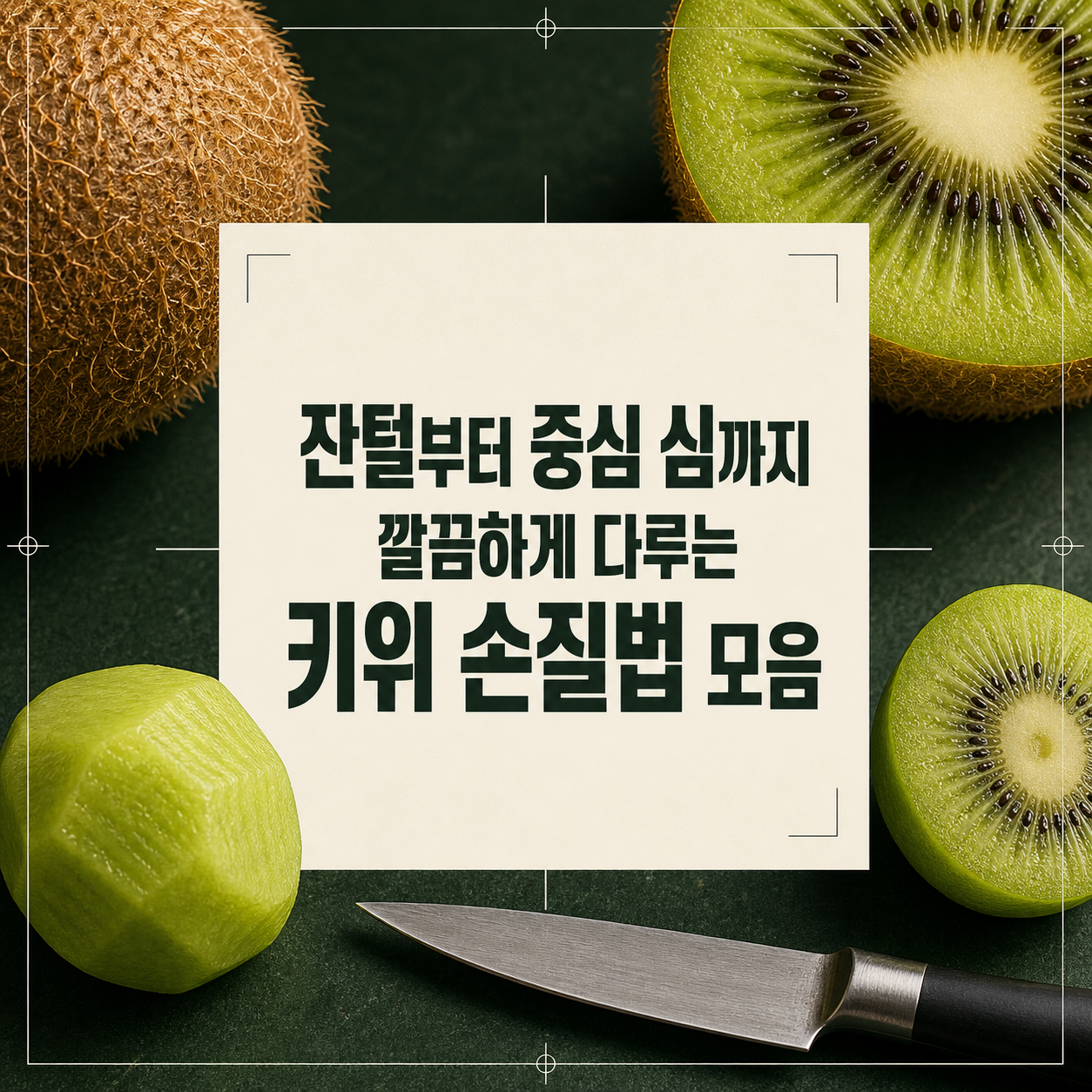
From washing to allergy response, here is the ten-step order for handling kiwi without cross-contamination or injury.
The trickiest part of prepping kiwi isn't cutting it — it's knowing the order to do things in. How much of that fuzzy skin actually needs scrubbing, whether the core has to come out every single time, and whether a tingling mouth is something you can just push through are the questions that trip people up most. On top of that, some people eat the skin and others always peel it, which makes it hard to tell which approach is actually right. This list walks through ten steps in the order your hands actually follow, starting with hygiene before the knife even comes out and ending with how to spot spoilage before you cut in.
How These Were Chosen
- Steps carrying real cross-contamination or injury risk are placed earlier.
- Eating methods (halve-and-scoop, skin-on slicing) come down to preference, so they sit in the middle.
- Steps that require a stop-or-continue judgment call — allergies, spoilage — are grouped at the end so they're easy to find again when you need them.
- Situations that change the approach, like prepping for a child, get their own dedicated step so they're not skipped.
The numbering isn't a ranking of importance; it follows prep, handling, eating, and then watching for trouble. If your hands are sensitive, start at step 3. If this is for a kid, jump straight to step 8. If you already felt something off while eating, go to step 9 first. Whichever order you read in, don't skip steps 1, 2, 9, and 10 — they're the ones covering hygiene and safety.
01
Hygiene has to come before technique, or every step after it is compromised no matter how carefully you cut. Wash your hands with soap for at least twenty seconds, keep a knife and cutting board reserved and washed for fruit only, and never reuse equipment that just touched raw meat or fish without cleaning it first. Skip this and no amount of careful slicing later undoes the contamination. If you're sharing a kitchen with other people, it's worth double-checking this step every time.

02
A knife dragging across a dirty peel can carry dirt or surface residue straight into the flesh underneath. Rub the surface gently under running water with your hands or a soft brush, then pat it dry with a clean towel, skipping soap or any non-food-safe cleaner. Working with a fruit that's been dried off some also keeps it from slipping out of your grip mid-cut. Draining it in a colander afterward keeps it from slipping around on the cutting board.

03
If kiwi's fuzzy skin has irritated your hands before, sensitive skin can react with itching or redness the moment it makes contact. Hold the fruit with thin gloves or a clean towel while washing and peeling, and stop immediately if itching or swelling shows up partway through. If this keeps happening to you, it's worth planning for the same precaution every single time you handle one. Some people only feel a mild tingle and it passes quickly, but if the reaction shows up consistently, planning for it every time is the safer habit.

04
This is the simplest way to enjoy the flesh with almost no tools and almost no cleanup involved. Stand a ripe kiwi upright on a cutting board, cut it in half through the middle, and scoop the flesh out from the skin toward the center with a clean spoon. Since the skin gets discarded whole, there's no need to worry about the fuzz touching your hands at all. If the kiwi feels too firm to scoop easily, press it gently with a finger first to check how ripe it actually is.

05
Stabilizing a round fruit keeps a peeler or knife from sliding sideways while you're working on it. Trim a thin slice off both ends to create flat surfaces, stand it upright on the board, and peel from top to bottom in one direction with the blade angled away from your body. Keeping that same grip and angle with a peeler lowers the odds of nicking your own hand. A dull peeler blade forces you to press harder, which raises the chance of it slipping, so check the blade itself while you're at it.

06
This suits people who enjoy the texture of the skin itself, though it's far from a universal preference. Scrub the fuzz off thoroughly first, then slice thin, which softens the rougher texture considerably, and don't push through it if digestion or allergy concerns come up while eating. If you're trying it for the first time, taste one or two slices before committing to a full serving. Choosing a variety with thinner skin, like gold kiwi, tends to make the texture easier to get used to.

07
Depending on the variety and how ripe it is, the center core can feel noticeably tougher than the rest of the fruit. Cut it lengthwise first to check the texture, then trim away only the genuinely firm part — a visible core alone isn't a reason to discard the surrounding flesh. A fully ripe kiwi often has a core soft enough that no extra trimming is needed at all. Core thickness varies by variety, so if you're trying one for the first time, cut into it once to see what you're working with before deciding on a method going forward.

08
Round, slippery pieces are a real choking hazard, so getting the size right matters more here than anywhere else on this list. Peel the fruit completely and cut it into small, thin pieces matched to the child's age and chewing ability, staying close to watch them swallow if it's their first time trying it. Cut any piece that still looks too large in half again before handing it over. Handing over one piece at a time rather than a whole plate makes it easier to watch how they chew and swallow each bite.

09
Tingling or itching in the mouth is easy to brush off in the moment, but it can escalate quickly if ignored. Stop eating immediately once these symptoms appear and take time to monitor how you feel, and seek medical care right away rather than self-diagnosing if swelling or breathing trouble follows. Anyone with a past reaction is safer sticking to a small trial amount before eating more. If you've had a similar reaction to another fruit before, letting a family member or caregiver know ahead of time can help too.

10
Catching mold or an off smell before you cut in is the only way to avoid the risk entirely once it's already sliced. Turn the fruit over slowly in your hand to inspect the whole surface, and once it's cut, check the color and smell of the flesh as well before eating. Don't gamble by trimming off just the suspicious part and eating the rest — when in doubt, throw the whole piece out. Even if it's been sitting in the fridge, don't skip this check.

How to Choose
Prepping kiwi really comes down to three things: basic hygiene while washing and cutting, a personal call on skin-on versus peeled, and catching the signals that mean you should stop — allergic reactions and spoilage. The first two get easier with a bit of repetition, but the third has to be checked fresh for every single piece of fruit, which is exactly why it's easy to get complacent about.
When weighing which approach to take, think about your own situation first — whether your hands run sensitive, whether a child is eating it too, or whether you've had a reaction to similar fruit before — rather than judging the technique alone. The steps above reflect general practice as of this writing, and if you notice tingling, itching, or swelling after eating kiwi, don't self-diagnose — see a doctor right away.
Frequently asked questions
Can you eat kiwi skin?
Once the fuzz is scrubbed off, thin skin-on slices are edible, though the texture isn't for everyone. If digestion or allergies are a concern, peeling is the safer choice.
What should I do if my mouth tingles or itches after eating kiwi?
Stop eating right away and monitor how you feel. If swelling or breathing trouble follows, don't self-diagnose — get medical care immediately.
Do I need to remove the core every time?
Only trim it if it feels tough, which depends on variety and ripeness. A visible core isn't a reason to throw out the rest of the fruit.
Why does kiwi fuzz make skin itchy?
The tiny hairs on the skin can irritate sensitive skin, causing itching or redness on contact. Holding the fruit with gloves or a clean towel while washing or peeling cuts down on direct contact.
How can you tell if a kiwi has gone bad?
Turn the fruit over and check the surface for mold or soft, mushy spots, then check the color and smell of the flesh once it's cut. Trimming off just the suspicious part and eating the rest isn't recommended.
What should I watch for when giving kiwi to a child?
Round, slippery pieces are a choking hazard, so peel the fruit and cut it small and thin for the child's age. If it's their first time trying it, stay close and watch how they react.
NEWSLETTER
Get new lists before anyone else
Once a week — only the new lists worth your time.
No spam · unsubscribe in one click
This page contains affiliate links. We may earn a commission from qualifying purchases.