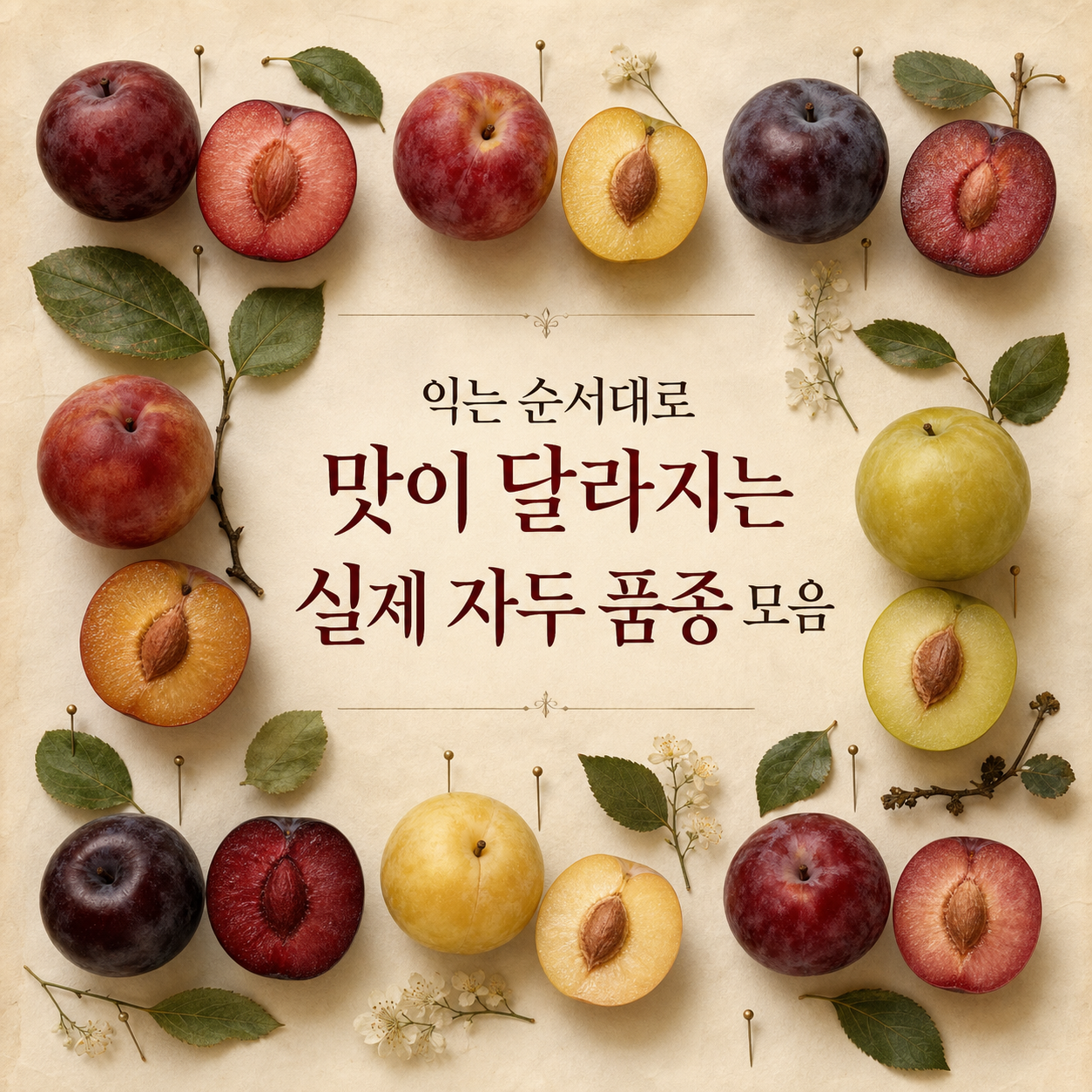
Plum flavor and texture shift with the harvest calendar, so learning variety names beats guessing by color alone.
Standing in front of a box labeled simply "plums," it is hard to know what you will get. The short answer is that knowing the variety name and harvest timing cuts down on surprises in tartness and texture. Early-season plums from the start of summer and late-season ones that run into early fall taste different, and skin color alone rarely tells you how ripe a plum is.
This list gathers varieties that actually circulate in Korea, such as Daeseok-josaeng, Formosa, and Santa Rosa, in harvest order. The numbers are not a taste ranking but a sequence from early summer to early fall, and since preferences differ, we did not rank one above another. To use it, work out which season the plum in front of you belongs to, then apply the checkpoints under that entry.
How we chose
- Harvest timing, from early to late season
- Size and texture: crisp large fruit or softer types
- Easily confused names such as red plum or giant
- What to check after buying: aroma, firmness, cut surface
Daeseok-josaeng
Formosa
Santa Rosa Plum
Summer Fantasia
Soldam
Taeyang
Chuhui
Daewang-jadu
Jabong-jadu
Piza-du
How to choose
If you want to taste the start of the season, begin with No. 1 Daeseok-josaeng and No. 2 Formosa. For something different in look and color, try No. 5 Soldam or No. 10 Piza-du. Shopping after late summer, No. 6 Taeyang and No. 7 Chuhui are the realistic options. When comparing by size, look at the large types like Nos. 2, 7, and 8, but remember that big does not guarantee sweet.
Whatever the variety, check the label and origin first, then aroma, firmness, and the cut surface; that habit prevents the most disappointments. With an unfamiliar variety, slice one and taste it before deciding on the rest. The information here reflects the time of research, and harvest timing and quality vary by year, so confirm with the seller or official channels before you buy.
Frequently asked questions
When is plum season in Korea?
Early varieties like Daeseok-josaeng appear in early summer, while late varieties like Chuhui and Taeyang run from late summer into early fall. Timing varies by variety, so checking the label matters.
Does green skin mean a plum is unripe?
Not necessarily. Some varieties, like Soldam, are simply green-skinned by nature. Check aroma, firmness, and the cut flesh instead of relying on color alone.
What should I watch for when giving plums to kids?
Always remove the pit completely and cut the fruit into easy-to-chew pieces. Skip any fruit with visible damage or an off smell, even if it seems wasteful.
Are red plums and Santa Rosa the same variety?
Red plum is often used as a catch-all for red-skinned plums, while Santa Rosa is a specific variety name. If a stall only says red plum, ask which variety it actually is.
Is a plum safe to eat if the inside turned brown?
In very hot years the flesh can brown inside even when the skin looks fine. If there is an off smell or soft spots, it is safer not to eat it.
Should I pick plums by size?
Some varieties like Formosa and Chuhui are large, but size does not tell you sweetness or ripeness. Look at the area around the stem, the aroma, and firmness together.
Get new lists before anyone else
Once a week — only the new lists worth your time.
No spam · unsubscribe in one click
You may also like
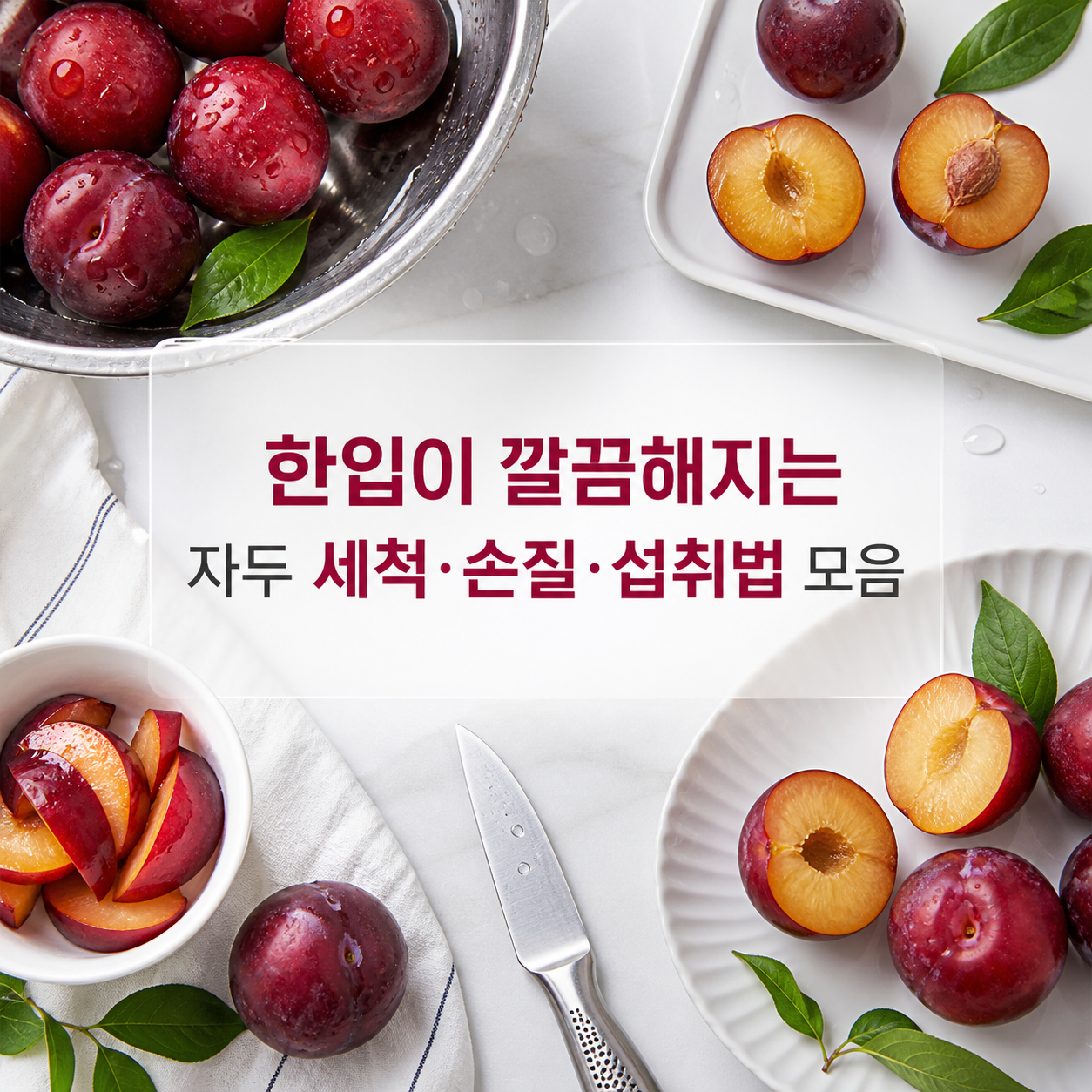
Plums: What to Check Before You Wash Them
Learn to tell natural bloom from mold on plum skin, then pit, prep, and decide when to discard, all in the right order.
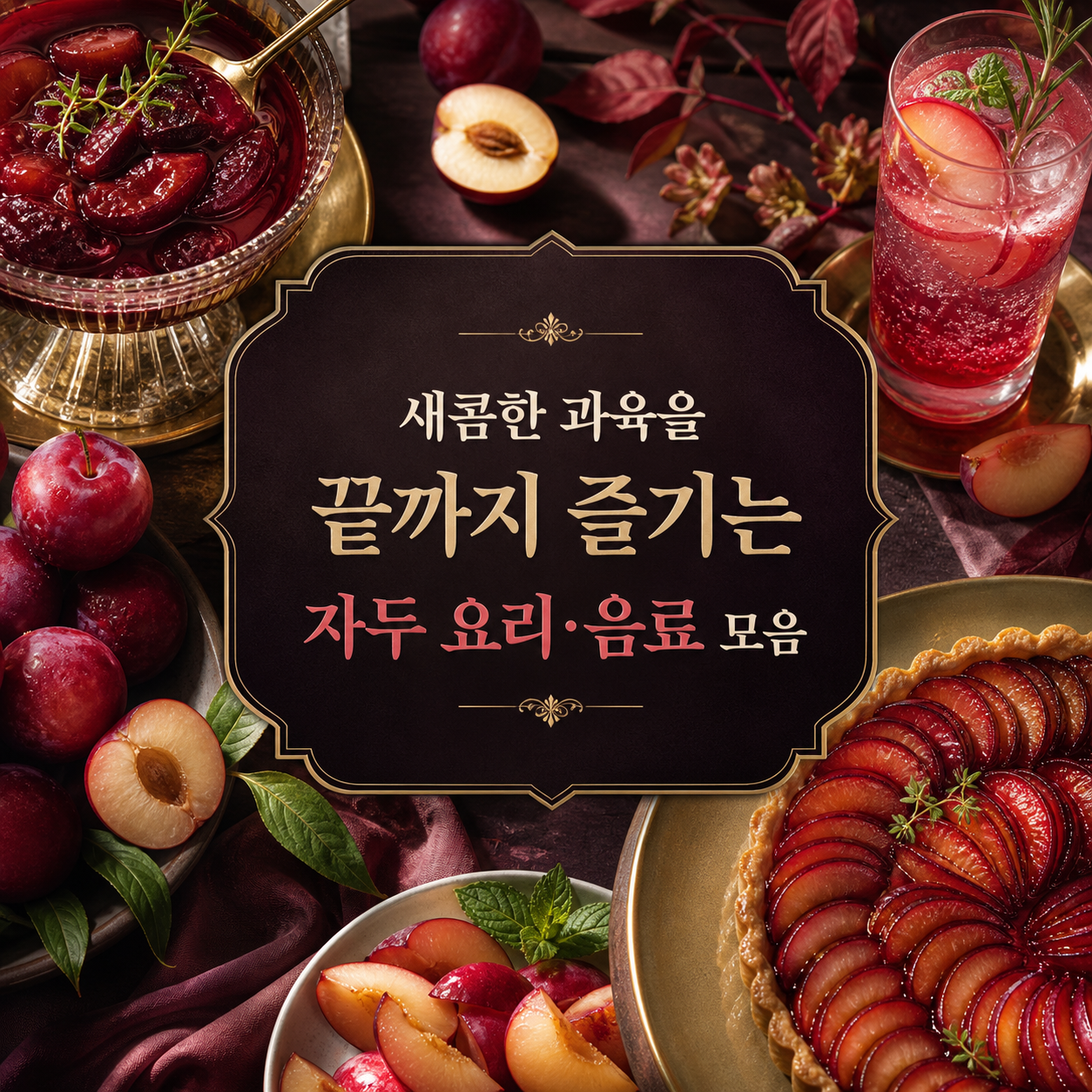
Plums Aren't All the Same Fruit — Match the Recipe to How Firm They Feel
How firm a plum feels decides what to make: slice firm ones fresh and cook soft ones, from syrup to sauce, so nothing goes to waste.
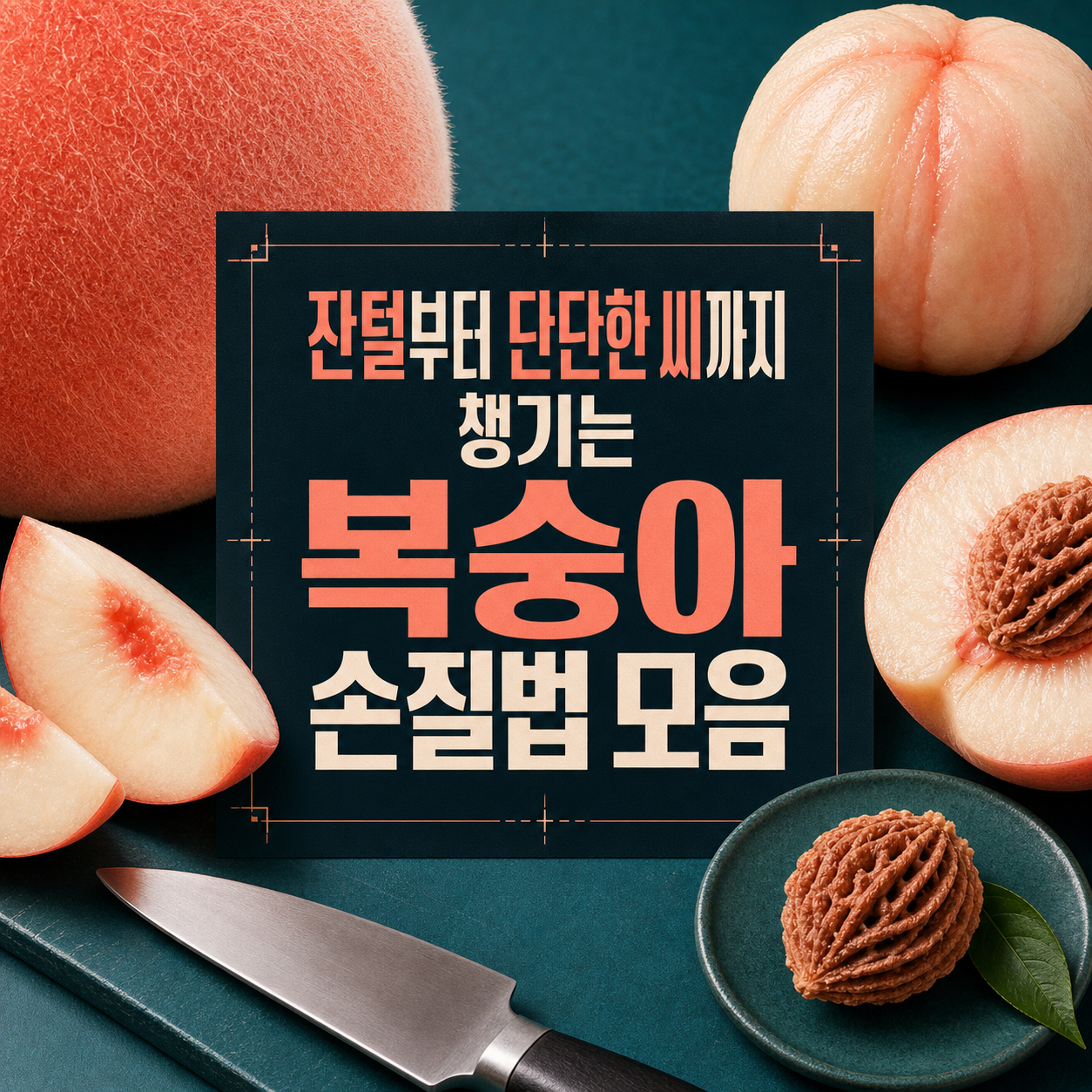
Picking a Peach Is a Job for Your Nose, Not Your Eyes
Pick peaches by scent and firmness, rinse them under cold water just before eating, and refrigerate cut pieces in a sealed container right away.
Knife Last, Hands First: How to Prep Kiwi Safely
From washing to allergy response, here is the ten-step order for handling kiwi without cross-contamination or injury.