
For Martin's stage-ready line, the onboard pickup system matters more for live performance than whether the body has a cutaway.
For a stage-ready Martin, how it sounds unplugged matters less than how quickly it settles into a stable tone once it's through a PA. The Martin E-1's soundhole-side controls and the LR Baggs Element and Anthem's blending approach both count as 'onboard electronics,' but they handle very differently in practice.
How this list was built
- Sorted first by pickup system (Martin E-1 / LR Baggs Element / LR Baggs Anthem), ahead of cutaway or body size
- Within the same pickup, sorted by wood and finish tier, then by body size and cutaway
- Live-performance behavior through a real DI or PA is described alongside the specs, not just unplugged tone
This list sorts twelve current models by pickup system first, ahead of cutaway shape or body size. Ranks 1-4 are Martin E-1 models on the GPC and SC bodies, 5-7 move into the LR Baggs-equipped SC line, and 8-12 split further by wood grade and body size. Test each one through a real DI or PA before making a final call, not just unplugged in a quiet room.
Martin GPC-X1E
Martin GPC-X2E
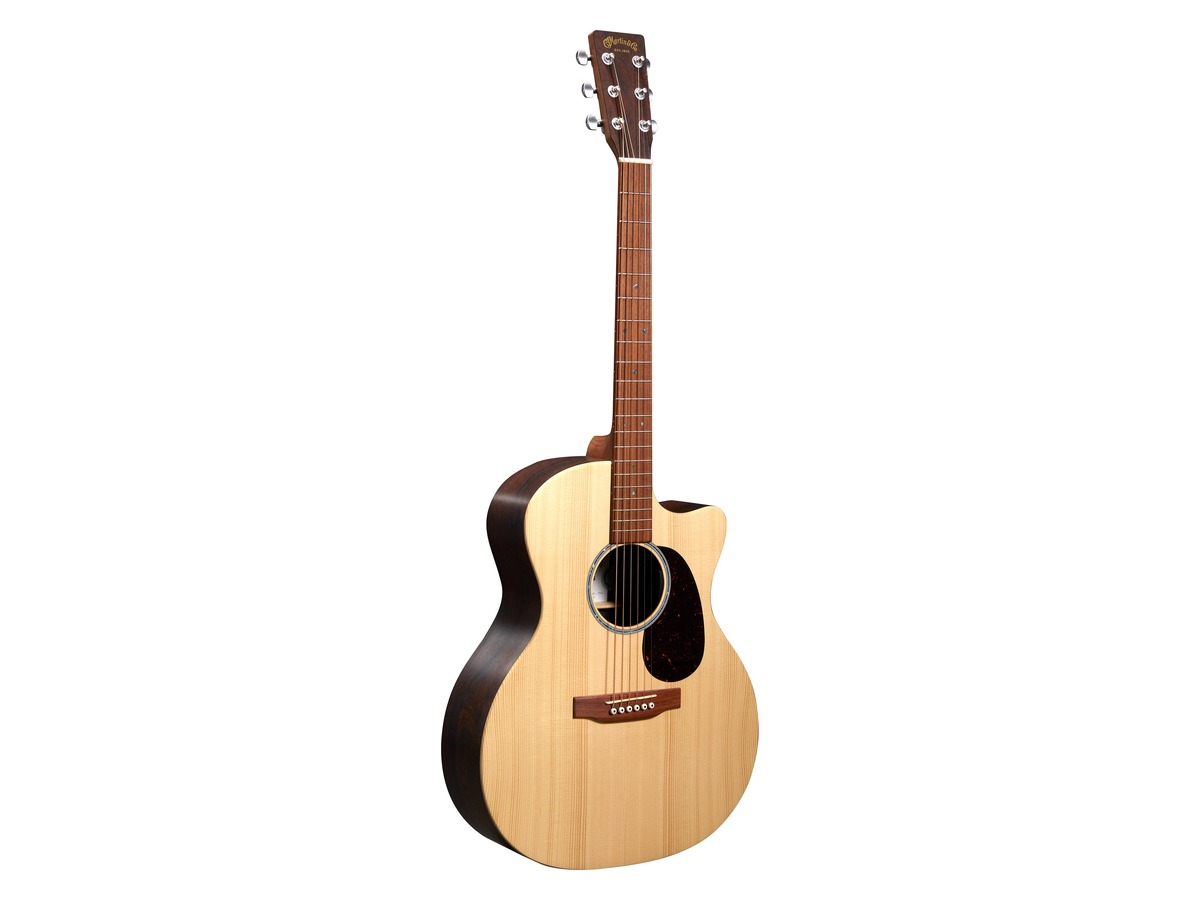
Martin SC-10E Modern Sapele
Martin SC-10E Modern
Martin SC-13E Modern
Martin SC-18E
Martin SC-28E
Martin GPC-16E
Martin D-16E
Martin 000-17E Black Smoke
Martin D Jr E
Martin 000C Jr E
How to choose
If reaching inside the soundhole for controls doesn't bother you and budget comes first, start with the E-1 GPC models at #1-2; if you want finer tone control from gig to gig, compare the LR Baggs models starting at #5. Whether you need a cutaway comes down to how much of your setlist is upper-fret soloing versus accompaniment — models without one, like #9 and #10, keep the body's full chamber intact for a stronger low end.
When comparing in store, don't just listen unplugged — run each through a real DI or PA and turn the volume up to check for boomy bass or feedback. This pickup and spec information reflects Martin's lineup as surveyed in August 2026; the brand can revise its lineup, so confirm current specs before buying.
Frequently asked questions
Do the Martin E-1 and LR Baggs pickups actually sound different?
Yes — the underlying designs differ in both tone character and how you control them. The E-1 is simple to operate via its soundhole-side controls, while LR Baggs Element and Anthem systems typically offer finer blending and feedback management, making them worth comparing if you gig regularly.
Are models without a cutaway still fine for live use?
Yes, especially if your setlist is accompaniment-heavy rather than solo-heavy. Skipping the cutaway keeps the body's full chamber intact, which can actually work in your favor for low-end presence — weigh that against how much you play the upper frets.
What should I test in store when choosing a stage-ready Martin?
Don't just listen to it unplugged — run it through a real DI or PA and turn the volume up to check for boomy bass or feedback. These pickup specs reflect Martin's lineup as surveyed in August 2026; the brand can revise its lineup, so confirm current specs before buying.
Do the HPL and solid-wood back-and-sides models need different care?
HPL is relatively unbothered by humidity and temperature swings, so it's easier to maintain on frequent travel or outdoor stages. Solid rosewood or mahogany lines can need more attention to storage and humidity control, so factor that in along with wood grade if you travel often.
How do the LR Baggs Element and Anthem differ?
In this list, Element appears on the SC-13E Modern and Anthem on the SC-18E and SC-28E. Anthem systems typically blend a microphone with an under-saddle pickup, which is the main distinction from Element — and since that means more to manage, it's worth setting your blend during rehearsal before you're on stage.
Get new lists before anyone else
Once a week — only the new lists worth your time.
No spam · unsubscribe in one click
You may also like

Chasing Low B: Where 5-String Active Basses Actually Differ
Low-B pitch stability, active EQ boost headroom, and neck width and scale are what actually separate five-string basses.

From Practice Room to Band Stage: A First Bass You Won't Outgrow
From Squier to Yamaha and Ibanez, here are 10 beginner basses picked with neck and pickup choices that won't force a second purchase later.

Martin Dreadnoughts: What the Low End Actually Gives You for Rhythm
Across Martin's dreadnought lineup, wood pairing and bracing — not sheer volume — decide how the bass holds together under a hard strum.

000 or OM: Let Your Fingers Decide
Despite sharing the same waisted Auditorium shape, Martin's 000 defaults to a shorter scale and the OM to a longer one, a real difference in tension, string spacing, and chord reach.