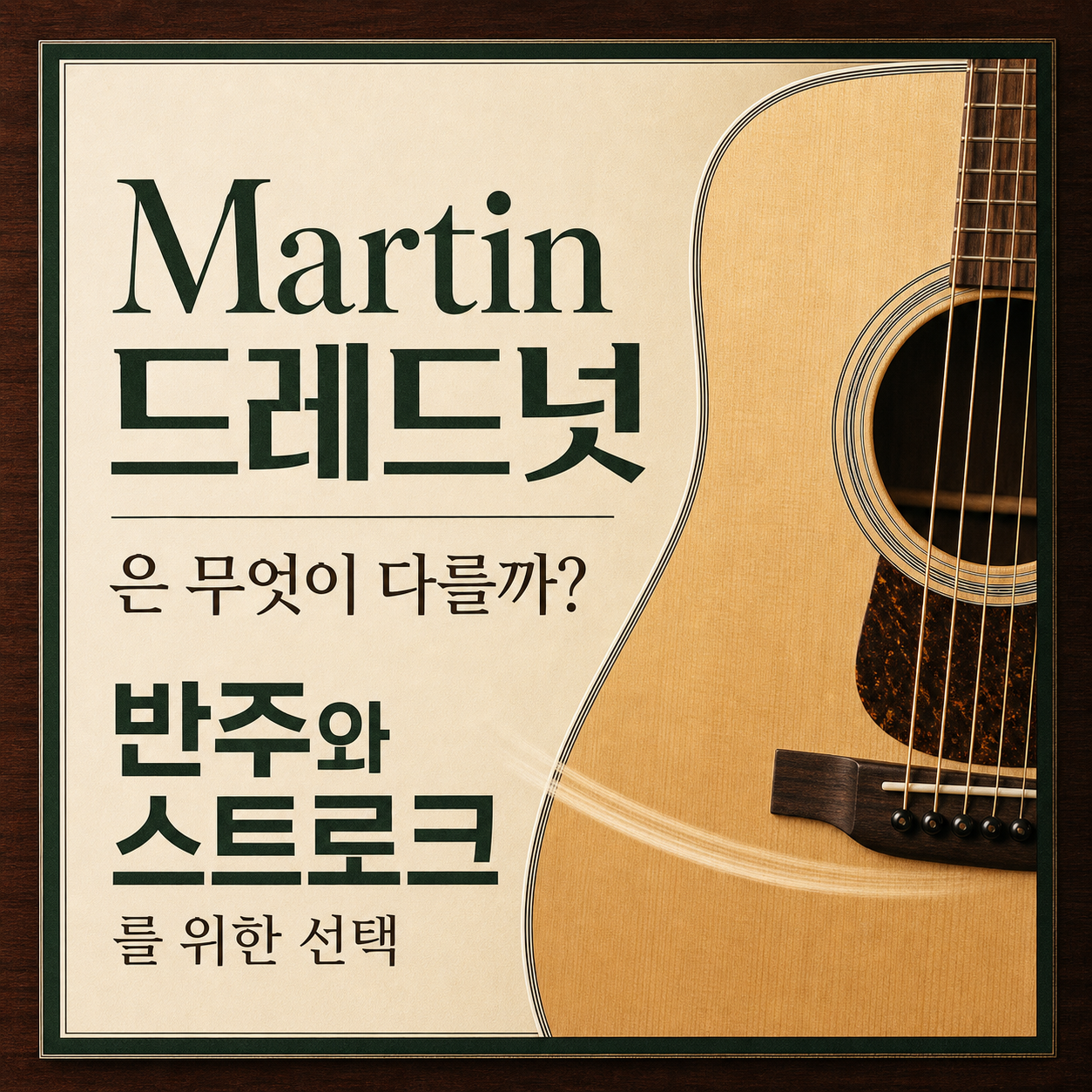
Across Martin's dreadnought lineup, wood pairing and bracing — not sheer volume — decide how the bass holds together under a hard strum.
Martin dreadnoughts get summed up as "loud," but what actually matters for rhythm playing isn't volume — it's whether the bass stays controlled instead of turning to mush under a hard strum. The X Series' HPL, the 15 Series' all-mahogany build, and the Standard Series' spruce-and-rosewood combination each produce a different bass character inside the same dreadnought body.
How we picked
- Whether the wood pairing spreads the bass wide or keeps it tight and focused
- How the bracing handles dynamics under a hard strum
- Whether having (or not having) a pickup fits your actual playing environment — practice room versus stage
- Whether details like nut width and body shape match your rhythm style
This list starts from real playing scenarios — bluegrass flatpicking, backing a vocalist, dropped tunings — then checks wood pairing and bracing across twelve models. On a starter budget, compare the X and Retro line at #1 through #4 first; for bass-heavy rhythm, compare the rosewood models at #9 through #11. Read this by how naturally each guitar takes your dynamics, not by how loud it can get.
Martin D-X1E

Martin D-X2E

Martin D-10E Retro

Martin D-10E Retro Sapele
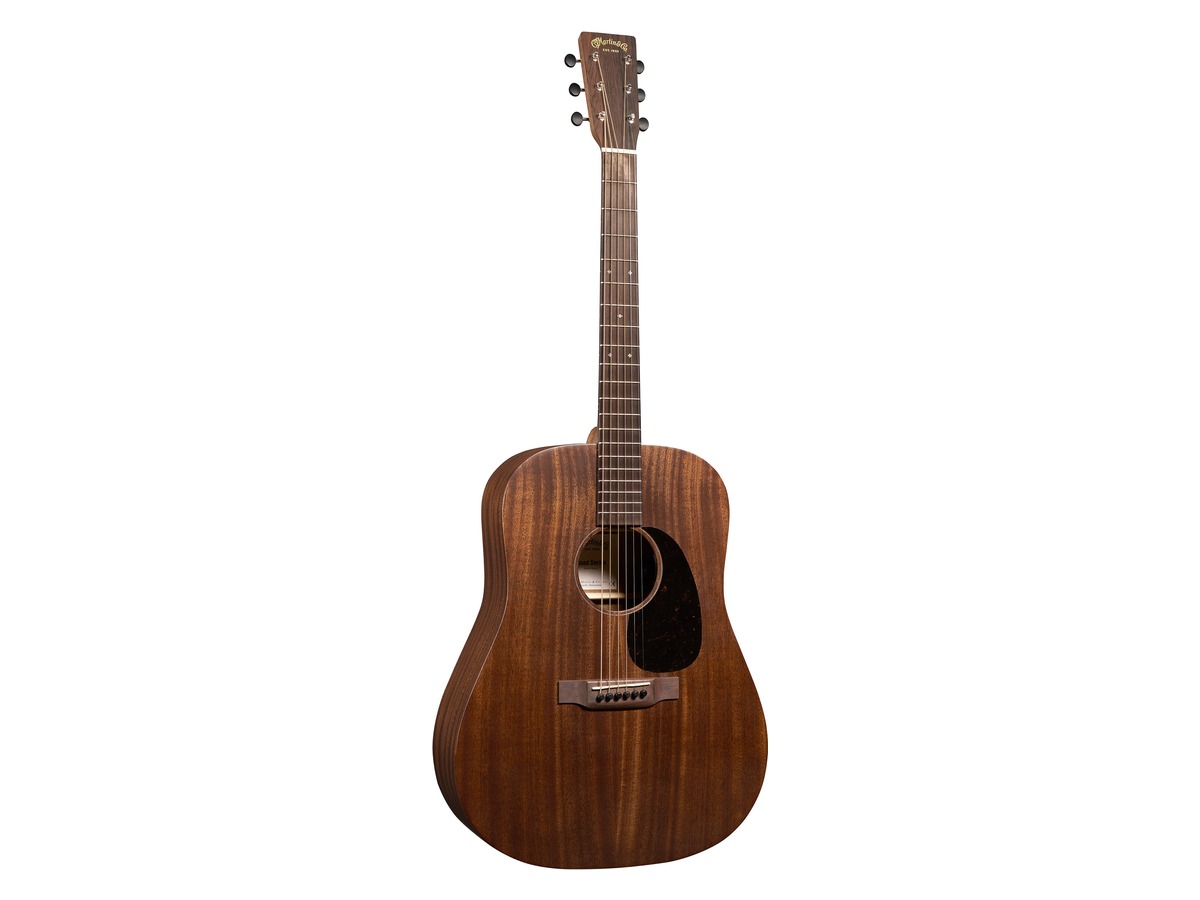
Martin D-15M

Martin D-16E

Martin D-17

Martin D-18

Martin D-28
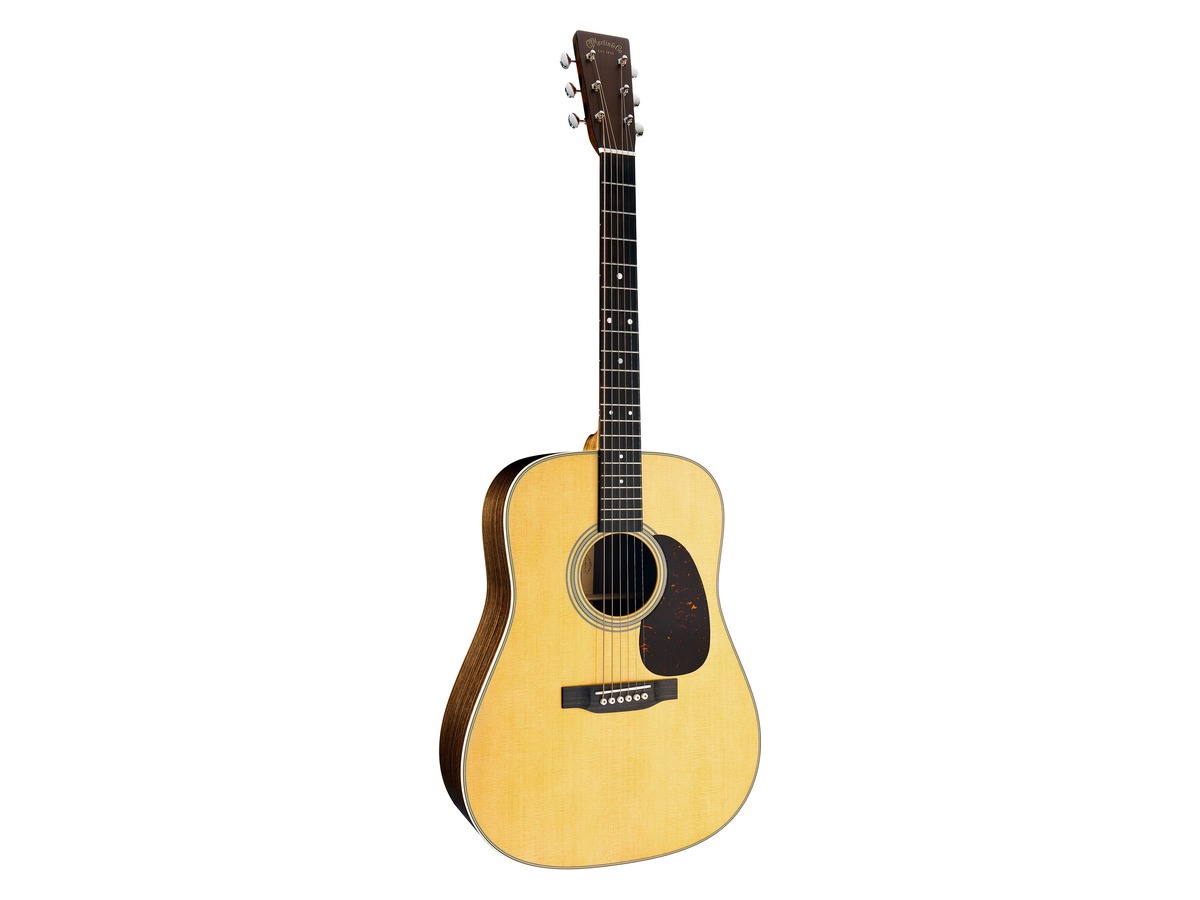
Martin HD-28

Martin D-35

Martin Super D-18

How to choose
Need a pickup on a starter budget? Start with #1 D-X1E and #2 D-X2E — their HPL construction also holds up better against humidity and temperature swings. Want a pure acoustic response with a focused midrange? Compare the mahogany-based #5 D-15M, #7 D-17, and #8 D-18. Want bass that fills out under bluegrass rhythm or a dropped tuning? Try #9 D-28 first, and if you also want faster dynamic response, the scalloped bracing on #10 HD-28 is worth trying. When comparing, don't stop at the wood — check bracing and nut width too, since those are what actually predict how a guitar feels under your hand.
Specs here are current as of August 2026 and the brand can adjust its lineup later, so confirm the latest details through official channels before buying.
Frequently asked questions
Does rosewood always give a dreadnought more bass?
Generally, rosewood spreads bass and overtones wider than mahogany, but bracing and top voicing can change how much of that difference you actually feel. D-28 and HD-28 share the same wood but different bracing, which changes response speed — so wood alone doesn't tell the whole story.
Are dreadnoughts without a pickup unsuitable for rhythm playing?
Not at all. In a practice room, an acoustic session, or any gig where you can mic the guitar, the pure acoustic response can actually work better for rhythm. If you need to plug into a PA regularly, look at pickup-equipped models like the D-X series or D-16E first.
Besides wood, what else should I check when choosing a dreadnought?
Nut width, bracing, and body shape (including exceptions like the Super D) all affect how the rhythm actually feels in your hands. These specs reflect the brand's official listing as of August 2026 and the lineup can shift later, so check the latest details before buying.
I'm worried about humidity and temperature changes — which model handles that better?
The D-X1E and D-X2E, built with HPL (high-pressure laminate) back and sides, are less sensitive to humidity and temperature swings than solid wood, making them a lower-stress choice for daily rhythm use. The trade-off is that the bass can feel a bit less dense than solid rosewood or mahogany.
Does nut width actually matter for rhythm playing?
A narrower nut makes chord fretting and fast strumming easier, while a wider one favors fingerstyle and precise fretting. The D-15M is the narrowest here at 1 11/16 inches, while the D-17 and D-18 sit at the standard 1 3/4 inches — check which width matches how you actually play.
Get new lists before anyone else
Once a week — only the new lists worth your time.
No spam · unsubscribe in one click
You may also like

Chasing Low B: Where 5-String Active Basses Actually Differ
Low-B pitch stability, active EQ boost headroom, and neck width and scale are what actually separate five-string basses.

From Practice Room to Band Stage: A First Bass You Won't Outgrow
From Squier to Yamaha and Ibanez, here are 10 beginner basses picked with neck and pickup choices that won't force a second purchase later.

000 or OM: Let Your Fingers Decide
Despite sharing the same waisted Auditorium shape, Martin's 000 defaults to a shorter scale and the OM to a longer one, a real difference in tension, string spacing, and chord reach.

Plug-In Ready: How Martin's Stage Guitars Split by Pickup System
For Martin's stage-ready line, the onboard pickup system matters more for live performance than whether the body has a cutaway.