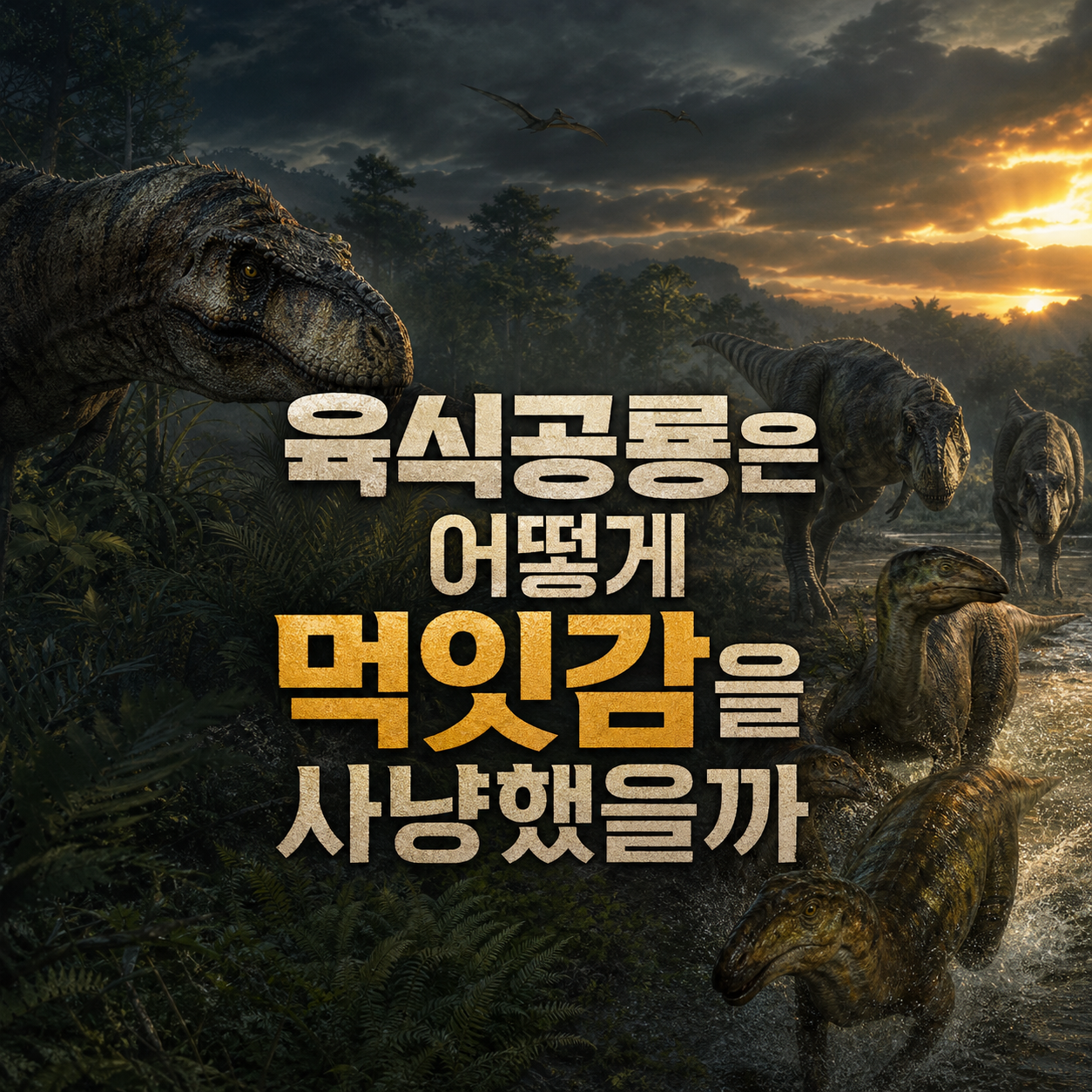
How carnivorous dinosaurs hunted is a careful reconstruction from fossil evidence such as tooth shape, claw structure, and bite marks, not from observed behavior.
How carnivorous dinosaurs hunted can only be worked out from bones and traces. The chase scenes in movies mix in plenty of imagination; what actually survives is tooth shape and wear, where jaw muscles attached, claw and forelimb joints, bite marks in prey bones, and stomach contents. This list picks ten species whose physical evidence is relatively clear and looks at what each structure really supports about their hunting.
No single tooth or claw settles a hunting style. Smell, prey size, terrain, speed, injury risk, and scavenging all matter, and juveniles of a species may have chased different prey than adults. Behaviors like pack hunting or ambush are hard to prove from fossils, so interpretations split.
Order and how to read it
- Entries with more direct evidence come first; species leaning on inference sit later.
- Each entry separates confirmed anatomy from researchers' inferences.
- For an easy start, read ranks 1 to 4; for the debates, begin at rank 5.
Tyrannosaurus

Allosaurus

Deinonychus

The Velociraptor–Protoceratops "fighting dinosaurs" fossil

Spinosaurus

Baryonyx

Carnotaurus

Giganotosaurus

Dilophosaurus

Majungasaurus

How to read this list
If you are new to the topic, start with ranks 1 and 4, where bite marks and the fighting fossil give the clearest evidence. To see how hunting and scavenging blur together, read ranks 1 and 10 side by side and notice what bite marks can and cannot tell you. For water-edge predators, try ranks 5 and 6; for running and tooth shape, ranks 7 and 8 are good starting points.
Research on dinosaur behavior shifts whenever new fossils or analysis methods appear. This list reflects the mainstream view and open hypotheses at the time of research, so check official museum or academic sources for the latest findings.
Frequently asked questions
Did carnivorous dinosaurs really hunt in packs?
Finds of several individuals in one rock layer keep the idea of group living alive. That alone does not prove organized pack hunting, though. Pack hunting by Deinonychus or Giganotosaurus is best treated as one interpretation among several.
How can bite marks tell you how a dinosaur hunted?
Matching a mark's depth, spacing, and direction against tooth fossils suggests which species bit and how hard. But most marks record feeding, so it is hard to tell hunting from scavenging. The Majungasaurus case shows one mark can support several readings.
Is it settled that Spinosaurus was a strong swimmer?
No. Its long, narrow jaw and conical teeth support the idea that it used prey in or near water. Without a complete skeleton, though, its real swimming ability and how it moved on land remain debated among researchers.
What does the Velociraptor and Protoceratops fossil show?
Found in Mongolia, it shows the two animals locked together when they were buried, a direct look at the moment of a clash. It is still one scene, so it does not represent how the species usually interacted or who tended to win.
Did Dilophosaurus really spit venom like in the movie?
No. The flaring frill and venom spit are inventions with no support in the fossils. What the skeleton does show is a pair of crests, serrated teeth, and forelimbs suited to grabbing.
Did big predators hunt or scavenge?
Many, like Tyrannosaurus, probably did both. Bite marks usually record feeding, which makes hunting hard to separate from scavenging, so researchers avoid picking just one.
Get new lists before anyone else
Once a week — only the new lists worth your time.
No spam · unsubscribe in one click
You may also like

Dinosaurs Weren't Born Big: Ten Fossil Clues to How They Grew Up
Young dinosaurs were not scaled-down adults: growth rings in bone and embryos in eggs show body proportions and gait changing a great deal with age.
Dinosaur LEGO Sets: The Real Play Starts With Spotting What the Movies Made Up
Observe the joints, compare species from different habitats, and sort movie invention from fossil-backed fact, and dinosaur LEGO role-play becomes real science.
How Scientists Actually Monitor a Volcano Before It Erupts
No single signal predicts an eruption; scientists layer seismic, deformation, gas, thermal, satellite, and geologic data instead, and here's how each method works.

Long Before Flight — Ten Fossil Clues That Link Dinosaurs to Birds
From feathers and the wishbone to brooding posture, ten pieces of fossil evidence traced in the order they appeared on the path to modern birds.