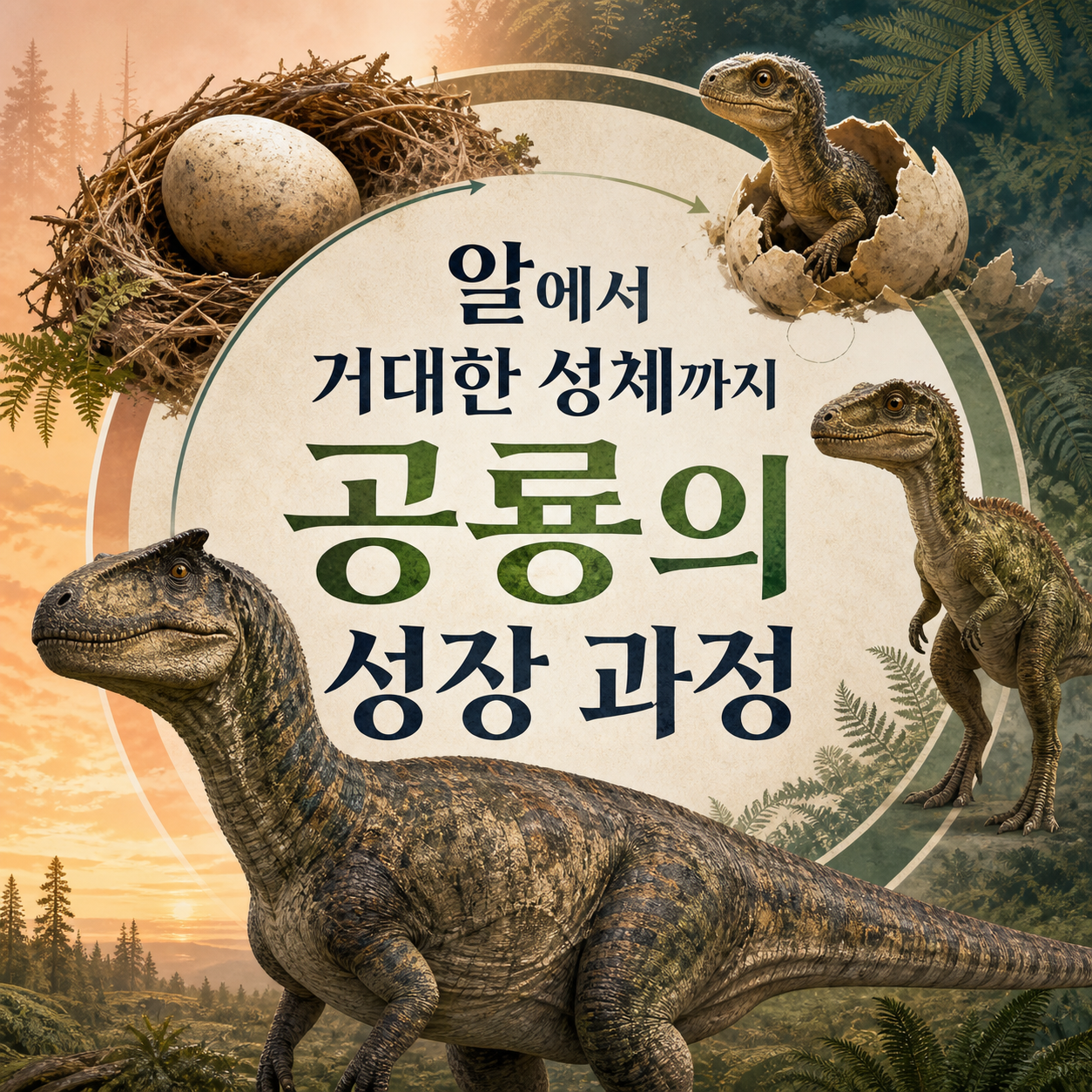
Young dinosaurs were not scaled-down adults: growth rings in bone and embryos in eggs show body proportions and gait changing a great deal with age.
How did dinosaurs grow from hatchling to adult? In short, babies were not shrunken copies of the adults: many species changed body proportions, gait, and head ornaments dramatically as they aged. We tend to picture only the giant adult, but when growth rings in bone, skeletons of different ages, and embryos curled inside eggs are laid side by side, a very different life story appears.
This list follows ten cases in roughly life-cycle order: the spurts when growth exploded, changing horns and frills, the shift from four legs to two, and the point at which reproduction became possible. The ranking reflects how rich the specimen record is and how clearly the change shows up in it.
How to read it
- Growth rings resemble tree rings, but season and health can shift them, so exact ages are hard to pin down.
- Look at the growth curve many specimens draw, not at a single number.
- New fossils and new methods can change the story.
Tyrannosaurus's Growth Spurt

Triceratops's Changing Horns and Frill

Maiasaura Hatchling Leg Development

Psittacosaurus's Shifting Body Proportions

Mussaurus's Changing Gait

Protoceratops's Growing Frill

Plateosaurus's Flexible Growth

Sauropods: Tiny Eggs, Enormous Adults

Hadrosaur Bone Beds Spanning Every Age

Theropod Medullary Bone and Sexual Maturity

How to choose where to start
If you are new to dinosaur growth, begin with No. 1, Tyrannosaurus, and No. 2, Triceratops, where plentiful specimens make the changes clearest. For nest care and reproduction, go to No. 3, Maiasaura, and No. 10, the theropods; for stories about changing gait, Nos. 4 and 5 fit best.
Whichever case you read, weigh the number of specimens, how ages were assigned, and individual variation. Clues in bone leave room for interpretation, so carrying one species' conclusion over to another is easy to get wrong. The information here reflects the time of research and may change, so check recent papers and official sources such as museums before citing it.
Frequently asked questions
Did young dinosaurs look very different from adults?
It varied by species, but many changed a great deal as they grew, such as Triceratops horn direction and frill shape or Tyrannosaurus leg proportions. That is why juveniles are hard to treat as simple scaled-down adults.
How do scientists figure out a dinosaur's age?
The most common method is slicing bone thin and counting growth rings that look like tree rings. Season and health can shift those rings, so the result is read as an approximate range rather than an exact age.
Could baby dinosaurs walk as soon as they hatched?
Species like Maiasaura appear to have stayed in the nest for a while under parental care. Mussaurus, by contrast, seems to have changed its whole gait as it grew. It is more accurate to say different species used different strategies.
How old were dinosaurs when they could reproduce?
Tissue resembling the medullary bone birds make in egg-laying season has been reported in some theropod fossils, so reproduction before full size is suggested. It is hard to separate from diseased tissue, so it is read cautiously.
How did sauropods get so huge from such small eggs?
Eggs and hatchlings were tiny next to the adults, but bone tissue analysis suggests a long growth period and rapid weight gain closed the gap. One species' growth rate cannot be applied to all sauropods.
Are hadrosaur bone beds proof of herd life?
Bones of many ages piled in one place are a clue to group living. Yet floods or other burial processes could also have gathered unrelated groups, so that possibility must be weighed too.
Get new lists before anyone else
Once a week — only the new lists worth your time.
No spam · unsubscribe in one click
You may also like
Dinosaur LEGO Sets: The Real Play Starts With Spotting What the Movies Made Up
Observe the joints, compare species from different habitats, and sort movie invention from fossil-backed fact, and dinosaur LEGO role-play becomes real science.

How Scientists Actually Monitor a Volcano Before It Erupts
No single signal predicts an eruption; scientists layer seismic, deformation, gas, thermal, satellite, and geologic data instead, and here's how each method works.

Long Before Flight — Ten Fossil Clues That Link Dinosaurs to Birds
From feathers and the wishbone to brooding posture, ten pieces of fossil evidence traced in the order they appeared on the path to modern birds.
Ten Fossils That Made Paleontologists Rewrite the Dinosaur Textbook
From gray reptile to feathered, social, possibly semi-aquatic animal: ten fossil finds that forced scientists to redraw dinosaurs, and what each one actually proved.