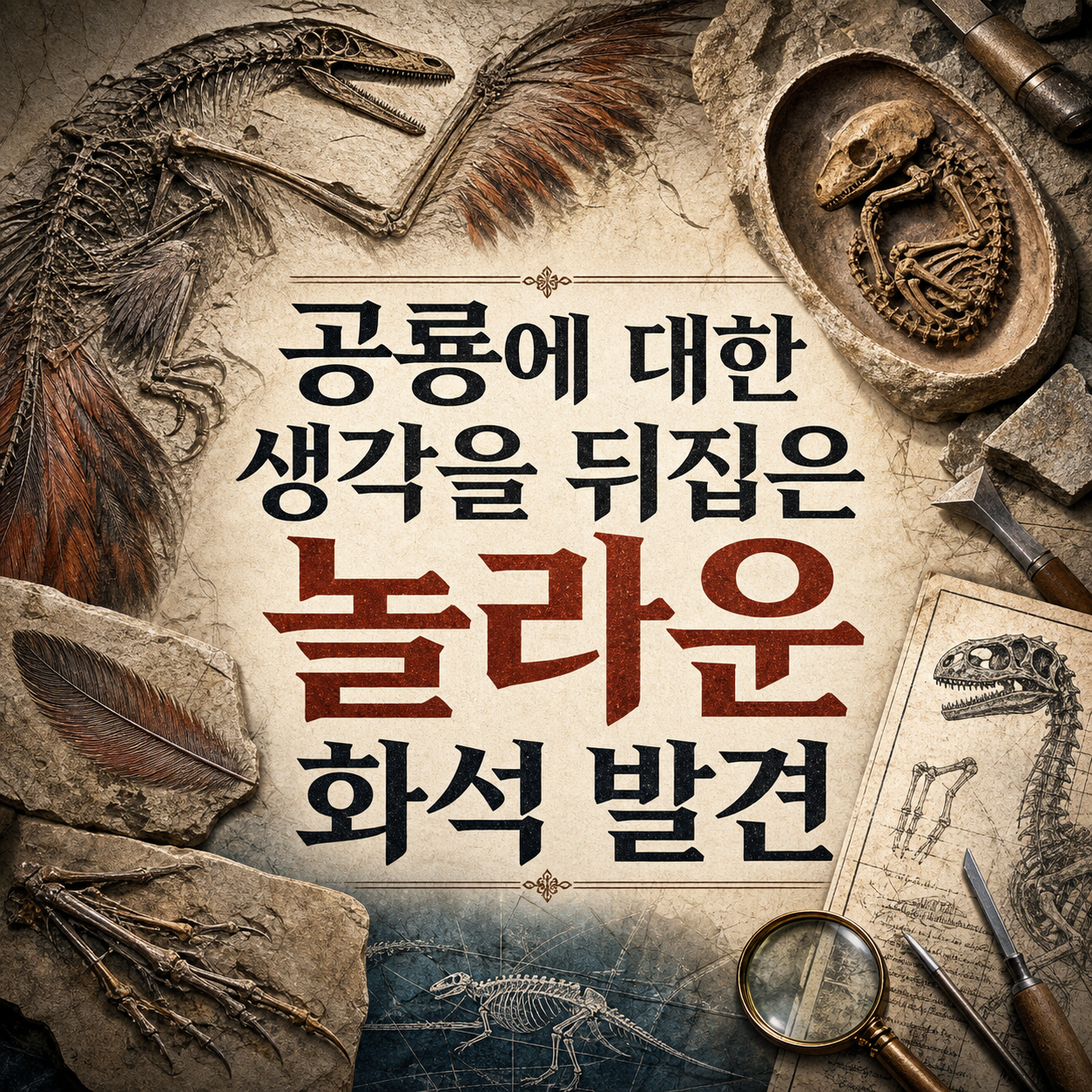
From gray reptile to feathered, social, possibly semi-aquatic animal: ten fossil finds that forced scientists to redraw dinosaurs, and what each one actually proved.
Dinosaurs are still pictured by a lot of people as solitary, cold-blooded, uniformly gray animals. That picture has been dismantled piece by piece over the past 50 years, with each new fossil forcing another revision. Feather impressions turned up. Evidence of parents guarding nests turned up. Even the reconstruction of species that had been studied for decades got redrawn more than once. The trouble is that these shifts usually get flattened into a single headline, and what gets lost is which fossil actually proved what, and which old assumption it overturned.
How these were chosen
- Did the discovery change how dinosaurs are pictured, in appearance, behavior, or ecology
- Is it backed by an actual fossil find, not speculation
- Some entries held up under later research, others were later shown to be wrong and publicly corrected, both kinds are included
They're ordered roughly by how far-reaching the discovery was. If you care about how dinosaurs actually looked, start with #1 and #9. If behavior and social life interest you more, #3 and #7 are the ones to read first. If you want to see science catch and correct its own mistake, start with #4.
Sinosauropteryx (1996, Liaoning, China)

Soft tissue in a juvenile tyrannosaur (2011, Alberta, Canada)

Maiasaura nesting site (1978, Montana, USA)

The Archaeoraptor fraud (1998-2002)

The real size of Velociraptor (1999, Montana)

Microraptor (2000, China)

Protoceratops nesting fossils (multiple finds, Mongolia)

Spinosaurus reconstruction revised (2014-2020, Egypt and follow-up analysis)

Pigment traces in amber-preserved feathers (2010s)

Reassessing brain size (2020s)

How to read this list
If you're curious about how dinosaurs actually looked, start with Sinosauropteryx at #1, where feathers first became hard evidence, and the amber pigment finds at #9, where color entered the picture for the first time. For group behavior and parental care, the Maiasaura nesting site at #3 and the Protoceratops nests at #7 are the core evidence. If you want to see how science corrects itself in public, the Archaeoraptor fraud at #4 is the one to read.
When you look at any single fossil, it helps to check where and when it was found, and exactly which older assumption it overturned. That matters especially for entries like Spinosaurus at #8 and the brain-size studies at #10, where the debate is still ongoing rather than settled.
Everything here reflects the state of research at the time it was written. Dinosaur science keeps moving as new fossils turn up, so for the latest interpretation, check current academic sources or museum publications rather than treating any single reconstruction as final.
Frequently asked questions
What's the actual evidence that dinosaurs had feathers?
The Sinosauropteryx fossil from Liaoning, China preserves clear impressions of feather-like structures on the skin. Before it was published in 1996, some scientists suspected a bird-dinosaur link, but there was no direct evidence for it. Since then, more feathered dinosaur fossils have continued turning up.
How do scientists know how fast a dinosaur could move?
By analyzing bone structure, the angles of leg joints, and trackway fossils together. Researchers also compare that data against the muscle mechanics of living birds and reptiles. Whenever a skeletal reconstruction changes, the movement estimates get recalculated with computer simulations.
Is dinosaur science still changing today?
Yes, new fossils turn up every year, and analytical techniques keep improving alongside them. Protein analysis that was impossible a decade ago is now being attempted on some specimens. It remains a genuinely active field where conclusions get revised, not a settled body of facts.
Is it certain that Spinosaurus lived in water?
Additional fossil material from Egypt and a re-analysis of existing specimens built up evidence supporting a semi-aquatic lifestyle, which led to a major revision of its reconstruction. That interpretation isn't universally accepted within the field, though, so it isn't a fully settled conclusion.
Were there other dinosaur fossil fraud cases besides Archaeoraptor?
This list covers only the Archaeoraptor case. It involved fossil fragments from different specimens glued together and presented as a 'missing link,' later exposed through careful analysis. It's frequently cited as the textbook example of why fossil verification procedures matter.
Does a smaller dinosaur brain mean it was less intelligent?
Studies keep finding smaller-than-expected brain cavities in some dinosaurs, but that doesn't by itself settle how intelligent they were. This remains an active research area where conclusions get revised often, so it's too early to draw a firm conclusion from any single study.
Get new lists before anyone else
Once a week — only the new lists worth your time.
No spam · unsubscribe in one click
You may also like

How Scientists Actually Monitor a Volcano Before It Erupts
No single signal predicts an eruption; scientists layer seismic, deformation, gas, thermal, satellite, and geologic data instead, and here's how each method works.

Long Before Flight — Ten Fossil Clues That Link Dinosaurs to Birds
From feathers and the wishbone to brooding posture, ten pieces of fossil evidence traced in the order they appeared on the path to modern birds.

Dinosaur Play Turns Into Science the Moment You Ask 'What Do You Think Happens?'
Ten at-home dinosaur science activities ranked by age fit and how many materials you need, built around predicting, observing, and explaining.
What the Fossils Actually Prove: 10 Dinosaur Nests and the Case for Parental Care
Nesting posture, egg arrangement, and eggshell pores separate what fossils confirm from what remains inference about dinosaur parenting.