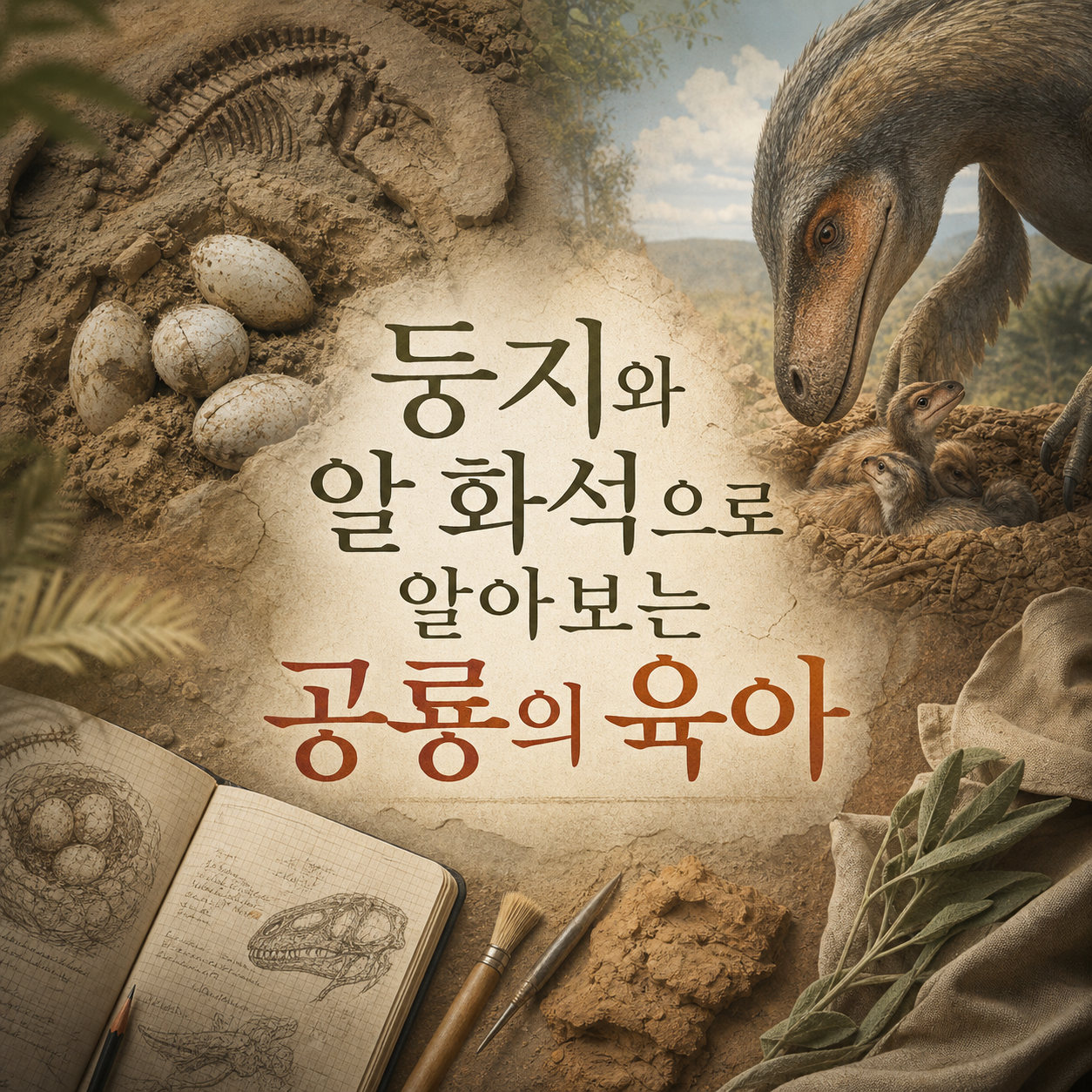
Nesting posture, egg arrangement, and eggshell pores separate what fossils confirm from what remains inference about dinosaur parenting.
Whether dinosaurs actually cared for their hatchlings, or simply laid eggs and left, is a question no single fossil can settle. An adult crouched over a nest, eggs arranged in a tidy ring, the same nesting ground reused year after year, all of these hint at parental behavior, but that circumstantial picture doesn't automatically add up to weeks of sustained care.
This list walks through ten fossil finds, sorting out what each one solidly demonstrates from what's still contested. The same fossil can be reinterpreted as new analysis methods emerge, cross-sectioning eggshell, thin-sectioning bone tissue, and as new specimens turn up from different regions, so treat these readings as current best guesses rather than settled fact.
How this list was built
- Is there directly observable fossil evidence, like brooding posture or nest layout
- Has the interpretation been confirmed across multiple specimens or studies
- Can confirmed fact be clearly separated from inference
- Does it include well-known cases that are often misunderstood
Ranking follows how direct the evidence is and how much scientific consensus backs it. Behaviors closest to what modern birds do, like brooding posture, come first; finds open to wider interpretation, like mega-nesting grounds or group fossils, come later. If you're curious about one species specifically, jump to its rank; if you want to understand what fossils can prove in principle, start with #9 on eggshell pores.
Oviraptorid brooding posture

Citipati's ring-shaped nest

Maiasaura nesting colony

Troodontid eggs and adult skeleton

Titanosaur mega-nesting grounds

Mussaurus colonial nesting

Massospondylus embryos and nest

Lufengosaurus embryo growth record

Dinosaur eggshell pores

Juvenile Psittacosaurus group fossil

What the fossils confirm, and what they don't
Oviraptorids and troodontids left behind both brooding postures and adult skeletons positioned right beside their nests, making them the strongest case for bird-like parental care among dinosaurs. Maiasaura, Mussaurus, and Psittacosaurus, on the other hand, show multiple growth stages clustered together, evidence of group living and reused breeding grounds, but not proof of exactly how many days or weeks parents stuck around.
Titanosaur mega-nesting grounds are better read as evidence of nest-site selection than parental care, and eggshell pores sit in between, offering supporting clues about whether eggs were covered or left exposed.
Paleontology is a field where a single new fossil or a new analysis technique can overturn existing interpretations. Treat the order and readings in this list as current, not final, they may well look different a few years from now.
Frequently asked questions
How do we know dinosaurs cared for their young?
Researchers piece it together from multiple lines of evidence: adults found brooding atop nests, nesting sites with young of varying ages found together, and bone structures suggesting how mobile hatchlings were right after birth. Since there's no direct behavioral record, these remain informed inferences rather than certainties.
Did all dinosaurs incubate their eggs by sitting on them?
No. Some groups, like oviraptorids and troodontids, have confirmed brooding postures, while others, like titanosaurs, are known mainly from large nesting grounds, so whether they covered eggs or left them exposed has to be judged separately using evidence like eggshell pore structure.
Where can I learn more about dinosaur parenting research?
Natural history museum dinosaur exhibits, paleontology paper summaries, and documentaries tend to cover current research in accessible form. Since interpretations of specific fossils can shift, it's worth checking the publication date of whatever source you're reading.
What do the tiny pores on dinosaur eggshells tell us?
They're traces of the channels gases passed through, and their size and density offer clues about whether eggs were covered in soil or plants to manage humidity, or left exposed and brooded directly. Pore count alone can't settle nest structure, it has to be weighed alongside sediment context.
Why do theropods and sauropods get described as having different parenting styles?
Theropods like oviraptorids and troodontids have left behind direct fossil evidence of brooding posture, while massive sauropods like titanosaurs were likely too heavy to sit on eggs, so their parental behavior is inferred more indirectly, from mega-nesting grounds and eggshell pore structure. The two kinds of evidence aren't really comparable on the same terms.
Get new lists before anyone else
Once a week — only the new lists worth your time.
No spam · unsubscribe in one click
You may also like

How Scientists Actually Monitor a Volcano Before It Erupts
No single signal predicts an eruption; scientists layer seismic, deformation, gas, thermal, satellite, and geologic data instead, and here's how each method works.
Long Before Flight — Ten Fossil Clues That Link Dinosaurs to Birds
From feathers and the wishbone to brooding posture, ten pieces of fossil evidence traced in the order they appeared on the path to modern birds.
Ten Fossils That Made Paleontologists Rewrite the Dinosaur Textbook
From gray reptile to feathered, social, possibly semi-aquatic animal: ten fossil finds that forced scientists to redraw dinosaurs, and what each one actually proved.
Dinosaur Play Turns Into Science the Moment You Ask 'What Do You Think Happens?'
Ten at-home dinosaur science activities ranked by age fit and how many materials you need, built around predicting, observing, and explaining.