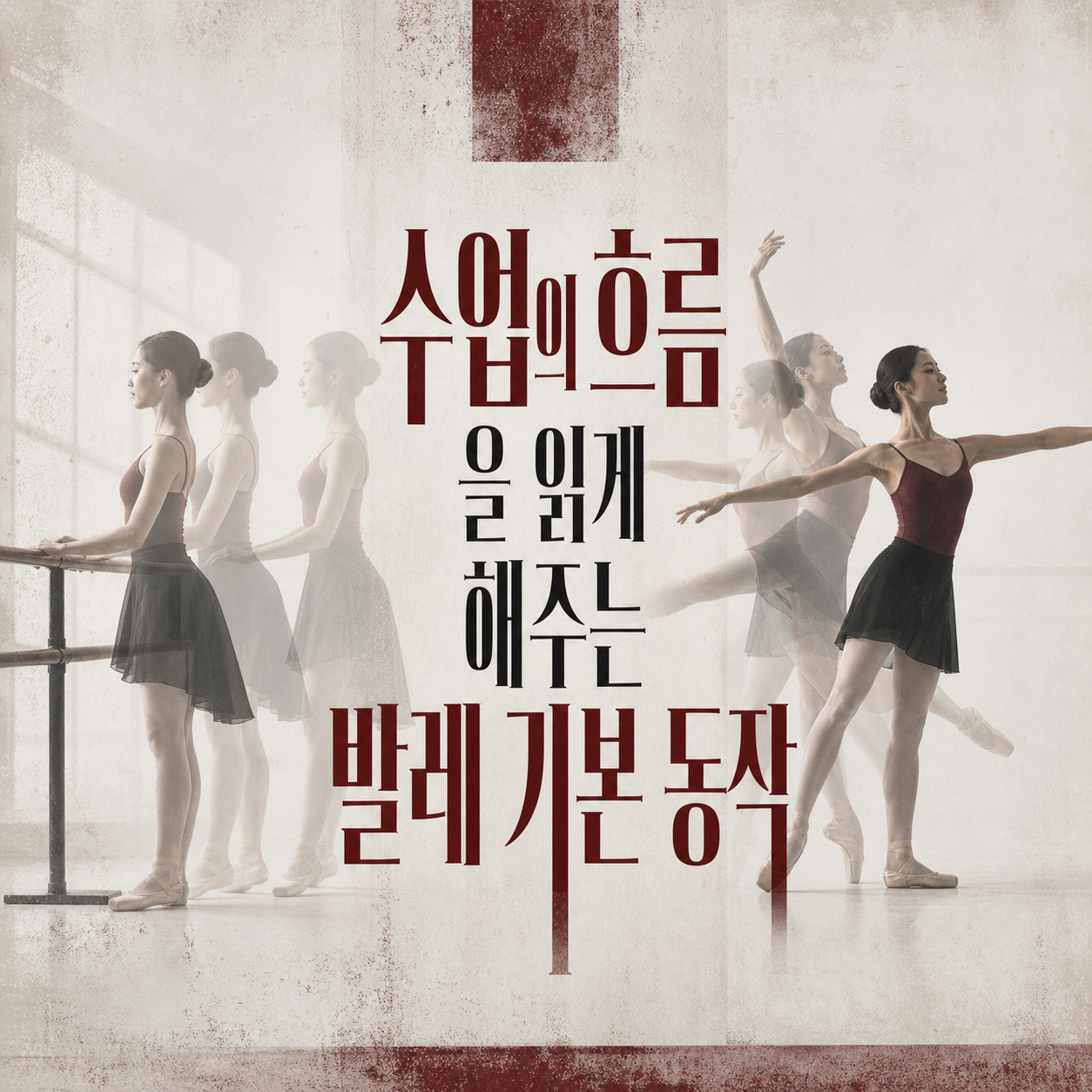
Instead of translating French cues word by word, understanding which joint each movement uses and why makes a beginner's first ballet class far easier to follow.
When a ballet teacher calls out "plié" or "tendu," a beginner's first instinct is to scramble for a translation. But the word itself matters less than which joint the movement uses and in which direction. Once you understand why the knee bends or why the toes push out, you stop repeating the same correction, and your body starts responding before your brain catches up.
This list walks through the ten movements you'll actually meet, roughly in the order a beginner class introduces them — term, purpose, and the joint to watch. Don't rush to memorize; check each one against a video and stay inside your own range of motion. In ballet, a safe, aligned position always comes before an elegant-looking one.
The five positions of the feet
Arm positions
Plié
Tendu
Dégagé
Rond de jambe
Fondu
Frappé
Relevé
Port de bras
Feel the Movement Before You Chase the Sequence
Early on, spend time in #1 and #2 to build basic alignment into your body, then repeat the plié–tendu–dégagé sequence in #3 through #5 to develop control in the feet and legs. Balance- and expression-heavy movements like #9 and #10 only start to feel natural once that foundation is in place.
The order and explanations here reflect a typical beginner class, but the sequence and emphasis can vary by studio and teacher — always follow your own instructor's guidance in an actual class.
Frequently asked questions
How should I respond when a teacher corrects my form mid-class?
A correction isn't criticism — it's a signal to move to the next stage. Don't force an instant fix on the spot; instead, remember the position and the feeling the teacher guided you into. Checking yourself in the mirror afterward and revisiting that same spot repeatedly sticks better than straining to nail it in the moment.
Do I need to memorize every French term to follow class?
No. Knowing the 10 to 15 basic terms covered in this list is enough to follow most of what happens in a beginner class. Spend the first few weeks picking up the words you hear most often, and if something's unclear, just ask the teacher during a break — that's faster than trying to memorize alone.
Do I need perfect height and form right from the start?
No. Alignment between your pelvis and spine matters more than how high you lift your leg. Lifting a leg high with an unstable ankle throws your form off and can lead to injury over time. Gradually widening your range class by class is the normal pace, and that's enough.
Do I need to stretch before starting ballet?
Yes — many movements suddenly push joints toward the edge of their range, so a light warm-up focused on the ankles, hips, and shoulders matters. Reaching or turning cold raises the risk of injury noticeably.
Can I learn in bare feet or sneakers instead of ballet shoes?
You can follow a beginner class without dedicated ballet shoes, but grip and arch support differ enough that if you plan to keep going, it's worth asking your teacher what shoe fits your level.
Get new lists before anyone else
Once a week — only the new lists worth your time.
No spam · unsubscribe in one click
You may also like
Before You Buy a Leotard: What to Sort Out First for Ballet Class
From the first booking question to the notes you jot down after class, doing things in order takes the edge off day one.
Your Pirouette Is Breaking at One Specific Point -- Find It
A diagnostic checklist that isolates exactly where a wobbly turn goes wrong, from prep plié to the final spot, in ten steps you can test one at a time.
Your Feet Do the Holding, Not Your Hand: The Logic Behind 10 Ballet Barre Moves
Barre work isn't about memorizing steps -- it's training to carry the alignment found in one move straight into the next, from plie to port de bras.
Ten Classic Ballets: The One Scene to Watch, Not the Plot to Memorize
You don't need to memorize the plot of ten classic ballets — just the one scene in each that makes the room go still. Here's how to watch them that way.