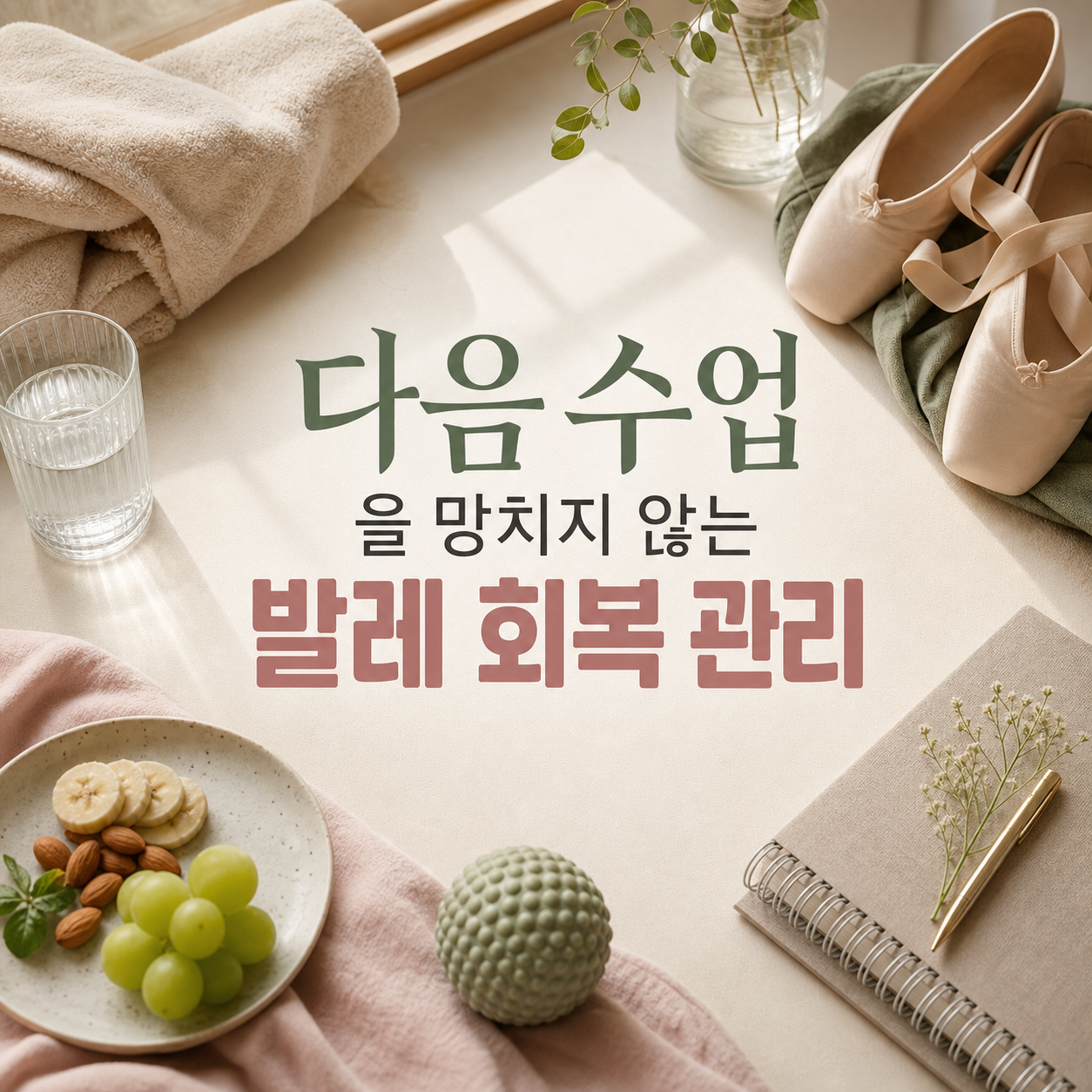
Recovery after ballet class is its own process, from calming your breath to hydration, food, foot care, sleep, and tracking pain, and persistent pain means seeing a professional.
What to do after ballet class is surprisingly rarely spelled out. The short answer: calming your breathing, getting fluids and food in, and checking your feet are all part of the same class. People tend to get stuck on how hard to stretch, what to do about a blister, and how much pain is okay to train through.
This list doesn't treat recovery as one stretch or ice-pack fix. We split it into steps to check in the order you'd actually go through them after class. Ranks 1 to 10 are not a ranking of importance. They follow the real sequence of the evening.
How to read it
- Right after class, start with 1 to 4. Once you're home, look at 5 to 8.
- Use it to notice which step you tend to skip. You don't need to follow every one perfectly.
- If pain affects everyday movement, don't cover it with training. Go straight to step 10.
This is general self-care information and does not replace diagnosis or treatment.
Calm Down With Breath and Walking

Rehydrate

Eat After Class
Change Out of Wet Practice Clothes

Check Your Feet and Toenails
Air Out Your Shoes

Do Light Range-of-Motion Work

Keep a Class Notebook

Protect Your Sleep Schedule

Get Persistent Pain Checked

How to choose
If you're new, learning just the immediate routine in steps 1 to 4 is plenty. If your feet often hurt, start with 5 and 6. If the same mistake keeps showing up in class, begin the notebook in step 8. If you often take late classes, the sleep schedule in step 9 comes first.
The comparison point is simple: is your body sending a signal of ordinary tiredness, or repeated discomfort in the same spot? If it's the latter, don't try to loosen it up as in step 7. Move to step 10 and pass the details to your teacher and a doctor.
This is general information and varies from person to person, so check with a professional when needed, and confirm product guidance through official channels before buying.
Frequently asked questions
What should I do first after ballet class?
The first step is to walk slowly rather than sit right away, letting your breathing and heart rate settle. Then sip fluids over time and move on to a meal and a foot check. If dizziness keeps going, don't push it. Tell your teacher.
Is it okay to stretch hard right after class?
It's best to avoid forcing a stretch by pressing on a joint or bouncing. Move within a comfortable range just to check for tension, and save more intense stretching for sessions guided by a teacher.
How should I take care of a blister on my foot?
The priority is not popping it forcefully or pressing the same spot again. Comparing both feet and noting which spots keep turning red gives you something concrete to adjust in your shoes or gear. If pain is significant or you see swelling or warmth, have a medical professional check it.
If something hurts after class, should I skip the next one?
Mild soreness is usually something to watch. But pain that affects everyday movement like stairs or walking is a signal to tell your teacher first and consult a doctor, rather than pushing through another class.
How do I dry ballet shoes after class?
When you get home, take them out of the bag, remove the insoles, and dry them in a shaded, ventilated spot. Holding them close to a heater or hair dryer can damage the material. Care guidance differs by maker, so check with the store you bought from.
How much water should I drink after class?
The amount you need varies a lot with body size, class intensity, and weather. Sip over time instead of chugging, and use thirst and urine color as rough guides. If a health condition limits your fluids, follow your doctor's advice.
Get new lists before anyone else
Once a week — only the new lists worth your time.
No spam · unsubscribe in one click
You may also like
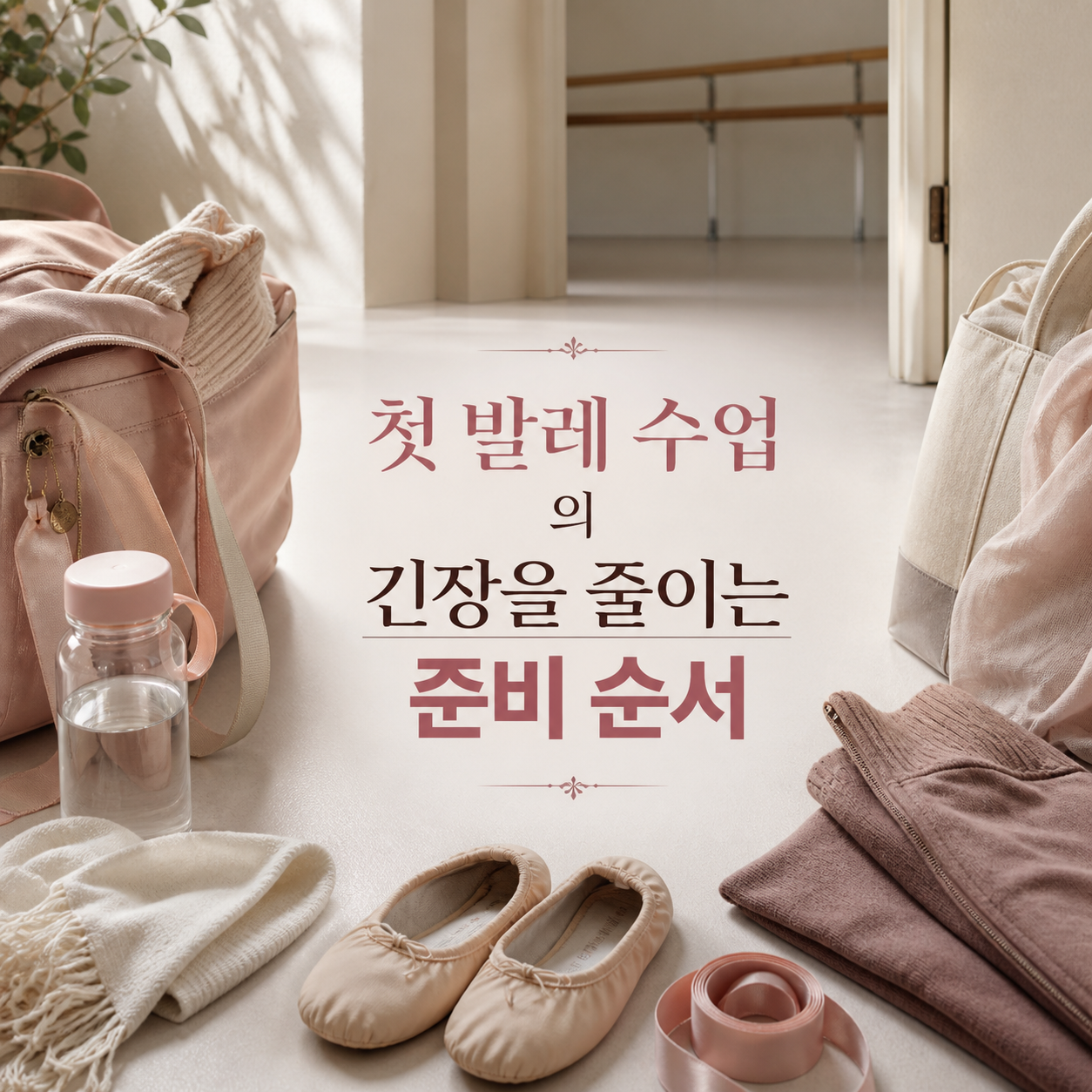
Before You Buy a Leotard: What to Sort Out First for Ballet Class
From the first booking question to the notes you jot down after class, doing things in order takes the edge off day one.
Your Pirouette Is Breaking at One Specific Point -- Find It
A diagnostic checklist that isolates exactly where a wobbly turn goes wrong, from prep plié to the final spot, in ten steps you can test one at a time.
Your Feet Do the Holding, Not Your Hand: The Logic Behind 10 Ballet Barre Moves
Barre work isn't about memorizing steps -- it's training to carry the alignment found in one move straight into the next, from plie to port de bras.

Ten Classic Ballets: The One Scene to Watch, Not the Plot to Memorize
You don't need to memorize the plot of ten classic ballets — just the one scene in each that makes the room go still. Here's how to watch them that way.