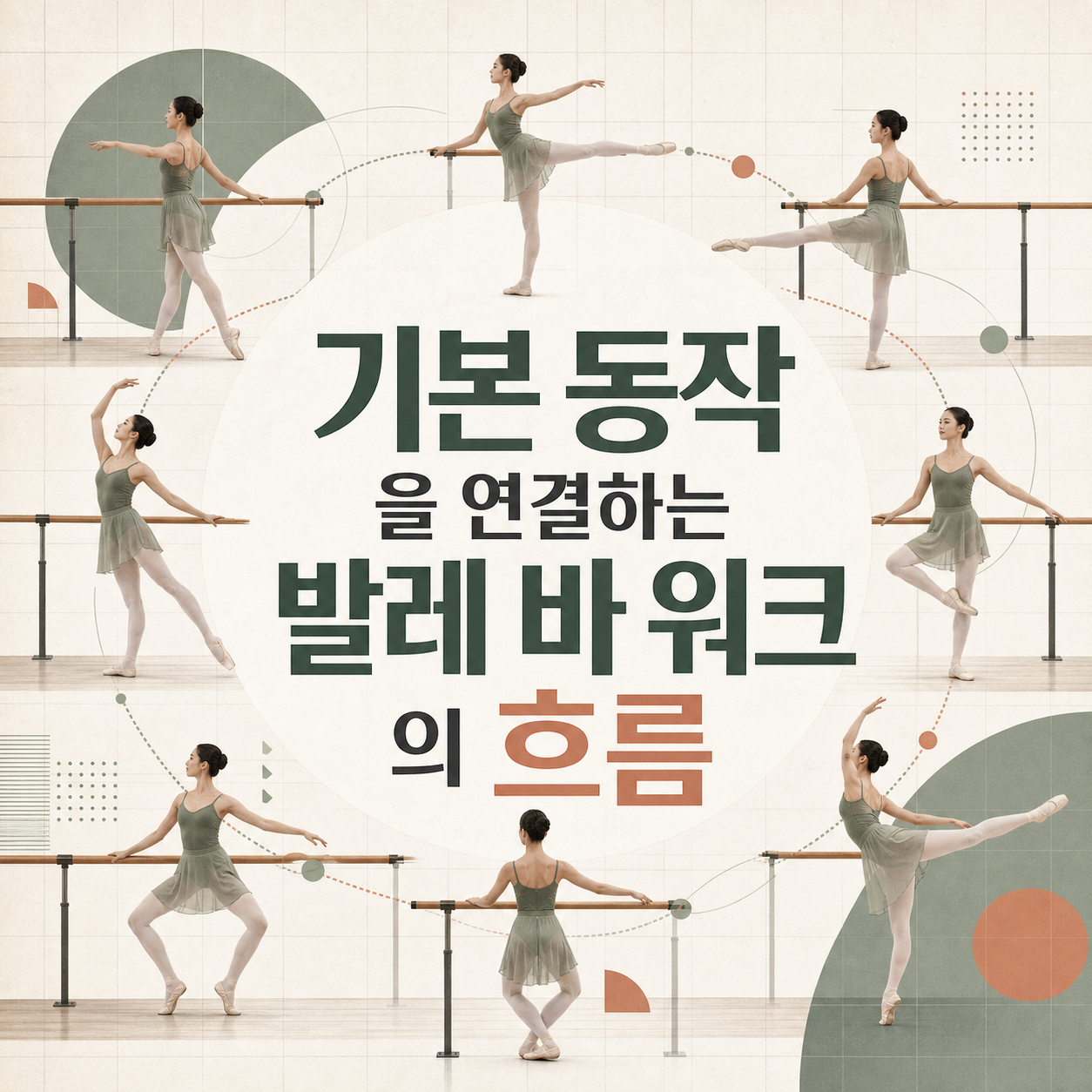
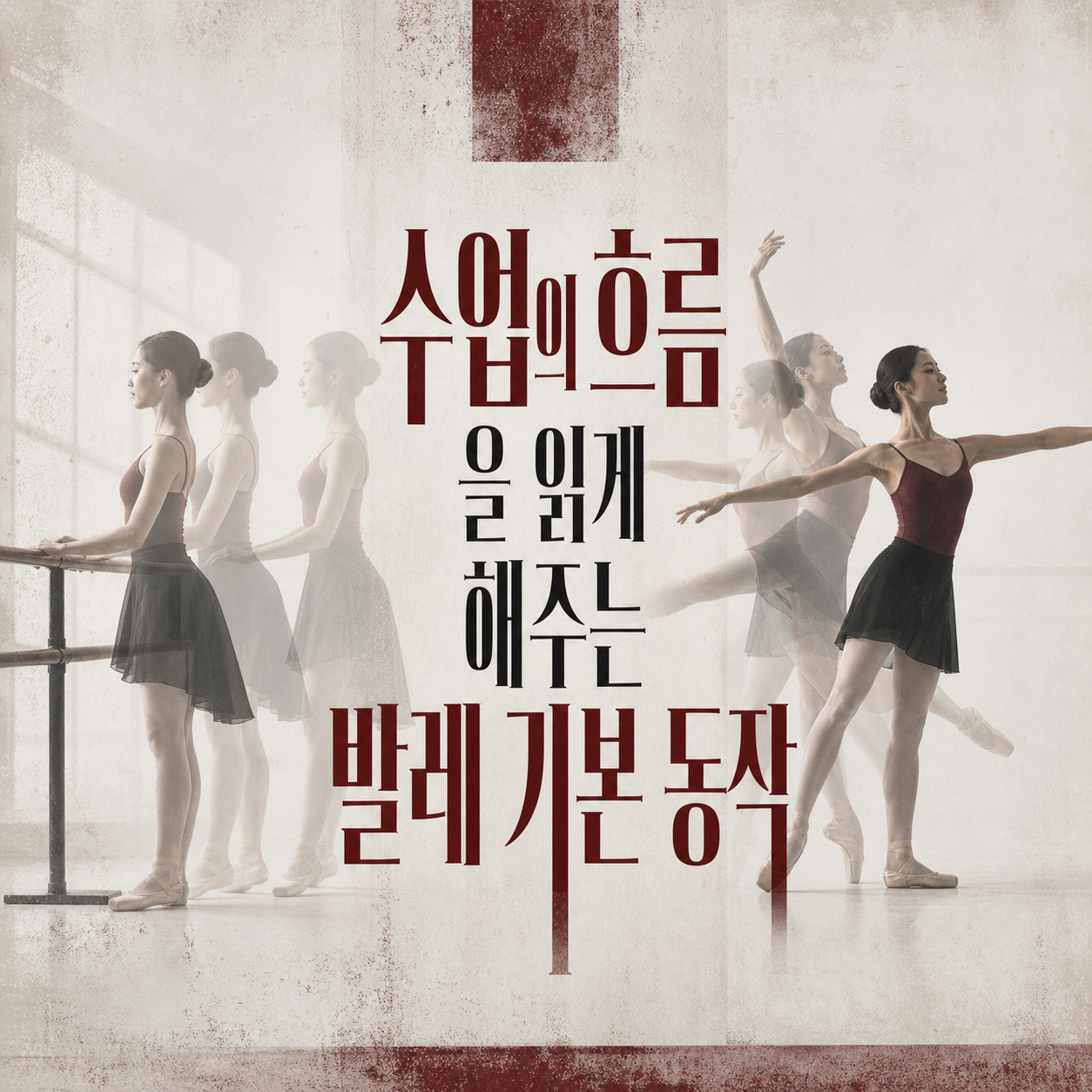
Barre work isn't about memorizing steps -- it's training to carry the alignment found in one move straight into the next, from plie to port de bras.
Treat barre work as just a set of names to memorize and you're only seeing half of it. It's really a flow -- carrying the alignment you find in one move directly into the next. Learn to press the floor and let the knee track the toes in plié, and that same feeling carries straight into tendu and dégagé. Once you understand why class moves from small movements to big ones in that specific order, you realize the sequence isn't arbitrary -- it's logic.
The barre is something your hand touches, not something your weight leans on. The hand is a light reference point for checking balance; the actual support is split between the sole of the foot, the leg, and the torso. Rather than chasing leg height in the mirror, noticing the exact moment the pelvis rotates, the supporting knee locks, or the shoulder creeps up will serve you far better once you move into centre work.
How to use this list
- If you're new to barre, take your time building the alignment in items 1-4.
- If your balance wobbles often, revisit items 5 and 9.
- If you're heading into centre work soon, pay close attention to item 10.
Plié — Checking Alignment

Tendu — Pressing the Floor

Dégagé — A Quick, Clean Separation

Rond de Jambe — Reading the Hip Joint

Fondu — Matching Two Legs' Timing
Frappé — Sharpening the Foot

Adagio — Sustaining Balance

Grand Battement — Controlling the Force

Relevé — Building an Ankle Axis

Port de Bras at the Barre — Bringing It Together

How to carry it forward
If you're just starting barre work, the priority is carrying the alignment you find in plié (item 1) straight through items 2-3. If your balance wobbles often, revisiting fondu (item 5) and relevé (item 9) helps more than pushing harder on grand battement (item 8).
When comparing your progress, watch how stable your supporting leg and pelvis are before you watch how high your leg goes. If you're still leaning weight into your hand, fixing that habit first is the fastest route into centre work.
This reflects a typical classical ballet barre sequence; exact order and coaching cues vary by studio and teacher, so always follow your own instructor's guidance first.
Frequently asked questions
Is it okay to let my hand carry weight at the barre?
The barre is a reference point for checking balance, not a handle meant to bear weight. Lean on it out of habit and you'll find yourself suddenly unstable the moment you move to the centre -- keep the hand light and let the leg and torso do the actual supporting, and centre work will feel far steadier.
What if my balance keeps wobbling during barre work?
Shrink the size of the movement, slow down, and re-check the relationship between the supporting foot and the pelvis. Gripping the barre harder isn't a real fix and actually works against your centre prep -- pushing through instability risks locking in bad habits, so it's better to reset the basics within a range you can control.
I'm trying hard to lift my leg higher -- why isn't it working?
Leg height is a result, not a goal in itself. Once the supporting foot is stable, the pelvis is aligned, and the weight is distributed correctly, the leg rises on its own. Chasing height alone while tilting the pelvis or losing the supporting axis gets you the shape without the technique -- prioritize alignment and a genuinely stable height follows.
Why does barre work always start with plié?
Because plié is the reference move for checking alignment between the foot, knee, and pelvis. The alignment you find there becomes the starting point for tendu, dégagé, and everything after -- rush through it and the moves that follow tend to drift out of line.
Is it okay to force more turnout than feels natural?
It's not recommended. Turnout beyond your natural range strains the knees and ankles and tends to break alignment rather than support it, undermining balance in the process. Keeping alignment precise within your current range is the safer path to long-term progress without injury.
How does barre work connect to centre practice?
Port de bras, the closing move at the barre, layers the arms, upper body, and gaze on top of the leg sequence -- that's exactly the coordination centre work demands. The less you lean on the barre with your hand, the smoother that transition into the centre becomes.
Get new lists before anyone else
Once a week — only the new lists worth your time.
No spam · unsubscribe in one click
You may also like
Before You Buy a Leotard: What to Sort Out First for Ballet Class
From the first booking question to the notes you jot down after class, doing things in order takes the edge off day one.
Your Pirouette Is Breaking at One Specific Point -- Find It
A diagnostic checklist that isolates exactly where a wobbly turn goes wrong, from prep plié to the final spot, in ten steps you can test one at a time.

Ten Classic Ballets: The One Scene to Watch, Not the Plot to Memorize
You don't need to memorize the plot of ten classic ballets — just the one scene in each that makes the room go still. Here's how to watch them that way.
Don't Memorize the Words — Feel the Joint First: 10 Ballet Basics for Beginners
Instead of translating French cues word by word, understanding which joint each movement uses and why makes a beginner's first ballet class far easier to follow.