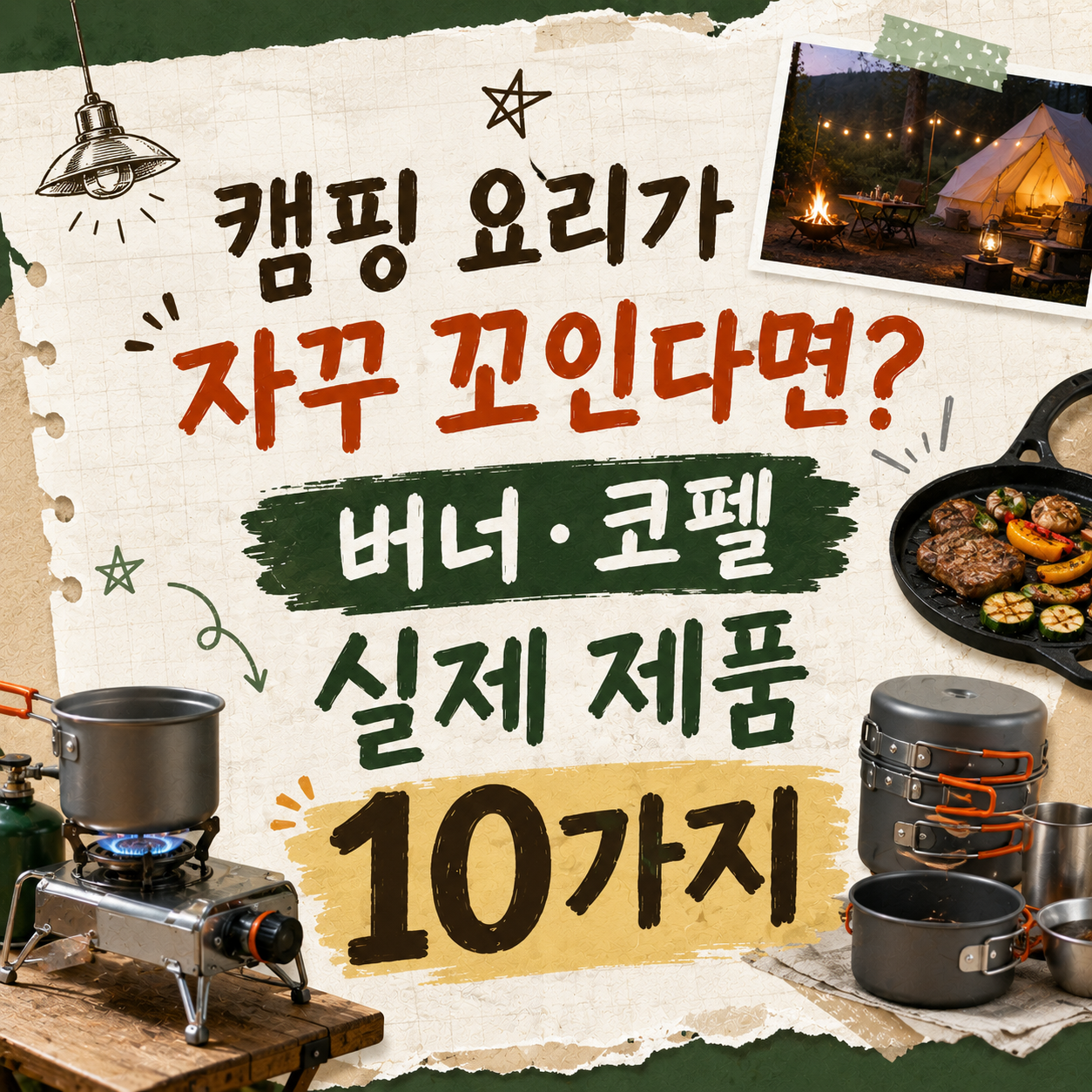
Pick a camp stove or cookset by party size, menu, fuel, and burner layout first, and flame output second, to avoid most cooking mishaps.
The right camp stove or cookset starts with who you are feeding and what you are cooking, not flame output. Dinner in camp usually goes sideways because the burner and cookware do not match your headcount or menu. This list gathers ten real products, from table burners and backpacking stoves to cooksets and pans, so you can compare those combinations side by side.
The order reflects how clear each product's use is and how easy it is to use safely, rather than raw heat. Whatever you pick, never run a stove in an enclosed space, and never cover the gas canister with oversized cookware.
Selection criteria
- Party size and menu: boiling water for one, or a family dinner
- Fuel: butane, iso-butane, or alcohol
- Transport: carried by car or on your back
- Safety: clear notes on canister overheating and ventilation
If you drive to camp, start with ranks 1 to 5 and 8 to 10. If you backpack, start with ranks 4, 6, and 7.
Kovea Cube
Kovea Alpine Master 2.0
Snow Peak Home & Camp Burner
SOTO WindMaster Stove
SOTO Regulator Stove ST-310
Trangia 25-3 UL
Snow Peak Trek 900 Titanium
Stanley Adventure Base Camp Cook Set 4
Lodge Blacklock 12 Inch Skillet
GSI Outdoors Pinnacle Camper
How to choose
If you are new to car camping, rank 1 or rank 5 is a safe pick, since either handles grilling and stew on a table. If you only need water boiled fast on a cold winter dawn, look at rank 2, and for a lighter two-person setup, rank 3.
For backpacking, rank 4 holds up in wind, rank 6 is an alcohol set for groups, and rank 7 is light titanium. Steak lovers should look at rank 9, and ranks 8 and 10 suit feeding a family in one go.
Information reflects the time of research and may change, so check official channels before you buy.
Frequently asked questions
What's the difference between butane and iso-butane gas canisters?
Standard butane (CB) canisters are cheap and widely sold in Korea, but pressure and flame strength drop as temperatures fall. Iso-butane holds up better in the cold but costs more and is sold in fewer places. If you camp often in winter, look at iso-gas or a cold-weather stove first.
Can I use a camp stove inside a tent?
No. Running a stove in an enclosed tent or vehicle can let carbon monoxide build up to dangerous levels. Cook in an open, ventilated spot, even if that is the vestibule, and never leave a lit stove unattended.
Should I pick an aluminum, stainless steel, or titanium cookset?
If you cook soups often and weight is not a concern, aluminum with good heat transfer or sturdy stainless steel is a safe choice. For backpacking, titanium is light but tends to form hot spots, so it is better used mostly for boiling water.
Can I put a large griddle or pan on my burner?
Cookware larger than the top plate can trap radiant heat around the gas canister and overheat it. Use a size that fits the burner, do not cover the canister, and check its temperature now and then while cooking.
Which stove is better on windy days?
In this list, the SOTO WindMaster Stove is the example, with a concave head that reduces the effect of wind. Even so, wrapping a windscreen around the gas canister risks overheating, so keep the canister area open.
Is a cast-iron skillet too heavy for camping?
For car camping the weight is rarely a problem, and the pan holds heat well for steak and other thick cuts. It is not suited to backpacking, and you should check that your burner top can support the weight.
Get new lists before anyone else
Once a week — only the new lists worth your time.
No spam · unsubscribe in one click
You may also like
Cold at 3 A.M.? It Might Be the Pad, Not the Bag — 10 Real Sleeping Bags & Mats
Five down bags and five insulated mats compared by comfort rating and R-value, to help you build one sleep system instead of judging a bag alone.
Wet Camping Gear: The Drying Order That Decides How Long It Lasts
Dry your gear by material and in the right order, and mold and rust stop being a recurring camping problem