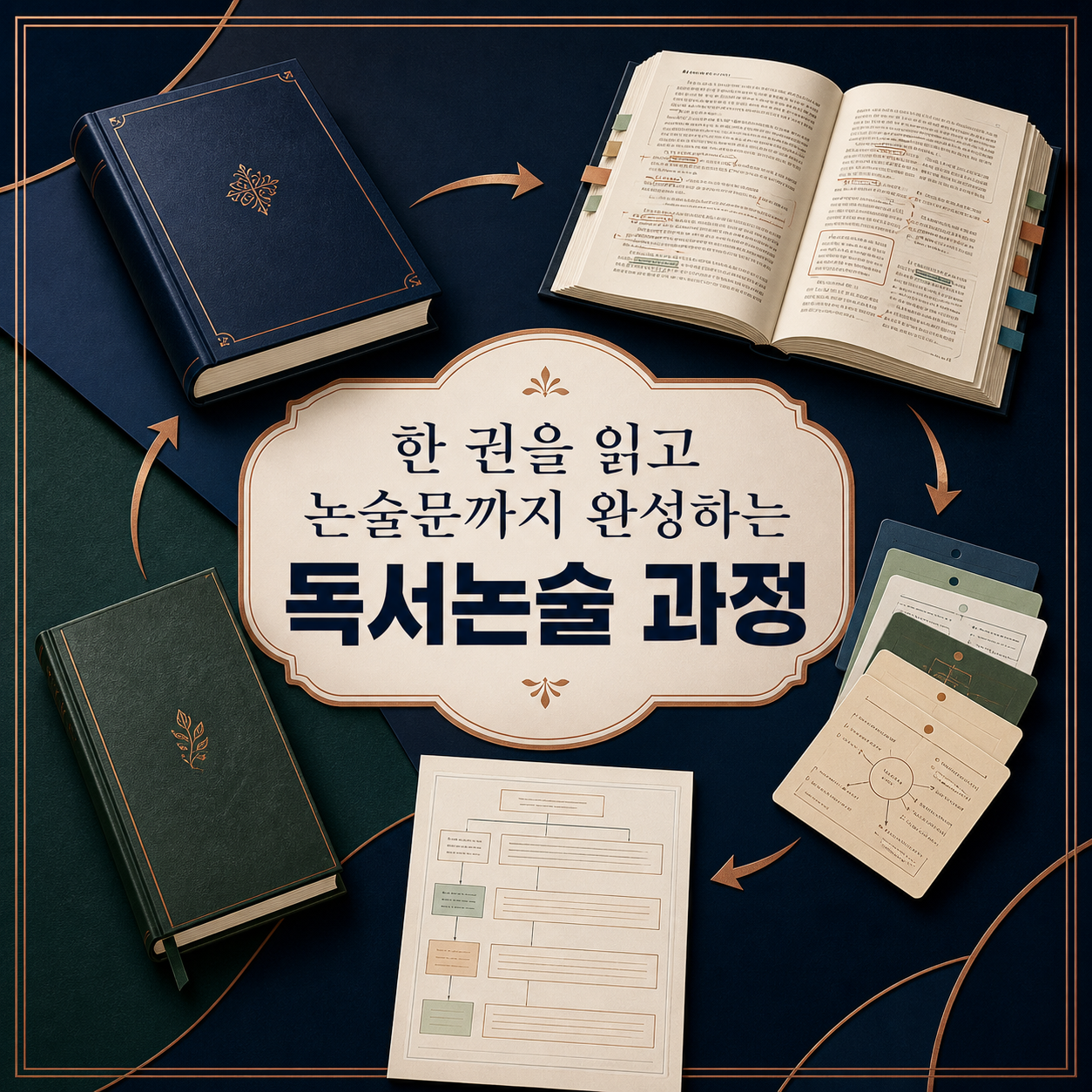
From choosing a book to the final rewrite, following this ten-step flow is how evidence and interpretation actually grow.
A good book for reading-to-essay work isn't the hardest one or the one with the clearest moral — it's one where the reader can generate their own questions and explain competing interpretations with evidence. Turning a single book into a finished essay and a rewrite takes more than confirming the plot; it means going back to examine a character's choices and the conditions of the story itself. This list lays out ten practical steps in order, from choosing a book to anticipating essay topics to finishing a rewrite.
These ten steps aren't ordered by difficulty or length — they follow how reading-to-essay work actually unfolds. Before reading, form questions from the title and cover; while reading, note the scenes and lines where a judgment shifted; and after finishing, rather than asking for a general impression first, ask which choice was hardest to understand or what conditions could have led to a different ending — a claim and its evidence follow naturally from there. Don't treat the book's message as a single correct answer; make a point of checking opposing interpretations too.