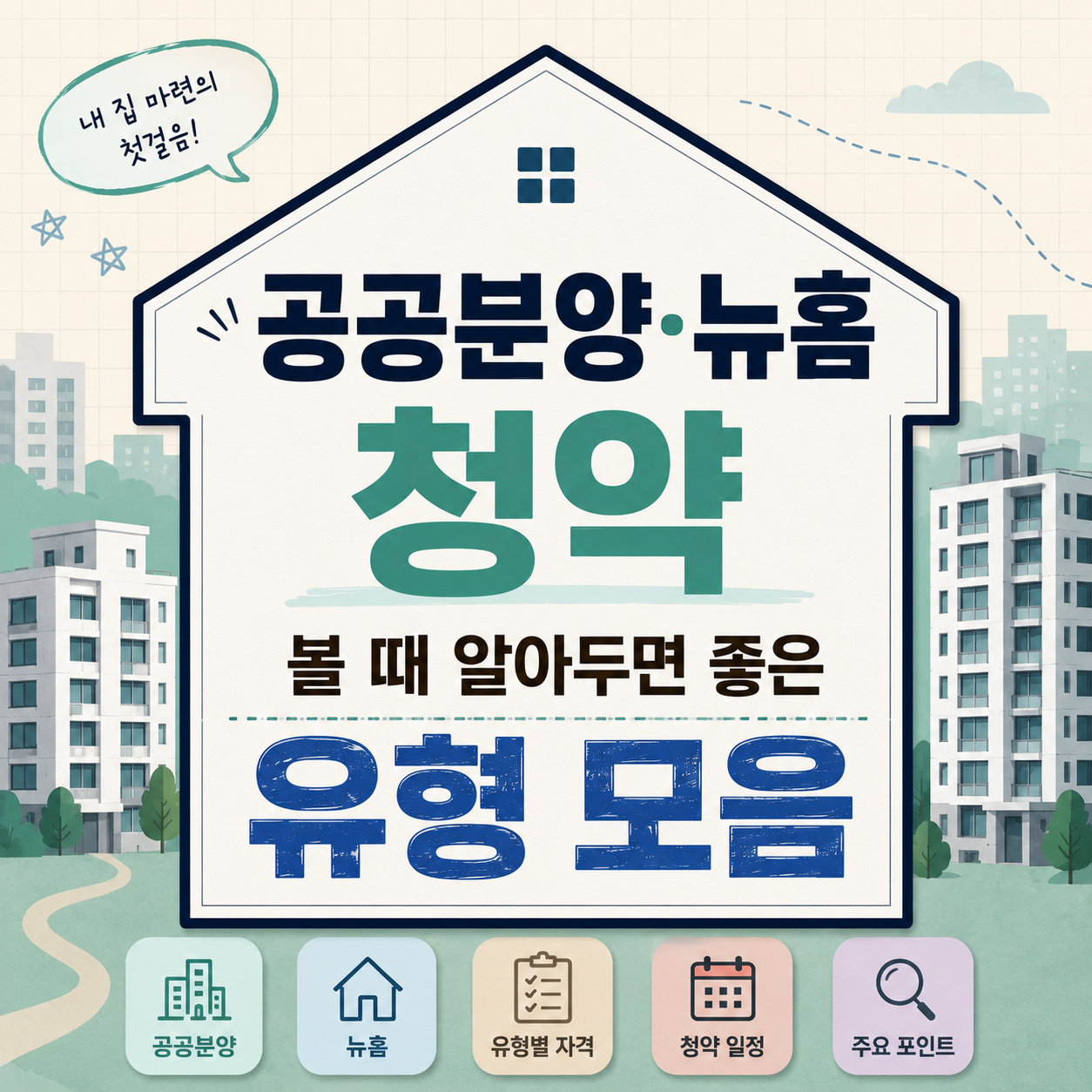
A plain-language guide to Korea's public housing and NewHome subscription types, covering what to verify before applying.
Public housing runs on different rules than private housing, and that trips up first-time applicants at the terminology alone. Income and asset limits often apply together, and deposit history in a subscription account can decide the outcome. NewHome adds another layer, splitting supply into General, Nanoom, and Suntaek types, each with its own conditions.
This list, current as of September 2026, covers eight categories that come up most often, in rough application order. Rules change often here, so confirm final eligibility through Cheongyakhome and the project announcement.
How this list was put together
- Terms follow how Cheongyakhome and LH announcements actually use them.
- For shifting thresholds like income limits, this covers what to check, not exact figures.
Young adults, newlyweds, or first-time buyers should start at #5–6; for a NewHome announcement, start at #2–4.
Public Housing (Gongbun Bunyang)
NewHome General Type
NewHome Nanoom Type
NewHome Suntaek Type
Young Adult Special Supply
Newlywed / First-Time Buyer Special Supply
General Supply Priority
Income and Asset Verification
How to choose
New to subscribing? Start with the basics at #1. Reading a NewHome notice? Compare General, Nanoom, and Suntaek at #2–4 against your budget. Young adult, newlywed, or first-time buyer? Check special-supply rules at #5–6 first.
Under general supply, deposit count at #7 is the key factor. Acceptance isn't final either way — income and asset checks at #8 still have to clear. This reflects the time of research; confirm through Cheongyakhome before applying.
Frequently asked questions
What's the difference between NewHome's Nanoom and Suntaek types?
Nanoom is described as a below-market purchase with a profit-sharing arrangement on future resale, while Suntaek lets you rent for a period before deciding whether to buy. Specific terms vary by project, so review the actual announcement for the unit you're considering.
What if I qualify for both the Young Adult and Newlywed special-supply categories?
Applicants who qualify for both typically compare competition rates, scoring, and income limits across announcements to judge which is more favorable. Eligibility and advantage can shift project by project, so confirming through Cheongyakhome or the housing provider is the safer approach.
Does winning a public housing unit guarantee I can get a loan?
No — this guide can't confirm loan approval or availability for any specific product. Whether you qualify and how much you can borrow depends on income, assets, and repayment capacity, so check directly with a lender and official channels like Cheongyakhome.
Can I apply to both general supply and special supply at once?
Some announcements allow applying to both, but rules on duplicate-win restrictions per household and which categories can be combined vary by project. Always check the eligibility section of the specific announcement before applying.
Why do some applicants fail income and asset verification after winning?
Figures entered at application are closer to self-reported estimates, and a separate verification process checks them against actual income and asset records. Changes in income, assets, or household composition between application and verification can push you over the threshold and result in disqualification.
How long do I need to hold a subscription savings account to have an advantage?
In general supply, a longer account tenure and more payments are generally understood to help, but the exact recognition criteria and minimum requirements vary by region and announcement. Check Cheongyakhome for the precise standard that applies to you.
Get new lists before anyone else
Once a week — only the new lists worth your time.
No spam · unsubscribe in one click
You may also like
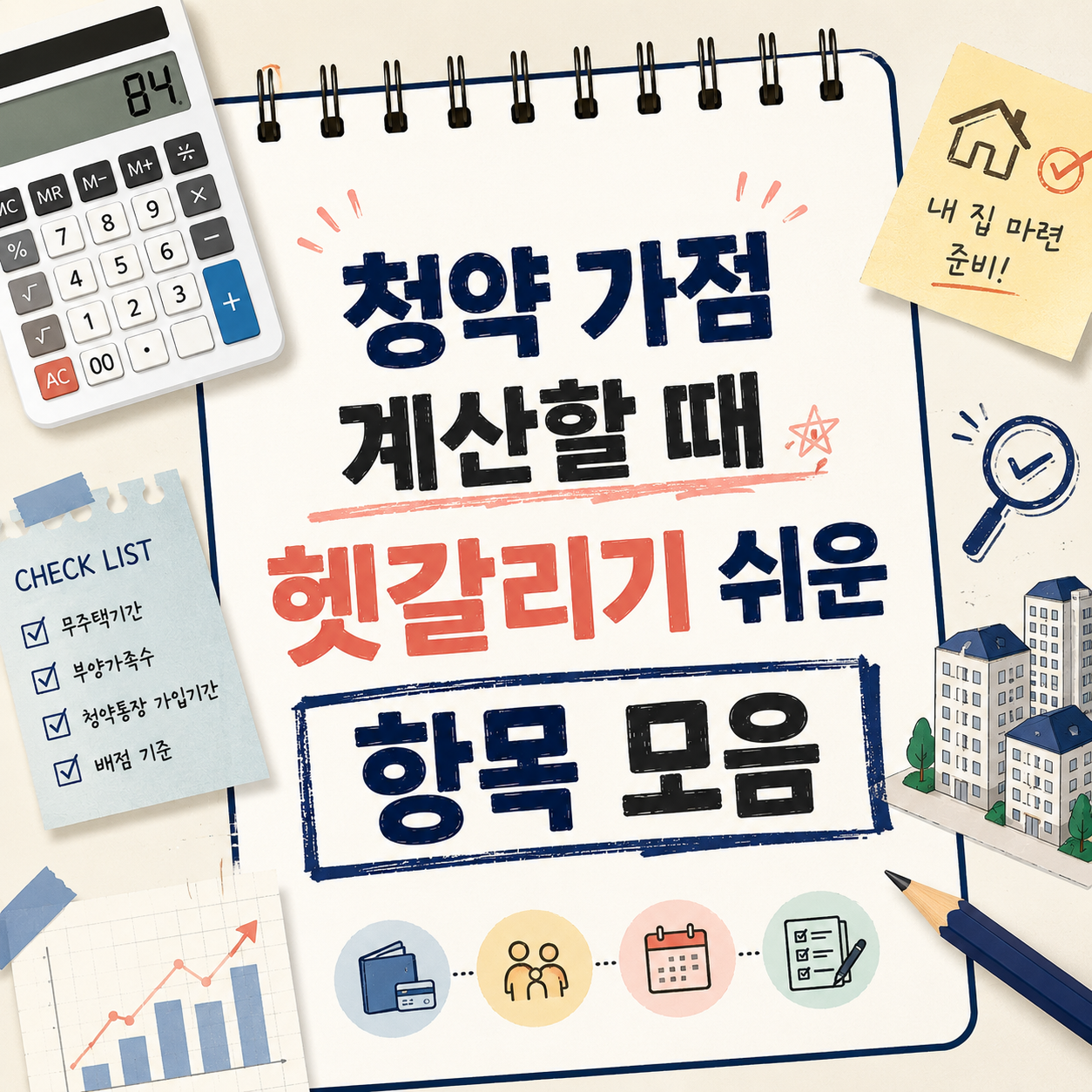
A Checklist for the Confusing Parts of Housing Subscription Scoring
A checklist of the items people commonly miscalculate in housing subscription scoring, including years without a home, dependent count, and subscription account tenure.
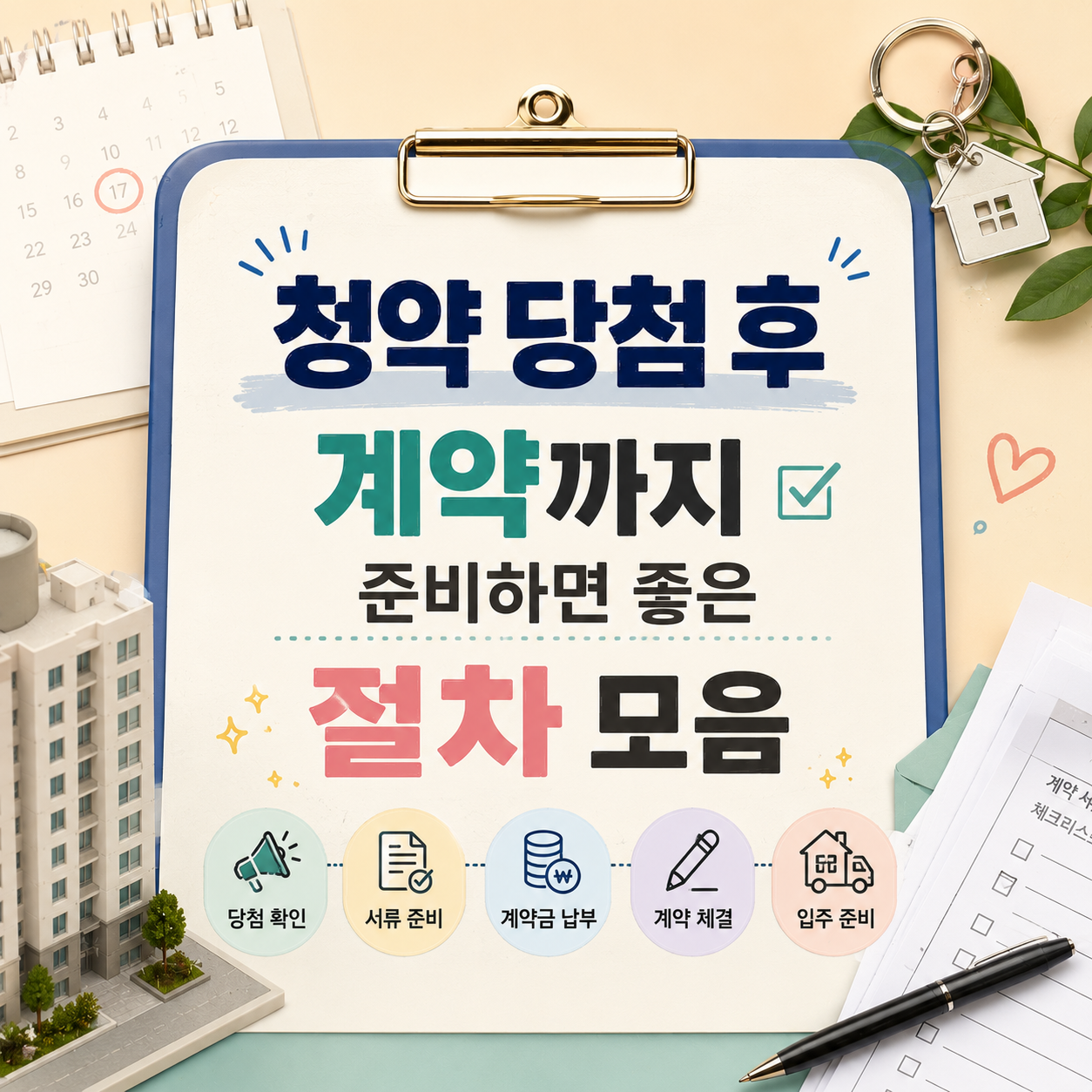
What to Do After Winning a Housing Subscription, Step by Step
Winning a housing subscription lottery in Korea is just the start of a paperwork and financing process — here is the order to follow, from result confirmation to move-in funds.