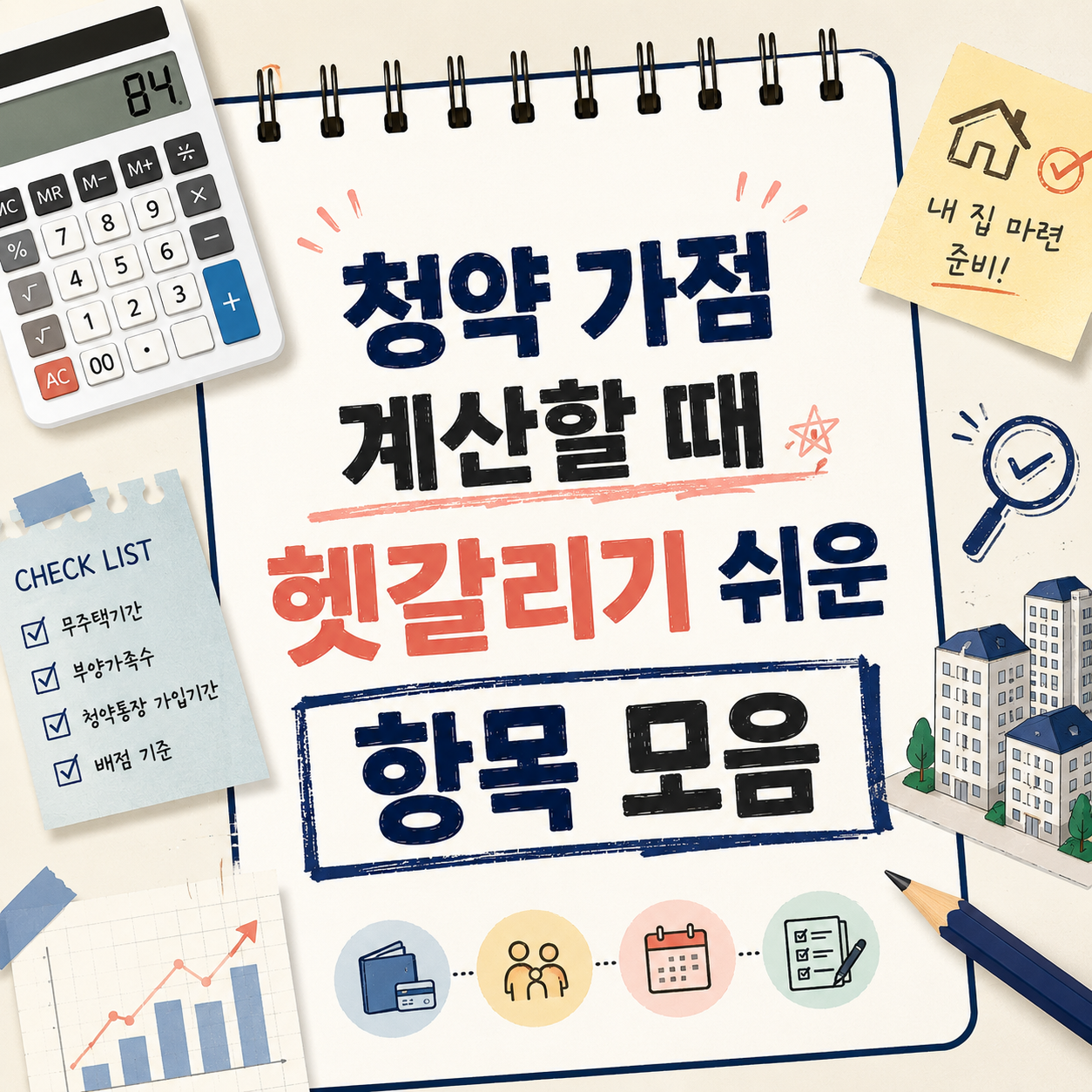
A checklist of the items people commonly miscalculate in housing subscription scoring, including years without a home, dependent count, and subscription account tenure.
A housing subscription score sounds like something a calculator should spit out instantly, but in practice the answer often shifts depending on which point in time you use as the reference and how your household is structured. How far back to count years without owning a home, whether parents or children count toward your dependent count, and how long your subscription account has actually been recognized as active can all be interpreted differently, which makes the score easy to get wrong. In competitive private-housing general supply, a one- or two-point gap can flip the outcome, so glossing over any item carries real risk.
This list, current as of September 2026, pulls together the points people commonly miscalculate in the housing subscription scoring system. Cases of applicants stretching an ambiguous item in their favor, only to get disqualified during document verification after winning, come up repeatedly — so the goal here isn't to hand you an exact score but to flag what's worth double-checking.
How to use this checklist
- Start with the highest-weighted items (years without owning a home, dependent count) — errors here move the score the most
- Don't settle household-composition questions from a resident registration copy alone; cross-check against the official listing notice
- Items like tiebreaker rules and the score-vs-lottery ratio vary by region and supply type — verify them in the specific listing notice
- When an item is ambiguous, score it conservatively and confirm the final answer through the official Cheongyakhome portal and the listing notice
Subscription rules change often and vary by region and housing type, so always re-check the latest standards on Cheongyakhome and the relevant listing notice before applying — this article does not guarantee a winning result.
Calculating years without owning a home
Determining dependent count
Subscription account contribution period
Household-head status and household composition
Regional residency and priority supply
Tiebreaker rules
Score-system vs. lottery ratio
Disqualification risk cases
How to check
Start with the highest-weighted items first: No. 1, years without owning a home, and No. 2, dependent count. Errors in either can swing your total score significantly, so if you're unsure, confirm through Cheongyakhome's help desk or the listing notice before finalizing your numbers. Also remember that items like household-head status (No. 4) and regional residency period (No. 5) can affect your eligibility to apply at all, not just your score, so screen for eligibility before worrying about points.
Even if you're confident every item is calculated correctly, cases like the one flagged in No. 8 — getting caught at the document-verification stage — keep happening. Score ambiguous items conservatively and confirm with the developer or subscription help desk before applying. This information reflects the time of research and may change as rules are revised, so check Cheongyakhome for the latest standards.
Frequently asked questions
When does the "years without owning a home" clock start?
It's generally judged as of the listing notice date, but recognition can vary by age, marital status, and any past homeownership history. Confirm the exact calculation through Cheongyakhome's guidance and the relevant listing notice.
Can I count my parents as dependents?
It's possible under certain conditions, but requirements like how long they've been registered on the same resident registration or how long you've supported them often apply. Rather than assuming, check your family relationship certificate against the listing notice's criteria.
What happens if I miscalculate my score?
If document verification after winning finds you exceeded the eligible score, you can be disqualified and lose the win, and you may also be barred from applying to other listings for a period. Score ambiguous items conservatively and confirm through official channels before applying.
Can I apply under both the score system and the lottery at the same time?
It depends on the supply type and how the unit allocation is structured. Even within the same unit type, score-based and lottery-based allocations are often listed separately, so check the allocation breakdown and application method in the listing notice before applying.
Who should I ask when my score calculation is unclear?
The Cheongyakhome customer center or the subscription help desk at the developer or sales office is the most reliable source. Online community posts reflect individual circumstances and should be treated as reference only, not a final answer.
Get new lists before anyone else
Once a week — only the new lists worth your time.
No spam · unsubscribe in one click
You may also like
Public Housing & NewHome Subscription Types in Korea, Explained
A plain-language guide to Korea's public housing and NewHome subscription types, covering what to verify before applying.
What to Do After Winning a Housing Subscription, Step by Step
Winning a housing subscription lottery in Korea is just the start of a paperwork and financing process — here is the order to follow, from result confirmation to move-in funds.