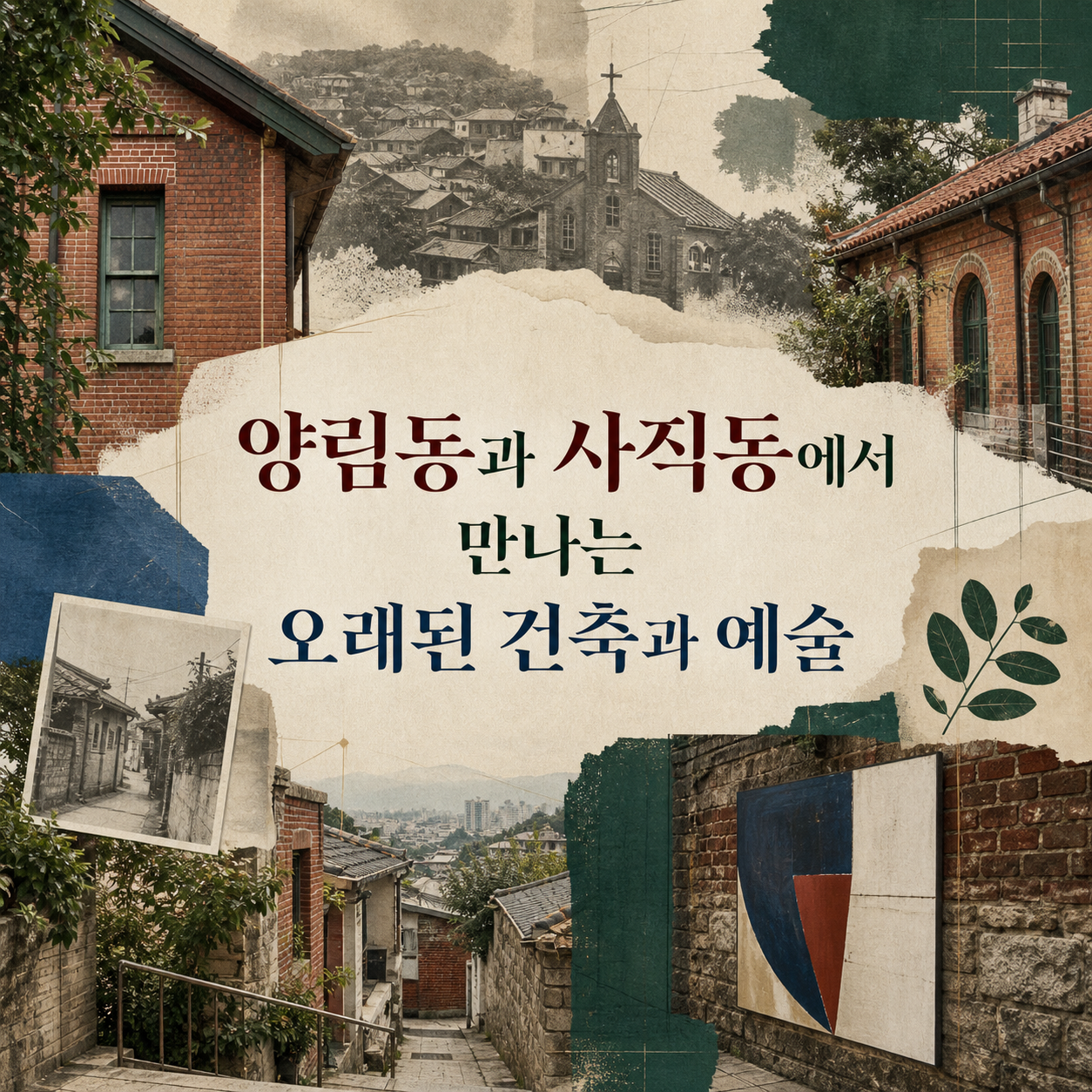
From the depth of a colonial-house eave to the stones in a garden wall, this walk through Gwangju's layered architecture rewards standing still and reading materials before you shoot.
Yangnim-dong and Sajik-dong hold onto Japanese colonial houses and missionary-era homes from the port-opening period, while young artists open studios and turn worn-out alleys into galleries just a few doors down. That two eras sit stacked in the same block is the whole reason to walk here.
Skim a bit of local history before you go. The depth of an eave, the shape of a window frame, or the stones in a garden wall stop being scenery and start reading as clues about who built what, and when. Save the photos for later. Stand in front of each building first, and let your eyes trace the material's texture and how it sits next to its neighbors.
How We Picked
- Paired old architecture — colonial houses, missionary-era homes — with spaces now turned into galleries and cafes
- Ordered stops to follow a walkable route
- Stuck to private buildings only where they can be observed from the street
Sansu-dong colonial houses
Penguin Village and Bongsan Culture Street
National Asia Culture Center
Yangnim-dong missionary houses
Former photo studios and print shop sites
Neighborhood cafes and modern remodels
Stone walls and fence details
Alley topography and house placement
Studio and workshop open days
Neighborhood bar and restaurant interiors
How to Walk It
Short on time? Start with #1 the Sansu-dong colonial houses and #4 the Yangnim-dong missionary houses, where the modern architecture stands out clearly. Want the art scene too? Add #2 Penguin Village and #9 the studio open days. If contemporary architecture is more your interest, the outdoor plaza at #3 the National Asia Culture Center is enough on its own.
The whole point of this walk is noticing material texture and how buildings relate to their neighbors before you reach for your camera. Exhibition and open-day schedules shift by season, so check official channels before you go.
Frequently asked questions
How long should the Yangnim-dong and Sajik-dong walk take?
Plan on two to three hours to see 8-10 key buildings at an unhurried pace, or closer to four if you duck into galleries along the way. Spring and fall offer the best light for walking; in winter, start early since daylight runs out fast.
Can I look at private homes along the way?
It's fine to observe from the street any building whose owner hasn't posted a restriction. Window and gate details, the stones in a wall, roofline shapes, all of that reads clearly from the sidewalk. Stick to public galleries and cafes and skip anywhere that isn't open to visitors.
Are there guided architecture tours?
Gwangju city and local architecture societies run guided tours periodically. Independent visitors can download route maps and audio guides online and walk at their own pace. Reading a neighborhood history pamphlet or architecture photo book beforehand makes everything you see along the way land with more depth.
Are there places where photography is restricted?
Policies on photography inside galleries and studios vary by space, so check with staff at the entrance first. Even for private house exteriors, avoid pointing a camera for too long out of respect for residents' privacy.
Is this walk okay to do with kids?
The narrow, sloped alleys suit kids who can walk on their own better than a stroller. Many galleries and studios expect a quiet visit, so it helps to give kids a heads-up before you go in.
Get new lists before anyone else
Once a week — only the new lists worth your time.
No spam · unsubscribe in one click
You may also like

Gwangju: 12 Cafes Made for Long Group Conversations
Gwangju cafes worth checking for group-friendly seating, reservation policy, and a quieter time slot, organized by neighborhood.

Gwangju's Night Views Aren't About Height — They're About When You Show Up
Arrive 30 minutes before sunset and the same spot becomes a completely different evening — a guide to Gwangju's ten best towers, riverbanks, and downtown corners for watching the light change.

Rainy Day in Gwangju: Check the Closing Day Before You Grab an Umbrella
Pair one large venue (media art, painting, science) with one small specialty museum, and confirm opening hours and reservations first — that's the real key to a smooth indoor day in Gwangju.

The Train Schedule Is Your Real Guidebook — A Half-Day at Gwangju Songjeong Station
Whether you're waiting out a transfer or just arrived, a few hours at Gwangju Songjeong Station is enough to taste the market's tteokgalbi, catch a park view, and duck into a neighborhood gallery — here's the order that makes it work.