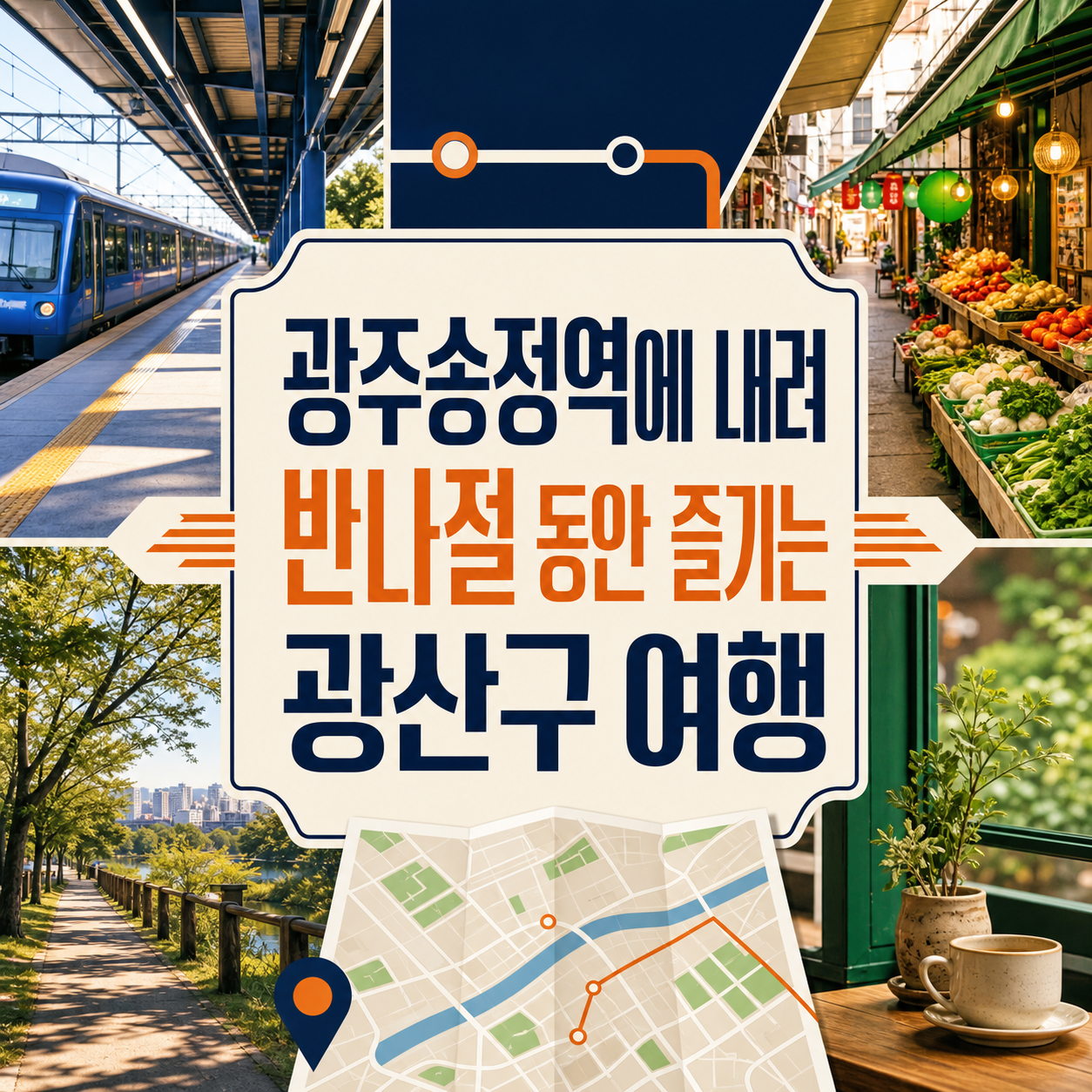
Whether you're waiting out a transfer or just arrived, a few hours at Gwangju Songjeong Station is enough to taste the market's tteokgalbi, catch a park view, and duck into a neighborhood gallery — here's the order that makes it work.
The most common mistake at Gwangju Songjeong Station, whether you're changing trains or just arrived on day one, is deciding the gap is too awkward to bother and waiting it out in the station hall. Step outside for even a few hours, though, and you get a compressed taste of Gwangsan-gu's food and culture — and the planning gets far simpler once you ask how many hours you actually have left rather than what's worth seeing. This list follows the order that makes the most of that window: eat first at the market, catch your breath in the park, then close with a local gallery or two.
You don't need all ten stops. Two hours before your next train is enough for the market and a meal; four hours or more lets you add the park and a gallery. Read this as a menu to pick from based on how much time you actually have. If you're carrying heavy bags, a station locker makes the whole route far easier to move through.
How to use this list
- Two hours or less? Stick to #1-4 — the market, tteokgalbi, and street food.
- Three to four hours? Add #5, the park, for a breather.
- Four hours or more? Round it out with #6-9, the galleries, culture space, and cafés.
Songjeong Market
Gwangju Jeil Tteokgalbi
Hwajeong Tteokgalbi
Street Food Around the Station
Sansu-Bongusan Park
Gwangsan Nanum Art Museum
Gwangsan Culture House
Songjeong Café Alley
Local Shops and Bookstores
Waiting Spots Near Songjeong Station
How to Choose
If you only have time for one meal, pick whichever has the shorter wait between #2 Gwangju Jeil Tteokgalbi and #3 Hwajeong Tteokgalbi. First time trying tteokgalbi? Starting with #3's milder seasoning is the safer bet, and if you have room to breathe, closing with a 30-minute walk at #5 Sansu-Bongusan Park balances out the half-day nicely.
When comparing stops, ask what you can actually fit into the time left rather than what's most famous. Rushing to force in every stop before your train beats the point — picking a few that match your window is far more comfortable. Hours and typical wait times reflect research at the time of writing and can change, so confirm again before you go.
Frequently asked questions
Is a half day really enough?
If you plan tightly, three to four hours covers the essentials — about an hour browsing the market, an hour eating, thirty minutes in the park, and an hour at a gallery. If you'd rather not rush, block out five to six hours instead.
Do I have to eat tteokgalbi?
Songjeong Market is essentially a cluster of tteokgalbi restaurants, so skipping it means missing half the point of stopping here. Each stall varies its seasoning and side dishes slightly, so if you have time, comparing two or three is part of the fun.
What's the best season for the park?
Cherry blossoms in spring and foliage in fall are the standout seasons, but winter draws fewer crowds and makes for a calmer walk. In summer, the sun is strong, so go later in the afternoon to avoid the heat.
Is it okay to bring luggage along?
If you have a suitcase or a big backpack, a station locker makes the route far easier to move through. The market's alleys are narrow enough that bulky bags slow you down, and leaving them behind gives you more room to browse the galleries and cafés.
Does this route work on a rainy day?
Songjeong Market has covered sections that offer decent shelter, and the gallery and café alleys are mostly indoor, so neither is much of a problem. The park walk is the one to reconsider, though — the paths can get slippery in rain, so cut it short or skip it that day.
Get new lists before anyone else
Once a week — only the new lists worth your time.
No spam · unsubscribe in one click
You may also like

Gwangju: 12 Cafes Made for Long Group Conversations
Gwangju cafes worth checking for group-friendly seating, reservation policy, and a quieter time slot, organized by neighborhood.

Gwangju's Night Views Aren't About Height — They're About When You Show Up
Arrive 30 minutes before sunset and the same spot becomes a completely different evening — a guide to Gwangju's ten best towers, riverbanks, and downtown corners for watching the light change.

Rainy Day in Gwangju: Check the Closing Day Before You Grab an Umbrella
Pair one large venue (media art, painting, science) with one small specialty museum, and confirm opening hours and reservations first — that's the real key to a smooth indoor day in Gwangju.
Stop Before You Shoot: A Ten-Stop Architecture Walk Through Yangnim-dong and Sajik-dong, Gwangju
From the depth of a colonial-house eave to the stones in a garden wall, this walk through Gwangju's layered architecture rewards standing still and reading materials before you shoot.