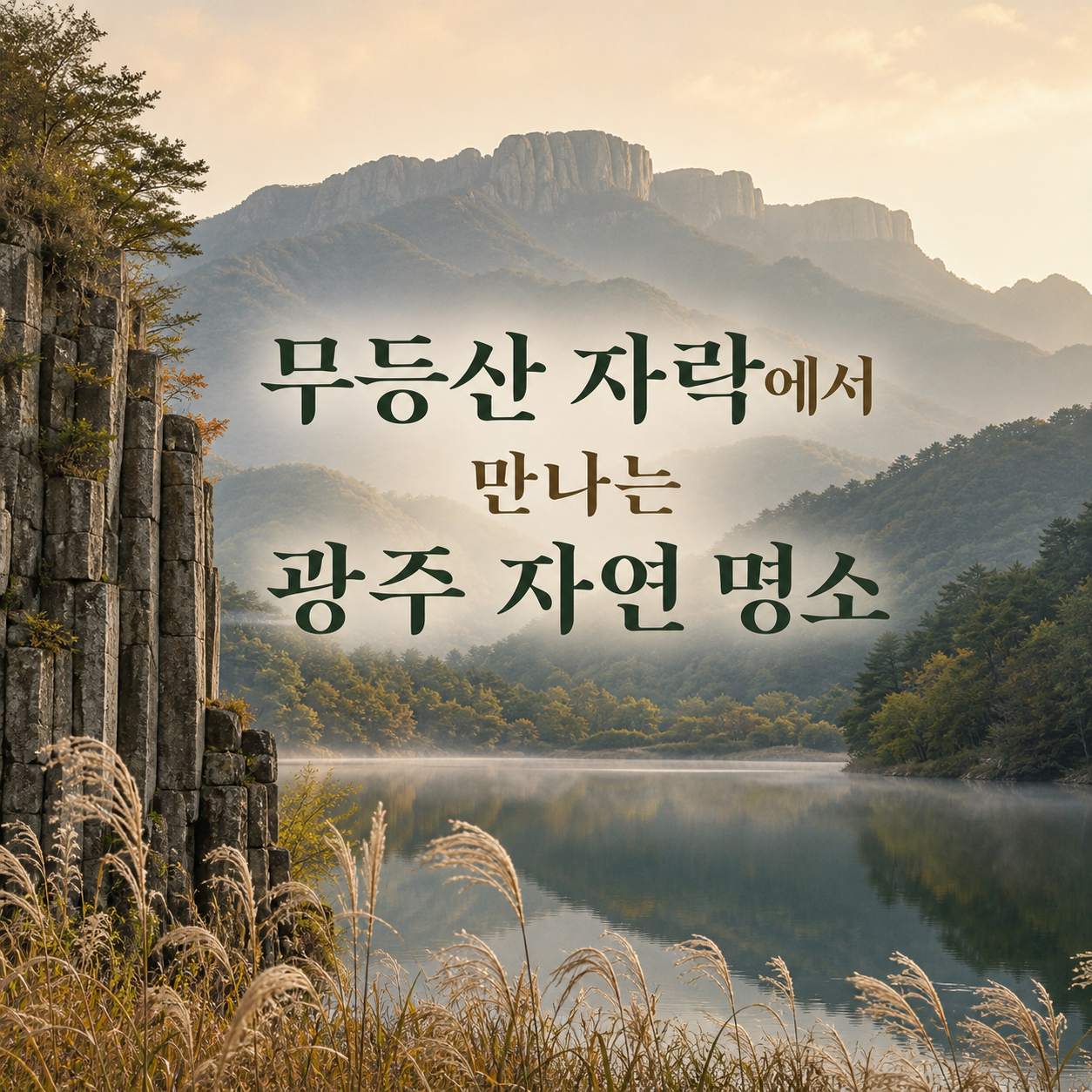
Instead of hiking to Mudeungsan's summit, this guide sorts ten nature spots into hikes, wetland walks, and lakeside strolls so you can pick based on your stamina and time.
Reaching the summit of Mudeungsan isn't the only way to enjoy Gwangju's outdoors. We split ten spots into hiking approaches near Jeungsimsa and Wonhyosa, wetland walks around Gwangju Lake, easy lakeside parks in the Seo-gu and Sangmu districts, and the river-island park in Gwangsan-gu. If you're not sure where to start, picking just one or two spots that match your stamina and schedule is enough to get a real feel for the mountain's foothills.
Weather shifts faster on the mountain than downtown, and lake parks that look flat can still take longer to circle than expected. Check restroom, bench, and parking locations ahead of time, and note that boardwalks and leaf-covered paths get slippery after rain.
How We Picked
- Split into hiking and flat-walk categories so you can match the pick to your stamina
- Weighed access by public transit as well as by car
- Ordered from trailheads down to downtown-adjacent flat parks
- Included practical details like parking, restrooms, and flood closures
Jeungsimsa Temple
Gwangjuho Lake Eco Park
Mudeungsan Natural History Exhibition Hall
Wonhyosa Temple
Hwanbyeokdang Pavilion
Pungam Lake Park
Uncheon Reservoir
Gwangju Citizens' Forest
Songsan Park
Gwangju Park
How to Choose
For an easy walk, start with #6 Pungam Lake Park or #7 Uncheon Reservoir, both flat routes. If you want a hiking feel without committing to the summit, try a short loop at #1 Jeungsimsa or #4 Wonhyosa. For learning about the ecosystem, pairing #2 Gwangjuho Lake Eco Park with #3 the Natural History Exhibition Hall works well.
When comparing spots, check travel distance, restroom and parking locations, and whether flooding closures apply. Details here reflect the time of research and can change, so confirm with official channels before you visit.
Frequently asked questions
What's a good route for a Mudeungsan beginner?
Start at Jeungsimsa and stick to a short loop around the temple grounds — it's low-effort. Climbing to Jungmeori Pass is a significant step up in difficulty, so only attempt it with extra time and energy in reserve.
Are any spots easy for strollers or older visitors?
Gwangjuho Lake Eco Park, Pungam Lake Park, and Uncheon Reservoir are mostly flat boardwalks or paved paths, making them relatively manageable. Just be careful — boardwalks can get slippery after rain.
How do I check if a place like Songsan Park is closed due to flooding?
The most reliable way is to check the official notice board on the Gwangsan-gu office or park management website right before your visit, since access can be restricted due to flooding or construction.
Is Songsan Park or Gwangju Park better for kids?
Songsan Park's wide lawns and waterside make it good for kids to run around, though it can close during flooding season. Gwangju Park's hillside terrain with stairs suits older kids better than strollers.
Can I do a hike and a lake park in one day?
Given the travel distances, it's more comfortable to pick either the hiking side or the flat-walk side and spend half a day there rather than trying to do both. Check restroom and parking locations before you set out either way.
Get new lists before anyone else
Once a week — only the new lists worth your time.
No spam · unsubscribe in one click
You may also like

Gwangju: 12 Cafes Made for Long Group Conversations
Gwangju cafes worth checking for group-friendly seating, reservation policy, and a quieter time slot, organized by neighborhood.

Gwangju's Night Views Aren't About Height — They're About When You Show Up
Arrive 30 minutes before sunset and the same spot becomes a completely different evening — a guide to Gwangju's ten best towers, riverbanks, and downtown corners for watching the light change.
Rainy Day in Gwangju: Check the Closing Day Before You Grab an Umbrella
Pair one large venue (media art, painting, science) with one small specialty museum, and confirm opening hours and reservations first — that's the real key to a smooth indoor day in Gwangju.
Stop Before You Shoot: A Ten-Stop Architecture Walk Through Yangnim-dong and Sajik-dong, Gwangju
From the depth of a colonial-house eave to the stones in a garden wall, this walk through Gwangju's layered architecture rewards standing still and reading materials before you shoot.