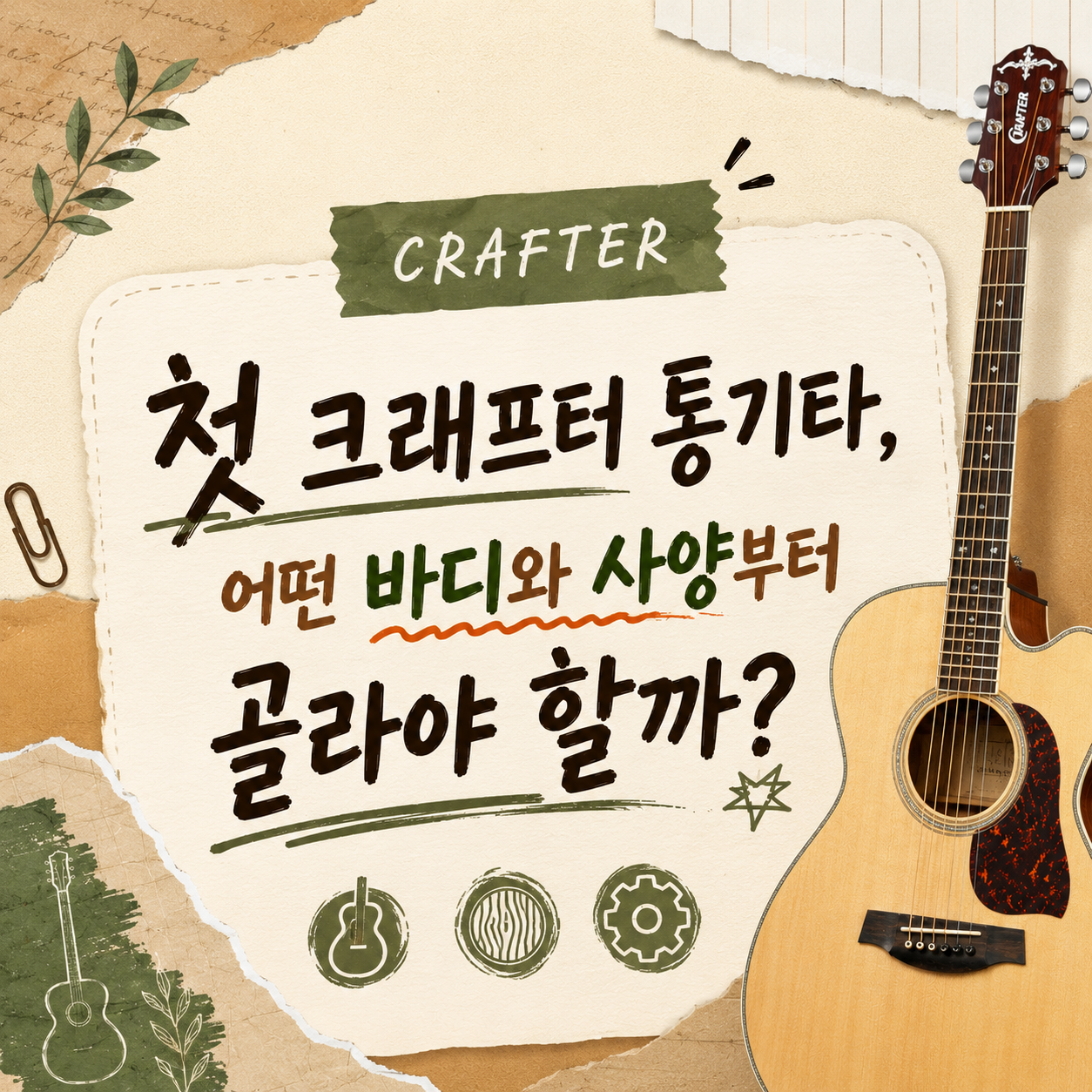
For a first Crafter acoustic, narrow down by body width, then laminate versus solid top, then electronics to find your fit among the 100 tier, 250 tier, and ABLE 600.
For a first Crafter acoustic, decide on body width first, then laminate or solid top, and finally whether you need electronics. Model names stacked with wood names make it hard for a beginner to tell what actually changes the sound and what is just a labeling difference.
This list lines up three bodies, HD (dreadnought), HG (grand auditorium), and HT (orchestra), across the 100 tier, the 250 tier, and the ABLE 600 line where the top turns solid. It separates models that share the same wood under a different name from those that genuinely differ. Specs reflect research as of August 2026 and may change.
How we chose
- Body width: comfort while seated
- Top wood: laminate or solid
- Electronics: PL-T NV GOLD or not
- Home practice or stage use
Order follows series number and body type. If you only play at home, start at rank 1; if band rehearsals are planned, start at rank 6.
Crafter HD-100/OP.N

Crafter HG-100C/OP.N

Crafter HT-100/OP.N

Crafter HD-250/N

Crafter HD-250MH/BR

Crafter HG-250CE/N

Crafter HG-250CE MH/BR

Crafter HT-250CE/N

Crafter HT-250 MH/BR

Crafter ABLE D-600/N

Crafter ABLE G-600/N
Crafter ABLE T-600/N
How to choose
If you are learning chords alone at home, simple builds like rank 1 HD-100 or rank 9 HT-250 MH/BR work well, and if you sit for long sessions or are smaller-framed, hold rank 2 HG-100C and rank 3 HT-100 first. If band rehearsals or a small show are coming, rank 6 HG-250CE/N and rank 8 HT-250CE/N come with electronics and cut down on extra gear.
When comparing, look at just three things: body width, top wood, and electronics. If you want an instrument to keep beyond the entry level, ranks 10 to 12, the ABLE 600 line with its solid top, are the next step. Information reflects research at the time and may change, so check official channels before buying.
Frequently asked questions
Laminate or solid top: which is better for a beginner?
Laminate is generally described as less sensitive to humidity swings, so it asks less of you in care, while a solid top is described as opening up in tone over time. It is less about which is better and more about matching your care habits and storage environment.
Can I still perform later if I buy a model without electronics?
Yes, you can add a clip-on pickup or use a microphone. If you already plan band rehearsals or small performances, though, starting with the 250CE models that include PL-T NV GOLD can save you from buying extra gear.
How should I decide on body width?
The most reliable method is holding a dreadnought, grand auditorium, and orchestra body in person and comparing how each feels against your right arm and waist while seated. Comfort varies a lot by person, so avoid deciding from specs alone.
How different do the 100 and 250 tiers sound?
The HD-100/OP.N and HD-250/N share the same wood pairing, so the difference in tonal materials is likely small. Finish and hardware details may differ, so compare them side by side in a shop.
Is the ABLE 600 an all-solid guitar?
No. Only the top is solid Engelmann spruce, while the back and sides are laminate African mahogany. Even with just the top changed, it is described as opening up in tone over time.
How do mahogany tops differ from spruce tops?
Mahogany tops are described as having calmer overtones, while spruce tops are generally thought of as sounding brighter. Taste varies a lot, so play them back to back on the same amp or in the same shop.
Get new lists before anyone else
Once a week — only the new lists worth your time.
No spam · unsubscribe in one click
You may also like
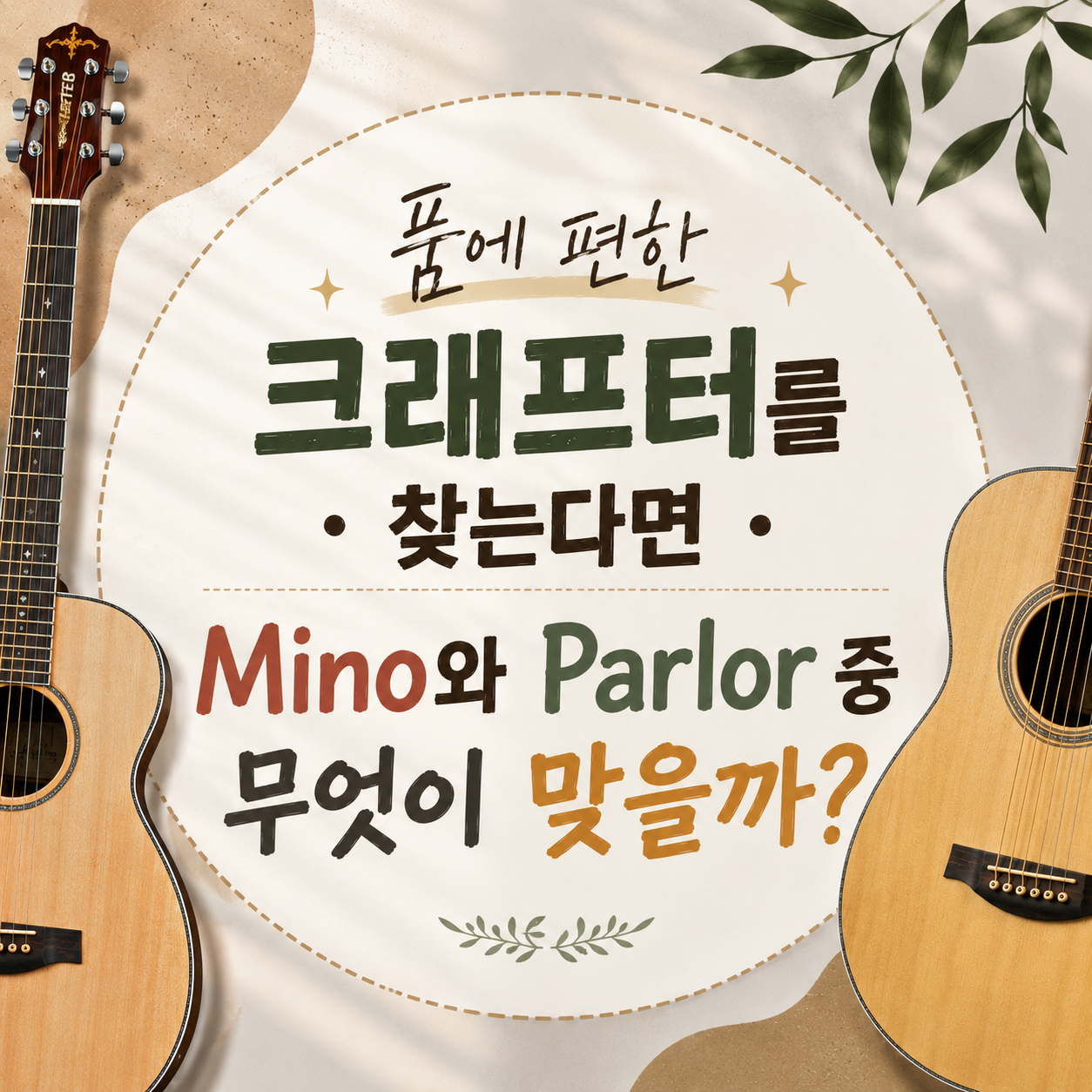
Small-Body Crafters: Which Fits Your Frame — Grand Mino, Mino, or the Parlor?
Grand Mino, Mino, and ES Parlor look alike in size but differ in scale and nut width, so fit comes down to dimensions before tonewood.

What the Stage Won't Forgive: Choosing a Performance Bass
A stage bass should put noise control, simple operation and battery-free peace of mind ahead of spec sheets, and these ten are compared that way.

Busking Crafters: What Actually Changes When the Onboard Preamp Is Different?
The MIND, STG, VL, LITE, and GAE lines each use a different onboard preamp, so for busking, check the electronics name and control placement before body choice.
Small Hands, No Compromise: Why Short-Scale Basses Fit Better
A short-scale bass narrows fret spacing and lowers string tension, easing the strain for players with small hands or a smaller frame.