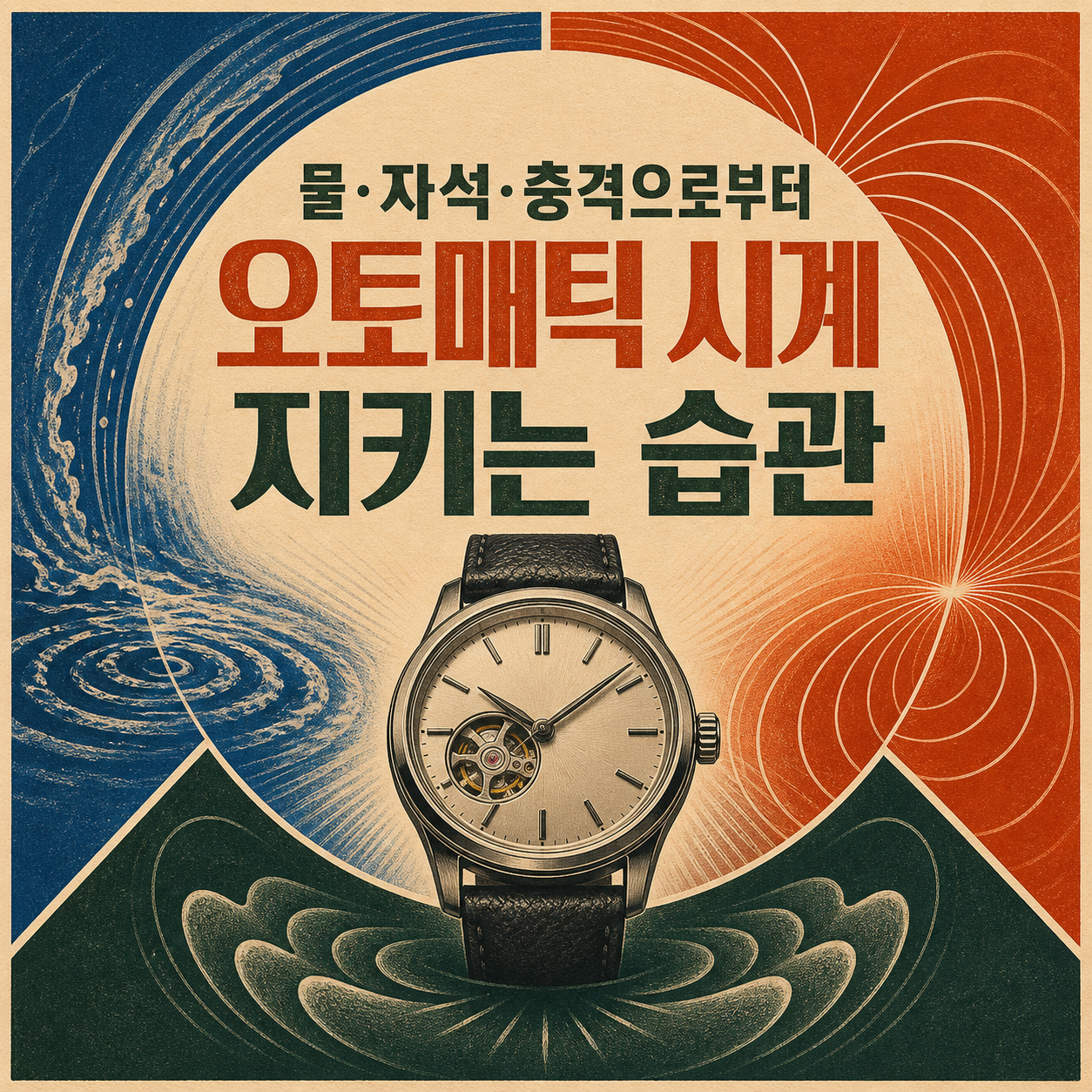
The bar or ATM rating matters less day to day than whether the crown is properly closed and how recently the watch sat near a magnet.
When an automatic watch stops or fogs up under the crystal, the cause is rarely the printed water-resistance number itself — it's usually a loose crown, a recent brush with a magnet, or a hard knock that got ignored. A case marked 30 bar can still let water in through a crown that's only half closed during something as ordinary as handwashing, and magnetism tends not to stop a watch outright — it quietly nudges the daily accuracy off instead, which makes the cause easy to miss.
This list follows the order these issues actually show up in real use: what to check before water exposure, what never to do underwater, how to keep distance from magnets and speakers, and which signs after a shock or seawater exposure mean it's time to stop and get help. None of it treats a single water-resistance figure as the whole answer — it weighs the crown type and recent service history alongside the number.
How to use this list
- Heading into a shower or swim, start with #1 through #3.
- Planning a hot spring, sauna, or beach trip, check #4 through #6.
- Frequently near magnetic phone cases or speakers, #7 and #8 apply to you.
- Already dropped or gotten wet, skip straight to #9 through #12.
Understanding the Water-Resistance Rating

Checking the Crown Before Water Exposure

Never Adjusting the Crown or Pushers Underwater

Avoiding Hot Water, Saunas, and Sudden Temperature Swings

Following the Maker's Guidance After Seawater Exposure

Limiting Leather Straps' Water Contact

Keeping Distance from Phone Magnets and Speakers

Recognizing Signs of Magnetization

Avoiding Hard Impacts During Sports or Manual Work

Checking Appearance and Function After Any Impact

Treating Fogging or Droplets as an Urgent Sign

Requesting Water and Magnetism Checks at Service

How to choose
If water exposure is imminent, start with #1's rating check and #2's crown seal. Heading somewhere with big temperature swings, like a sauna or hot spring, pay attention to #4. If the watch has been near a magnet lately or is suddenly running fast, use #7 and #8 to prepare for a service center conversation, and if it's been dropped or shows signs of moisture, check the warnings in #10 and #11 before doing anything yourself — leave the fix to a professional as described in #12. Water resistance and magnetization aren't things you can judge by looking, so compare crown type and recent service dates rather than the number alone. This information reflects conditions at the time of research and details can change by model, so confirm with the manufacturer's official channel before any purchase or service visit.
Frequently asked questions
Can I shower or swim with a watch rated 30m or 50m water resistant?
Those figures are often based on static lab conditions and don't necessarily account for the pressure and temperature swings of actual activity. A 30–50m rating is generally fine for handwashing, but swimming or showering is better suited to watches rated 100m or higher for active water use.
My watch stopped — how do I know if magnetism is the cause?
Magnetism rarely stops a watch outright; it usually shows up as a sudden jump in daily accuracy instead. If the watch has been near magnetic accessories or speakers recently, mention that when you take it in so the technician can test for magnetization specifically.
Can I rinse off seawater myself at home?
If the rating is high enough and the crown was properly secured, a light rinse with fresh water followed by drying with a soft cloth is often fine, but this depends on the model and its condition. When in doubt, check with a service center before doing anything yourself.
Does a leather strap need special care even if the case is water resistant?
Yes — the case rating doesn't cover the strap. Leather reacts to water, sweat, and cosmetic residue with discoloration or stiffening, so if you're often near water, switching to a rubber or metal strap protects the strap far better than relying on the case's rating.
How can I tell in advance if a watch has been near a magnet?
Everyday items like magnetic phone cases, wireless speakers, and laptops often carry stronger magnets than people expect. Choosing a spot to set the watch down that's away from these objects prevents exposure in the first place, which is easier than diagnosing magnetization after the fact.
Get new lists before anyone else
Once a week — only the new lists worth your time.
No spam · unsubscribe in one click
You may also like
Setting an Automatic Watch for the First Time: What to Check Before You Touch the Crown
Skip the generic 'wind it 20 times' advice -- your model's own manual comes first. A 12-step order from finding the caliber to locking the crown back down.
A Bigger Power Reserve Number Doesn't Mean a Better Movement
The numbers on an automatic watch spec sheet aren't a scorecard — they describe different test conditions, and knowing what each one actually measures is what lets you pick the right watch.

Above $7,500: Reading Grand Seiko's Hi-Beat and Spring Drive Lines by Movement, Not Just Price
At the KRW 10 million-plus tier, hi-beat's ticking second hand and Spring Drive's continuous glide split these 12 Grand Seiko models.