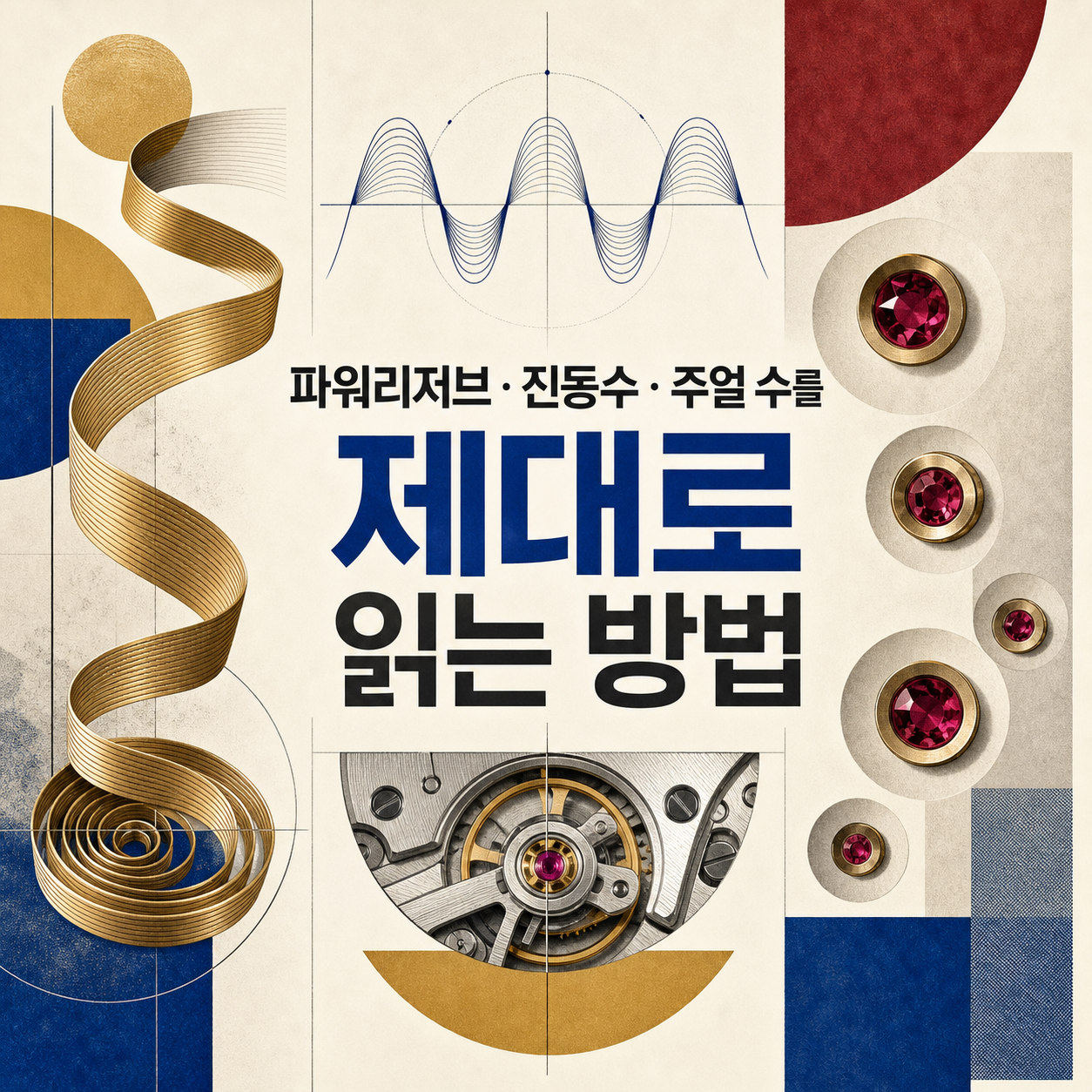
The numbers on an automatic watch spec sheet aren't a scorecard — they describe different test conditions, and knowing what each one actually measures is what lets you pick the right watch.
An automatic watch spec sheet lists power reserve, frequency, jewel count, daily rate, antimagnetic resistance, and water resistance one after another. It's tempting to assume bigger numbers mean a better watch, but each figure describes a completely different test condition and design goal, so that comparison doesn't actually hold up. This list breaks down twelve terms that show up repeatedly on spec sheets and explains what each one is actually measuring.
A spec sheet is a starting point for comparison, not a guarantee of real-world performance. As you go through each entry, check whether the units match and whether the test covered the bare movement or the finished, cased watch. The order here follows how these terms typically appear on a spec sheet, starting with power reserve and ending with case dimensions.
Power Reserve

Fully Wound

Beats Per Hour

Hz vs. vph

What 'High-Beat' Means

Jewel Count

Why Jewel Count Isn't a Quality Score

Daily Rate

Chronometer Certification

Antimagnetic Performance

Water Resistance in Bar, ATM, or Meters

Case Diameter, Thickness, and Lug-to-Lug

Read the Numbers With Their Conditions
If you wear a watch daily, #8 and #9 — daily rate and certification — matter more to how it actually feels than #1's power reserve, which becomes more relevant if you rotate between watches. If you're planning to swim or dive, always cross-check #11's water resistance rating against the manufacturer's activity-specific guidance rather than the meter number alone.
The terms covered here are common ground for reading any spec sheet, but actual performance still varies by model and manufacturer — confirm the official specifications and warranty terms for a specific watch before buying.
Frequently asked questions
Does a longer power reserve automatically mean a better watch?
Not necessarily. If you wear the watch daily, a shorter power reserve isn't much of an issue, and other factors — like frequency or overall movement finishing — often matter more for how it actually feels to wear.
If a watch is rated 100m water resistant, can I swim in it?
A meter rating reflects a static pressure test, not a guaranteed real-world activity range. If you plan to swim or dive, check the manufacturer's activity-specific water resistance guidance separately.
Does chronometer certification guarantee perfect accuracy?
Certification just means the watch passed a specific test standard — real-world accuracy still varies with temperature, position, and magnetic exposure. Check both the certifying body and whether the test covered the movement alone or the finished watch.
Can I compare specs the same way on a vintage watch?
Older movements were rated under standards that may not match today's, and real-world performance shifts with age and service history regardless of the original spec sheet. Checking service records and measured accuracy matters more than the printed spec alone.
Do these terms apply to quartz watches too?
Power reserve and frequency describe automatic movements specifically and don't carry over to quartz watches. Quartz watches use their own battery-life and accuracy specifications, which need to be checked separately.
Get new lists before anyone else
Once a week — only the new lists worth your time.
No spam · unsubscribe in one click
You may also like
Setting an Automatic Watch for the First Time: What to Check Before You Touch the Crown
Skip the generic 'wind it 20 times' advice -- your model's own manual comes first. A 12-step order from finding the caliber to locking the crown back down.
Before You Trust the Water-Resistance Number: What Actually Protects a Watch
The bar or ATM rating matters less day to day than whether the crown is properly closed and how recently the watch sat near a magnet.

Above $7,500: Reading Grand Seiko's Hi-Beat and Spring Drive Lines by Movement, Not Just Price
At the KRW 10 million-plus tier, hi-beat's ticking second hand and Spring Drive's continuous glide split these 12 Grand Seiko models.