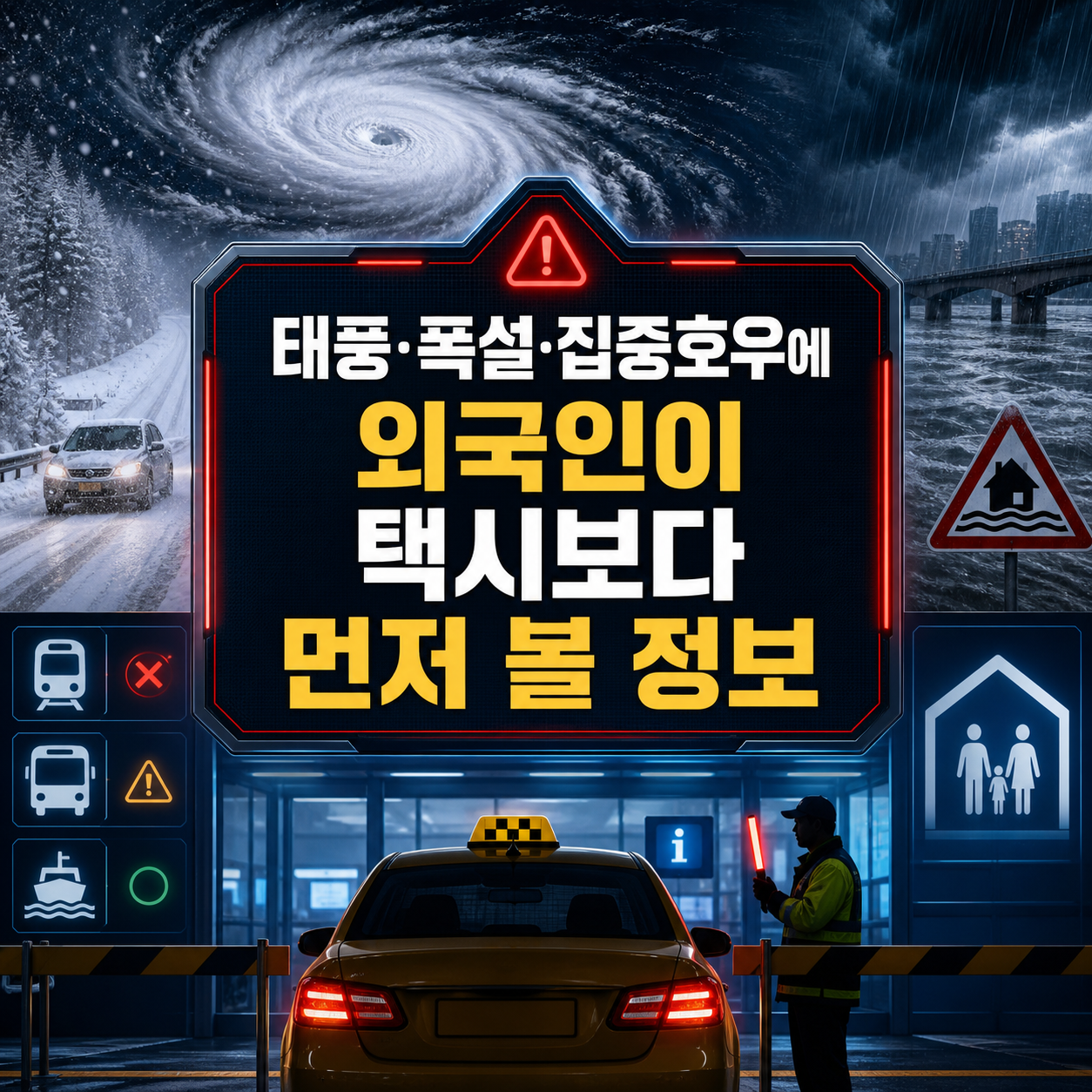
In a typhoon, heavy snow, or downpour, check weather warnings, road closures, and cancellation terms before booking a taxi, and call 119 or 112 if you are in danger.
A taxi showing up in the app on a day of typhoon, heavy snow, or torrential rain does not mean you can reach your destination safely. Road closures, flooding, and slow snow clearing can make the trip genuinely dangerous, and if you miss a Korean-language emergency text, you may set out without knowing which areas are closed. Travelers who do not read Korean miss this information most easily.
This list is a sequence of checks from before you leave to after you arrive, not a popularity ranking. The first items help you decide whether to travel at all, the middle ones cover alternatives and bookings, and the last ones are about avoiding dangerous spots and preparing for emergencies.
How we chose
- Items you can verify right away from official real-time sources
- Steps a foreign traveler can do with a translation tool or a phone call
- Ordered by how much a miss would affect safety and cost
Conditions change within minutes, so favor official real-time guidance and your ride app over this list. Save addresses, maps, and booking details as screenshots so you can read them even if your data drops. If there is immediate danger, skip to item 10.
Check weather warnings and pre-warnings

Translate disaster text alerts

Check road closures

Compare public transit status

Ask about extending your stay

Confirm cancellation terms for bookings

Avoid riverbanks, coastlines, and underground spaces

Shorten your trip in heavy snow

Set a contact plan with companions

Prepare emergency numbers and your location

How to choose
If you are about to leave, items 1, 2, and 3 (weather warnings, emergency texts, road closures) will usually settle whether to go. If travel looks hard, compare transit at 4, then sort out the schedule with the stay extension at 5 and the cancellation terms at 6. While waiting for a taxi, avoid the risky places at 7, and on heavy snow days shrink your range as in 8.
The contact plan at 9 and the emergency numbers at 10 are worth preparing in any weather. If life or safety is at risk, call 119 or 112 before a taxi. Warning criteria and service status change constantly, so confirm the latest information through official channels before you leave.
Frequently asked questions
Where can I check weather warnings fastest?
The Korea Meteorological Administration's Weather Nuri site lets you check warnings for both your current location and your destination. Use a translation tool if Korean is hard, but cross-check place names on a map.
What if I get an emergency text and cannot understand it?
Do not delete it. Screenshot and translate it, and jot down place names, times, and shelter locations. If it is still unclear, ask hotel staff or call the tourist hotline 1330.
Will I be charged for canceling a taxi because of a storm?
Weather cancellation terms differ by ride app and booking provider. Contact them right away rather than waiting silently, and screenshot the cancellation steps and support number to help avoid needless fees.
If a taxi is available, does that mean the road is safe?
No. An available taxi does not make the route safe, so check closures announced by local governments, police, and the airport first. Never ask a driver to go through flooded or barricaded sections.
Who do I call in an emergency during dangerous weather?
Call 119 for medical emergencies and 112 for crime or personal threats. Give the exact map coordinates and building name, and say up front that you are a foreigner and which language you need.
Can I rely on public transit instead of a taxi?
On days when taxis are scarce, subways and buses may also be suspended or delayed. Check each operator's notices, including last-train changes, and save line and station names in Korean.
Get new lists before anyone else
Once a week — only the new lists worth your time.
No spam · unsubscribe in one click
You may also like

Check Your Body Before You Check the App — Waiting for a Taxi in Extreme Weather
In extreme heat or cold, secure an indoor spot first, check battery, data, and health signs, then request a taxi.
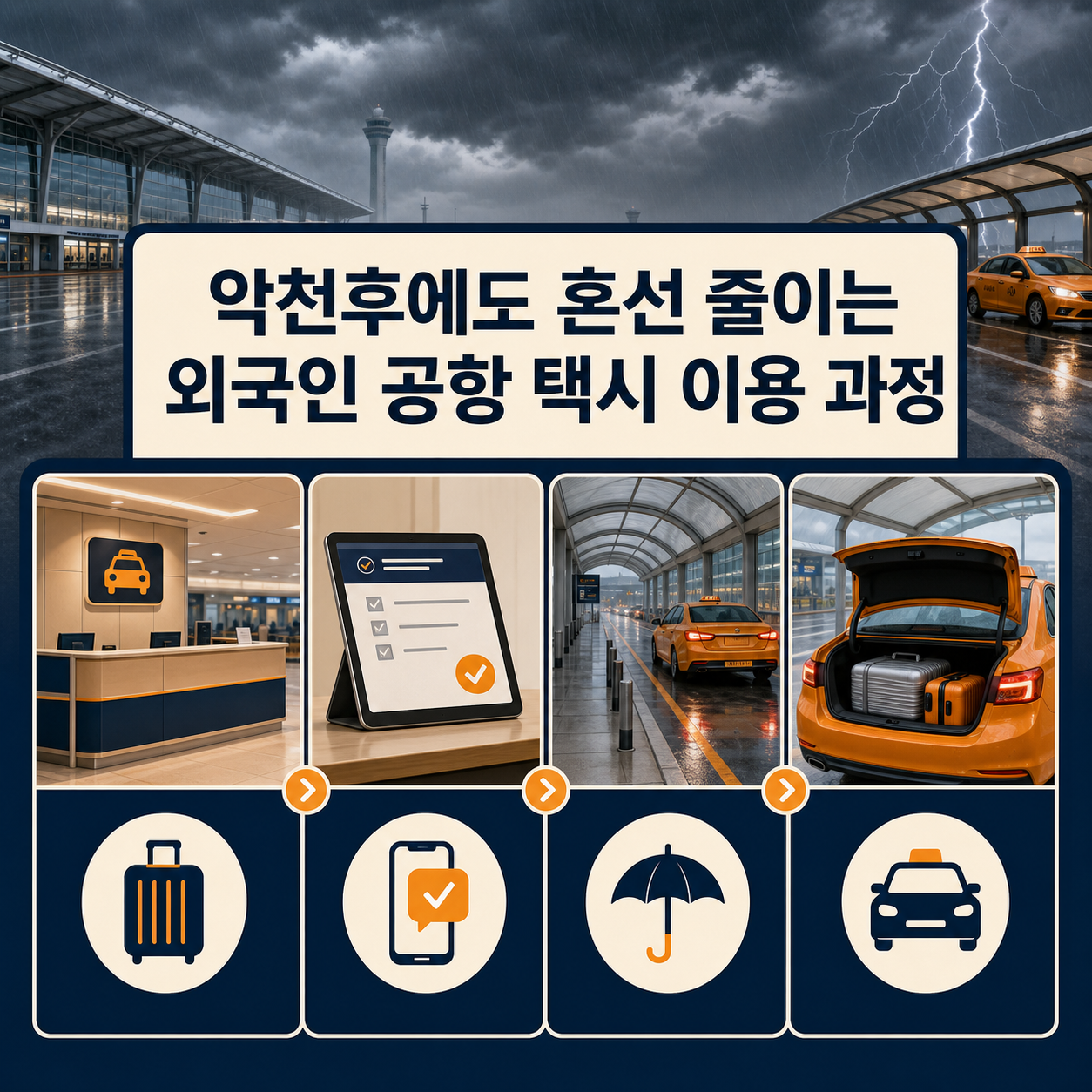
In a Downpour, Getting an Airport Taxi Right Beats Getting One Fast
Bad weather at the airport isn't a speed problem -- it's a sequencing problem across your flight, terminal, and taxi stand. Ten steps from before you land to backup transit.