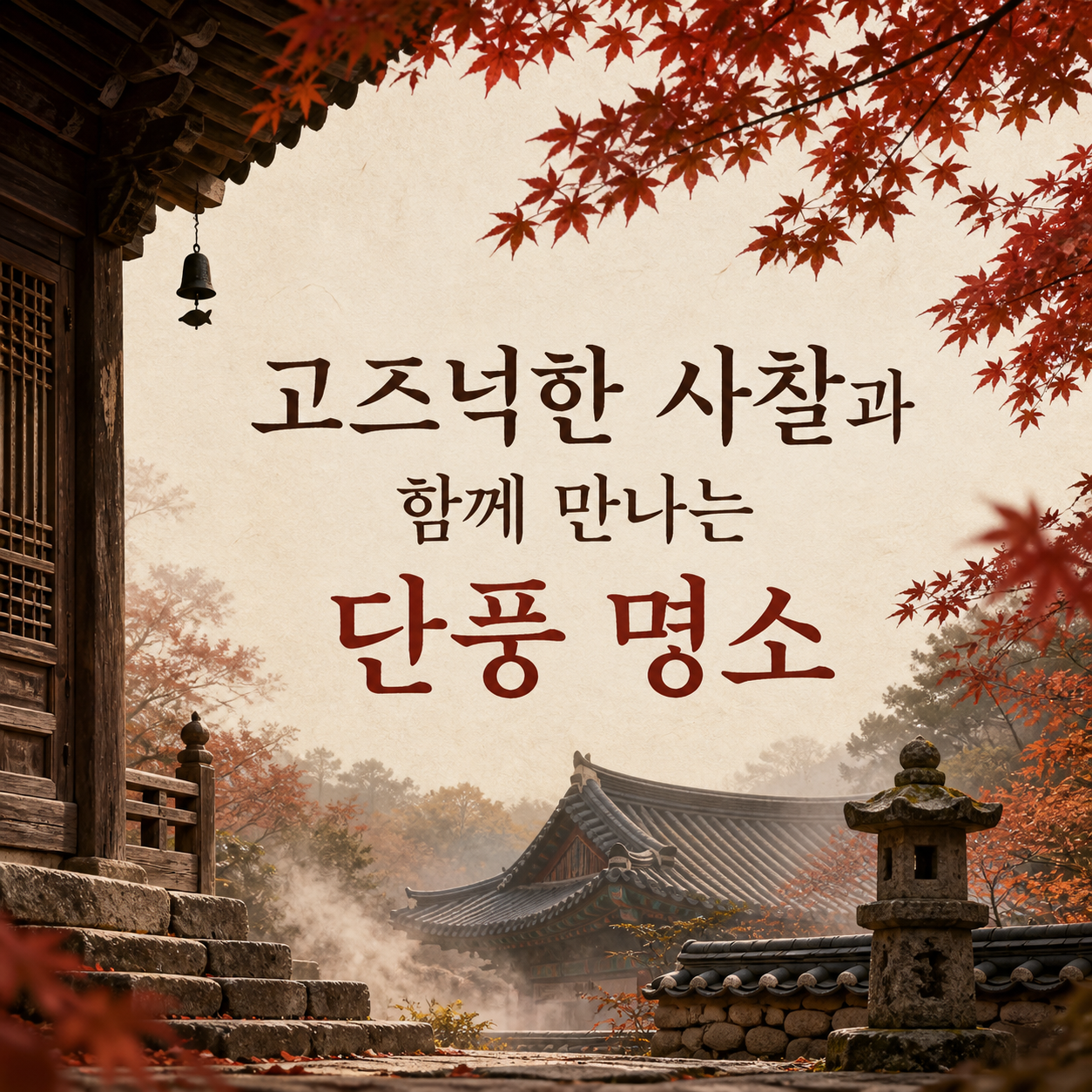
Ten temples across Korea where autumn color shares the frame with old halls, relics, and forest paths, ranked to help you pick where to start.
The hardest part of choosing a temple for fall color is knowing which one is less crowded, easy to walk, and still has plenty to see. This list picks ten temples across Korea, from Woljeongsa on Odaesan to Songgwangsa in Suncheon, where autumn foliage pairs with cultural relics and forest paths.
A temple is a sightseeing spot, but also an active place of practice and prayer. Keep noise and flash photography down, respect roped-off and restricted areas, wear non-slip shoes, and plan to be back well before sunset.
How we chose
- Whether foliage and temple halls share one frame
- Extra sights such as relics or forest trails
- Whether the grounds alone satisfy or a hike is needed
- Whether you can visit while respecting practice spaces
The order blends these criteria. For easy strolling, start with No. 3 Baekyangsa; for heritage, start with No. 7 Bulguksa and No. 4 Beopjusa.
Woljeongsa

Naejangsa

Baekyangsa

Beopjusa

Donghaksa

Daejeonsa

Bulguksa

Seonunsa

Bongjeongsa

Songgwangsa

How to choose
If it's your first time, No. 2 Naejangsa with its red maple tunnel or No. 1 Woljeongsa are good picks. For a relaxed walk, try No. 3 Baekyangsa and No. 9 Bongjeongsa. For heritage, No. 7 Bulguksa and No. 4 Beopjusa fit best, and for pairing with a hike, look at No. 6 Daejeonsa, No. 5 Donghaksa, and No. 8 Seonunsa.
When comparing, consider whether you'll only walk the grounds or add a hike, whether you can accept peak-season crowds, and whether photography is restricted. Weekday mornings are calmest anywhere, and respecting prayer times and closed areas is the baseline.
Foliage timing and trail conditions change every year, so check official channels before you go. Information reflects the time of research and may change.
Frequently asked questions
When does temple foliage peak in Korea?
Maples, ginkgos, and firs color at different times even within the same temple grounds, so there's no single date that fits every location. Checking the temple's own notice and recent visitor photos right before you go is more reliable than a fixed calendar.
What etiquette matters most when visiting a temple?
Keep conversation and photography down near the halls during prayer times, and stay out of areas like monks' living quarters or temple-stay zones that aren't open to general visitors. Don't block walkways with a tripod, either.
When's the best time to avoid crowds?
Weekdays and early mornings right after opening are far quieter than peak-season weekends. The difference is especially noticeable at popular spots like Naejangsa and Bulguksa.
Which temples work well without any hiking?
At Baekyangsa, a slow walk along the entrance path and around Ssanggyeru is enough, and Beopjusa can be covered in about two hours. Woljeongsa is also satisfying if you only walk from the gate to the grounds.
Which temples pair well with a longer hike?
Daejeonsa is the gateway to the Jubang valley hike, Donghaksa leads on to Nammaetap, and Seonunsa to Dosolam. Distance and slope differ a lot from a temple visit alone, so choose by stamina.
Where should I go to focus on cultural relics?
Bulguksa's Seokgatap and Dabotap, Beopjusa's relics and Sejo-gil trail, and Bongjeongsa's wooden architecture stand out. Always respect no-photography signs and relic protection lines.
Get new lists before anyone else
Once a week — only the new lists worth your time.
No spam · unsubscribe in one click
You may also like
The Starting Point Matters More Than the Summit: 10 Autumn Mountain Access Guides
For fall foliage in Korea, pick the trailhead before the summit; these ten mountains are ranked by park entrances, temples, rest areas, and cable cars.
The Korean Autumn Drives Where You Should Check the Pull-Off Points Before the Photo Spots
Ten rest areas, lookouts, and reservoirs in Korea where you can safely pull over for fall color, with stopping points and driving tips for each.
Seoul's Easiest Autumn Walks: Where Flat Ground Beats Peak Color
Ten walking routes across Seoul and the capital area, ranked by how flat and easy the ground actually is, not just how colorful it looks.