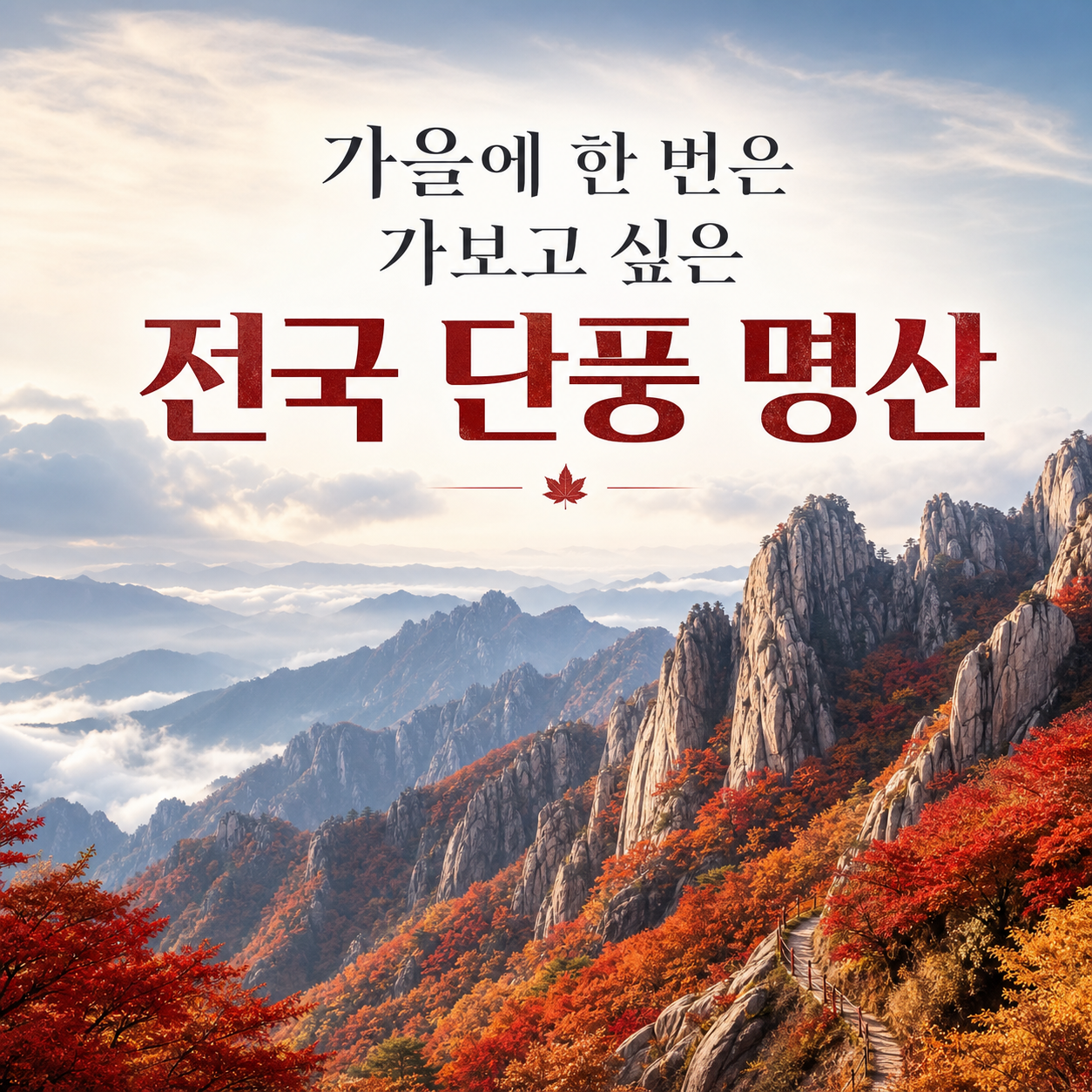
For fall foliage in Korea, pick the trailhead before the summit; these ten mountains are ranked by park entrances, temples, rest areas, and cable cars.
If you want to see autumn colors on a Korean mountain, decide where you will start walking before you decide which peak to climb. On the same mountain, a stroll along a temple approach and a full ridge route differ completely in time, effort, and gear. That is where most people get confused: foliage photos often look like summit shots, but many were taken at a valley entrance or along a temple path.
This list covers Seoraksan, Odaesan, Naejangsan, Jirisan, Bukhansan, Gyeryongsan, Songnisan, Juwangsan, Palgongsan, and Mudeungsan, and anchors each one to a real starting point such as a park entrance, temple, rest area, or cable car. The order favors places with flexible access and short routes that still satisfy, while weighing weather closures and reservation hurdles.
How to read this list
- First-timers or anyone short on stamina should start with the temple round trips at No. 2, 6, and 7.
- No. 4 and 9 depend on mountain roads and cable cars, so confirm operation right before you leave.
- If you want the summit, work backward from sunset to set your turnaround time.
Seoraksan Sogongwon

Woljeongsa

Naejangsa

Seongsamjae Rest Area

Bukhansan Ui Ranger Station

Donghaksa

Beopjusa

Daejeonsa

Palgongsan Cable Car

Jeungsimsa

How to choose
If you just want a light look at the colors, temple round trips such as Woljeongsa (No. 2), Donghaksa (No. 6), and Beopjusa (No. 7) are the easiest on the legs. For a one-day trip from Seoul, Bukhansan Ui Ranger Station (No. 5) keeps travel short, and on days you would rather not walk, the Palgongsan cable car (No. 9) offers ridge views. Seoraksan Sogongwon (No. 1) and Seongsamjae Rest Area (No. 4) carry bigger reservation and weather variables, so they suit trips with some slack.
When comparing, look at five things: round-trip time, parking and shuttle conditions, last cable car time, sunset, and how much colder it gets up high. Details reflect the time of research and may change, so check official channels for operations, reservations, and trail closures before you go.
Frequently asked questions
Can you enjoy the foliage without hiking to the summit?
Yes. Spots like Woljeongsa's fir forest trail or part of Beopjusa's Sejo-gil let you see plenty of color just by walking a temple approach or valley section. If time or stamina is short, this is often the more satisfying choice.
Do cable cars or shuttles always require reservations?
Some do. The Palgongsan cable car and Nogodan access via Seongsamjae come with reservation requirements or time limits. It is safest to recheck operating status and booking method in the official notice right before you go.
How should I plan for descent time?
Posted trip-time estimates often leave out rest, photo stops, and crowding delays. Working backward from sunset and building in extra margin is the safer way to set a turnaround time.
What should I wear for an autumn mountain walk?
Dressing for city temperatures alone can leave you cold in the ridge wind. Bring an extra layer, and wear shoes with good grip for stretches covered in wet fallen leaves.
Which spot is easiest for a first autumn hike?
On this list, the temple round trips at Woljeongsa (No. 2), Donghaksa (No. 6), Beopjusa (No. 7), and Jeungsimsa (No. 10) are the lightest. Start short and extend only if you still have energy.
Can mountain roads or cable cars shut down because of weather?
Yes. Fog, icing, or strong wind on the Seongsamjae pass means you should skip the drive, and the Palgongsan cable car often stops in high wind. Check conditions on site before leaving.
Get new lists before anyone else
Once a week — only the new lists worth your time.
No spam · unsubscribe in one click
You may also like
What Outlasts the Color: 10 Temple Foliage Trips Across Korea
Ten temples across Korea where autumn color shares the frame with old halls, relics, and forest paths, ranked to help you pick where to start.
The Korean Autumn Drives Where You Should Check the Pull-Off Points Before the Photo Spots
Ten rest areas, lookouts, and reservoirs in Korea where you can safely pull over for fall color, with stopping points and driving tips for each.
Seoul's Easiest Autumn Walks: Where Flat Ground Beats Peak Color
Ten walking routes across Seoul and the capital area, ranked by how flat and easy the ground actually is, not just how colorful it looks.