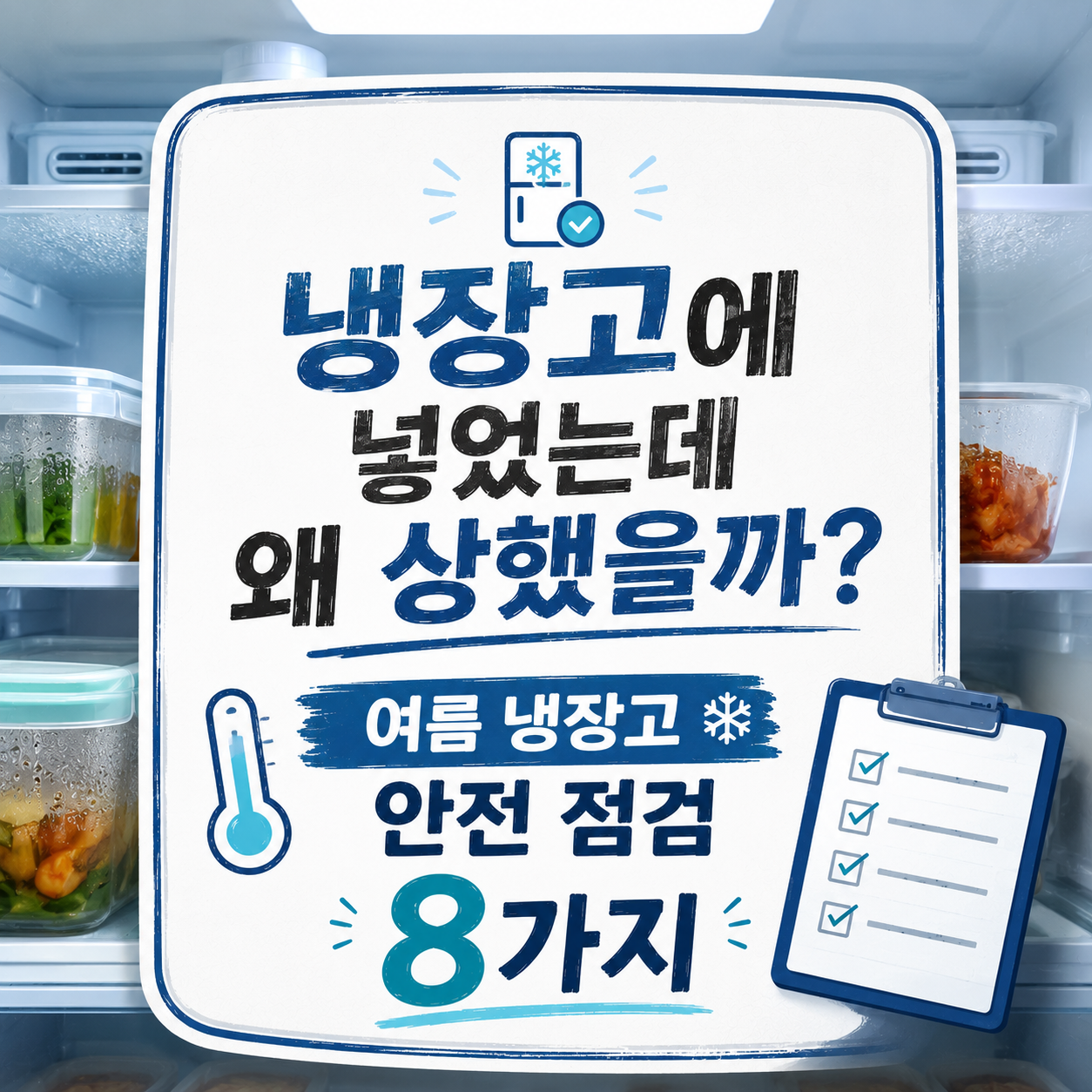
Food goes bad in a summer fridge because of actual internal temperature, placement, and packaging, not the dial, so run these 8 checks.
If food spoiled even though it was in the fridge, the cause is often less the temperature dial and more how often the door opens and how things are arranged inside. A refrigerator is not a box that protects everything the moment you shut the door. It only works when air can circulate and the temperature holds.
This list covers the checks that get skipped most in summer, starting with measuring the real internal temperature, then shelf layout, where raw meat sits, door use, labeling and cooling leftovers, wiping up contamination, and checking recalls. If this is your first check, start with items 1 to 3. If you are already worried about food poisoning, begin with items 3 and 7.
How we chose
- Habits you can start at home right away
- Items that directly reduce cross-contamination and temperature rise
- Judgments based on records and measurements, not smell or looks
Check the Real Internal Temperature, Not Just the Dial

Don't Pack Every Shelf to the Brim

Keep Raw Meat Sealed on the Bottom Shelf

Keep Temperature-Sensitive Items Off the Door

Label Leftovers with When They Were Made or Opened

Split Large Batches into Small Containers to Cool Fast

Wipe Down Handles Right After a Spill

Cross-Check Recall Lists When You Get a Safety Alert

How to choose
If this is your first check, begin with the thermometer in item 1 and the shelf cleanup in item 2. Households that handle raw meat often should put items 3 and 7 first, while those who cook big batches of side dishes will get the most from items 5 and 6. If kids are around or the door opens dozens of times a day, tidy up the door shelf in item 4 first.
The comparison points are the same for every item: measure the numbers, judge food by its date, keep anything that leaks below everything else, and match suspect products against an official list. Following these alone prevents a good share of summer fridge trouble. Information here reflects the time of research and may change, so check your manual and official channels before buying or discarding anything.
Frequently asked questions
What temperature should my fridge actually be set to?
Follow your model's recommended setting in the manual. The dial and the actual internal temperature can differ, so it matters more to check different spots with a fridge thermometer. Swings tend to be bigger in seasons when the door opens often.
If it doesn't smell off, is it safe to eat?
Smell and appearance alone can't confirm whether something is microbially contaminated. Labeling containers with a cooked or opened date and going by that record is the safer approach.
Where do I check for food recalls?
If you get a safety alert or see a recall in the news, cross-check the product name, manufacturer, expiration date, and barcode or lot number against the official recall list, such as Food Safety Korea. Don't assume a similar-sounding name is the same product.
Where should raw meat go in the fridge?
Put it in a lidded container or on a tray on the bottom shelf. That way, if juices leak from the packaging, they can't drip onto other food.
Can I put hot soup straight into the fridge?
A whole pot stays warm in the middle for a long time and can warm nearby food. Divide it into shallow containers, let some heat off first, and don't leave it at room temperature for long.
Is it okay to keep milk or eggs on the door shelf?
The door is where temperature swings the most with each opening. Keep sensitive foods on an inner shelf, and read the storage instructions on the package first.
Get new lists before anyone else
Once a week — only the new lists worth your time.
No spam · unsubscribe in one click
You may also like

Everyone at the Table Got Sick? 8 Things to Check Before You Panic
If food poisoning is suspected, log your symptoms and what you ate, sip fluids slowly, and get medical care or call 119 if warning signs appear, then report through official channels if needed.
One Cooler Isn't Enough: 8 Rules for Camp Food That Survives the Heat
From picking the right menu to packing, cooler placement, and grill tools, here's the order that keeps camping and picnic food safe in summer.