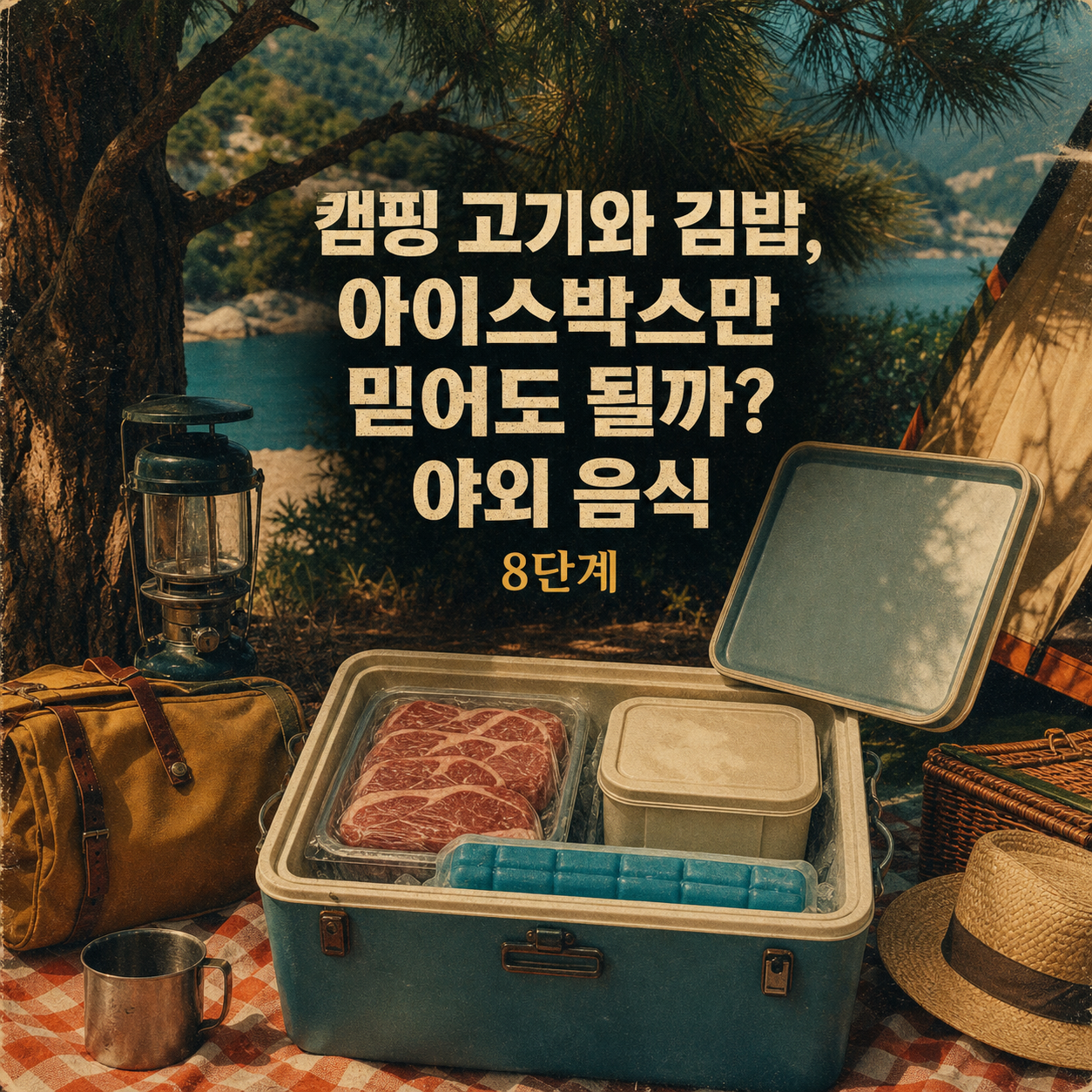
From picking the right menu to packing, cooler placement, and grill tools, here's the order that keeps camping and picnic food safe in summer.
At a campsite, there's no fridge door to open and close all day — just one cooler that has to last. The tricky part is that food can look perfectly fine on the outside while its actual safety depends heavily on travel time and how well it stayed cold. This list walks through shopping, cooking, and handling leftovers in order, covering what to prepare and what mistake to avoid at each step.
Each item notes the situation to watch for alongside the behavior to avoid. Actual risk still depends on outdoor temperature, travel time, and your specific cooler's performance, so treat this order as a starting point and let product labels and real conditions on site make the final call. In hot weather especially, factoring in your cooling capacity starts at the menu-planning stage, not after you've already packed.
Match the Menu to Your Cooler's Limits

Pack Ingredients Right Before You Leave

Keep Drinks and Food in Separate Coolers

Don't Let the Cooler Sit in a Hot Trunk

Bring Clean Water and a Way to Wash Hands

Keep Raw-Food Tools Separate from Cooked-Food Tools

Check That Thick Cuts Are Cooked Through

Don't Hesitate to Toss Questionable Leftovers

Follow the Order and the Risk Drops
Factoring in your cooling capacity at step 1, when you pick the menu, cuts down on mistakes in packing (step 2) and cooler management (steps 3-4) later on. At the cooking stage, pay particular attention to cross-contamination and doneness checks in steps 6 and 7, and when leftovers are questionable, the rule in step 8 — just throw them out — is the surest safeguard.
This list covers general safety principles; actual risk still depends on the day's temperature, travel time, and your cooler's real performance. If you notice symptoms of possible foodborne illness, don't self-diagnose — see a doctor at the nearest medical facility.
Frequently asked questions
How much ice do I actually need in the cooler?
Rather than chasing a fixed amount, match your ice or ice packs to how often you'll open the cooler and how long the trip is, and keep drinks in a separate cooler from food since drinks get opened far more often. Move the cooler to shade as soon as you arrive.
Can I just judge doneness by color?
A charred exterior doesn't tell you whether the inside is fully cooked. For thick cuts, checking the thickest part with a food thermometer is the safer approach.
How long can leftover camp food sit before I should toss it?
If you're not sure how long or at what temperature it sat, don't assume reheating makes it safe again — it's better to throw it out. When in doubt, don't taste it, just discard it.
Ice or ice packs — which is better?
Ice cools more aggressively but produces water as it melts, which can soak food; ice packs stay dry but their cooling duration varies by product. Using both together, with waterproof packaging around anything that might get wet, is the practical approach.
Can I cook food the night before and bring it along?
Yes, but cool it completely first, store it in a sealed container in the fridge, and keep it cold right up until you leave. Avoid packing food that's already sat at room temperature for a long stretch, and reheat it thoroughly all the way through once you're on site.
Get new lists before anyone else
Once a week — only the new lists worth your time.
No spam · unsubscribe in one click