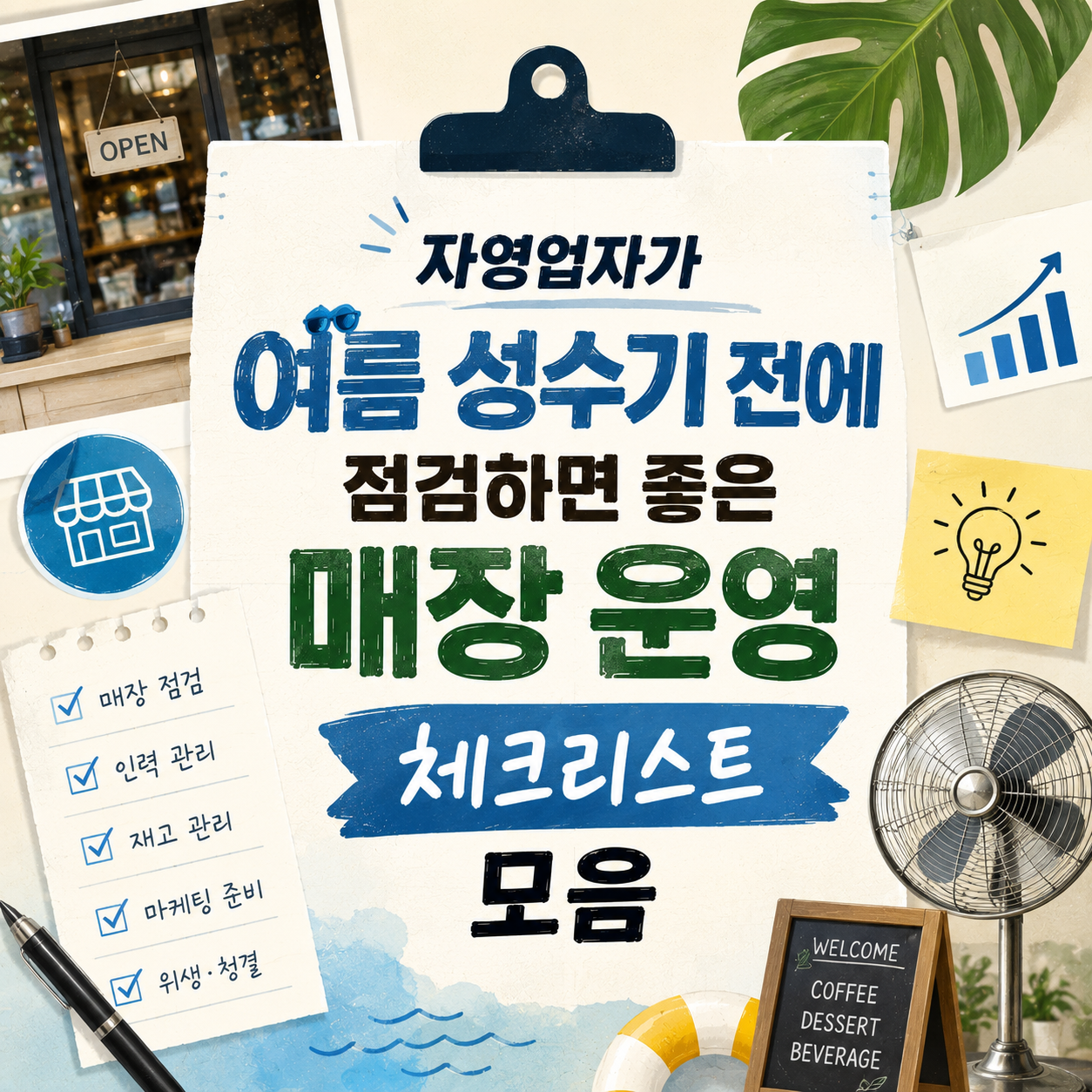
Summer Peak Season Checklist for Small Business Owners
Updated 8/30/2026
A checklist of operational points small business owners can review before summer's busy season, covering cooling, food safety, delivery, and staffing.
Summer peak season brings more revenue, but it also raises operational risk at the same time. Cooling costs climb, food storage gets trickier, and staff schedules collide with delivery order spikes — small oversights here tend to show up quickly in reviews and repeat visits. Sanitation and fire-safety standards vary by business type and region, so treat any specific requirement as something to verify with your local government or the relevant agency rather than a fixed rule.
Below are the checks worth running before summer for cafes, restaurants, retail shops, and delivery-focused businesses. Getting basic operational stability right tends to matter more heading into peak season than any single marketing push.
01
Check the AC filter and airflow layout
Weak cooling shortens how long customers stay and adds to staff fatigue. Start with cleaning the AC filter, clearing space around the outdoor unit, and checking for seats where airflow gets blocked.
02
Confirm food storage temperatures
Foodborne illness risk climbs in summer, which makes fridge temperatures and expiration tracking more important. Check whether first-in-first-out is actually being followed, and whether frequent door openings during rush hours are letting temperatures swing. For specific sanitation standards, check your local public health center's current notices.
03
Test delivery packaging for leaks
Packaging quality on cold drinks or soup dishes shows up directly in reviews. Shaking test packages for roughly the actual delivery duration beforehand helps catch problems before customers do.
04
Recalculate the cost of summer specials
A seasonal item can sell well and still leave thin margins if the cost ratio is high. Recalculate actual margin including ice, fruit, milk, and packaging costs.
05
Adjust part-time staffing for peak hours
Vacation season tends to concentrate orders into specific time windows. Reinforce staffing during those windows based on sales data, and keep roles simple for newer staff.
06
Block insect entry points
Doors open more often in summer and food smells travel, which raises the odds of insects getting in. Check screens, drains, trash bins, and outdoor lighting, and shorten your cleaning cycle for the season.
07
Prepare review response templates
Both good and bad reviews pile up faster during peak season. Having response templates ready for common praise and complaints helps keep response quality steady even when things get busy.
08
Check card terminals and mobile payment systems
Payment errors create major bottlenecks during rush periods. Check the card terminal, POS system, delivery app settlement account, and mobile payment QR codes before peak season hits.
09
Set a standard for typhoon and heavy-rain operations
Summer can force sudden changes to operating hours because of typhoons or heavy rain. Deciding in advance on staff commute safety, deliverable areas, and when to post a temporary closure notice makes real-time decisions much faster.
10
Check small business support programs
Support programs covering electricity costs, policy funding, training, and consulting change depending on the season. Checking notices from the Korea Small Business Institute and your local government regularly helps you avoid missing available support.
Frequently asked questions
What standard should I use for summer sanitation checks?
Sanitation requirements differ by business type and region, so there's no single answer. Checking your local public health center or the relevant agency's current notices is the accurate way to know what applies to you.
What's the first thing to check to cut down on delivery packaging complaints?
Testing your packaging over roughly the actual delivery time is effective. For items prone to leaking, like soups or drinks, checking the packaging first tends to reduce complaints later.
How do I set a standard for adjusting hours during a typhoon or heavy rain?
Deciding in advance on staff commute safety, which delivery areas to serve, and when to post a temporary closure notice cuts down on confusion when it actually happens. It helps to base that standard on both weather alerts and local government guidance.
NEWSLETTER
Get new lists before anyone else
Once a week — only the new lists worth your time.
No spam · unsubscribe in one click
This page contains affiliate links. We may earn a commission from qualifying purchases.
Summer Peak Season Checklist for Small Businesses | Golladream