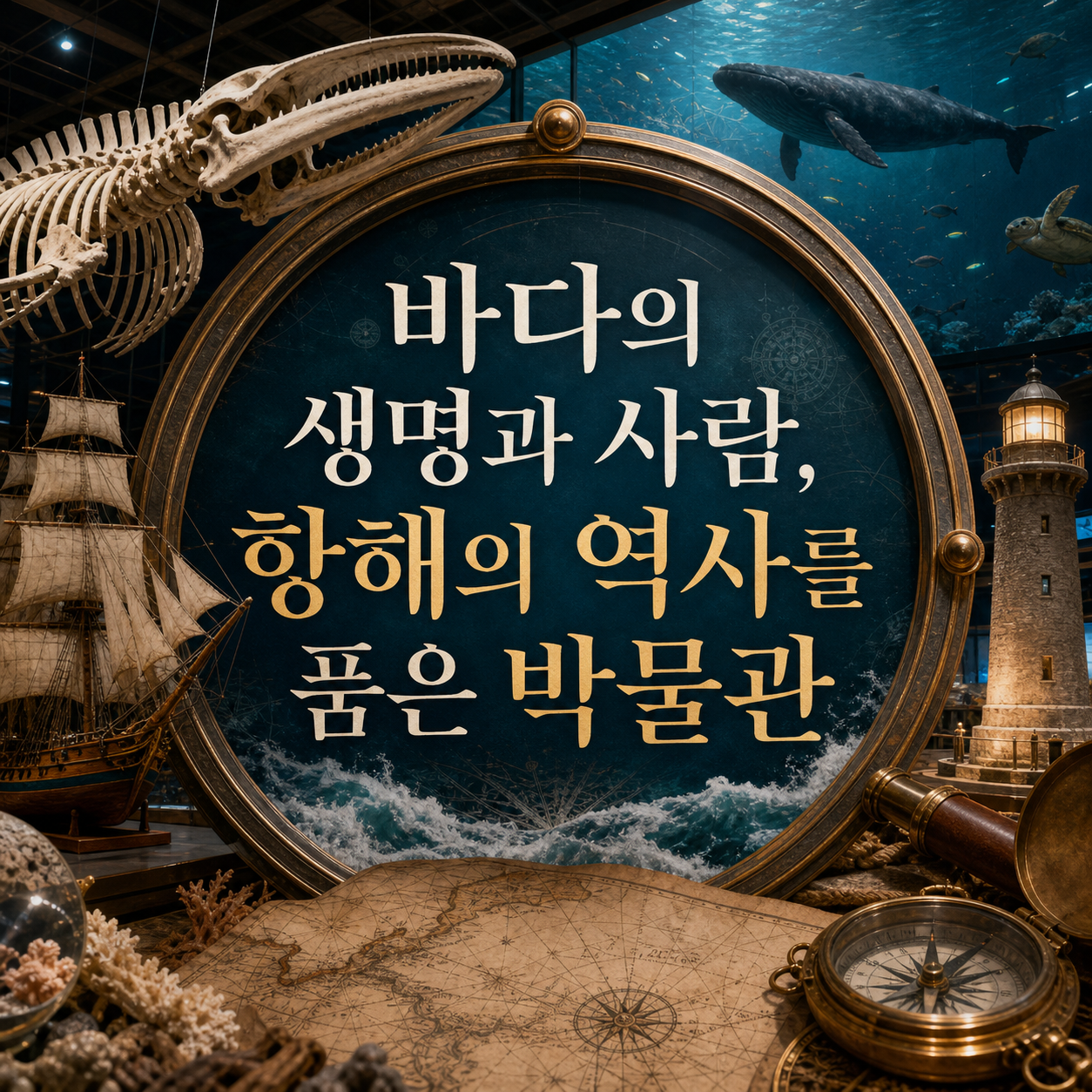
Ocean museums range from history halls to relic sites to hands-on science centers, so knowing the type first helps you pick the right one fast.
Search for ocean museums in Korea and the names sound similar, but the places behind them differ a lot. Some trace navigation and shipbuilding history broadly, others walk you through how relics from shipwrecks get restored, a few let you experiment with waves and currents, and some display living-scale marine specimens. Because the purpose differs so much, picking one at random often means an exhibit you weren't expecting.
This list gathers ten real museums by type: comprehensive halls in Busan and Incheon, a hands-on science center in Uljin, underwater relic halls in Mokpo and Taean, and living-history or natural-history exhibits in Jeju and Busan, plus shipbuilding and whaling history in Geoje and Ulsan. Bring kids to the hands-on science museum, bring history buffs to the relic halls, and bring biology fans to the specimen collections.
How These Were Chosen
- Currently operating public or national ocean museums in Korea
- A mix of comprehensive, relic, science, biology, and folk-history exhibits
- Regional balance across the capital area, Yeongnam, Honam, and Jeju
- Whether hands-on programs or children's facilities are available
Most sites sit along the coast or outside city centers, so travel time adds up, and closing days and tour reservations vary — match the type to your curiosity first, then confirm details on the official page before you go.
National Maritime Museum

Incheon National Maritime Museum

Marine Bio Resource Institute Seaqrium

National Marine Science Museum

Mokpo Maritime Museum, National Research Institute of Maritime Heritage

Taean Maritime Relics Exhibition Hall

Jeju Haenyeo Museum

Busan Marine Natural History Museum

Geoje Shipbuilding & Maritime Culture Center

Jangsaengpo Whale Museum

How to Choose
New to ocean museums and want an overview? Start with No. 1 National Maritime Museum or No. 2 Incheon National Maritime Museum. Traveling with kids who want hands-on exhibits points to No. 4 National Marine Science Museum. Drawn to shipwreck history, pair No. 5 Mokpo Maritime Museum with No. 6 Taean Maritime Relics Exhibition Hall; for biology and habitats, combine No. 3 Seaqrium with No. 8 Busan Marine Natural History Museum.
Weigh exhibit type against what interests you, then check travel distance and closing days against your schedule. Fees, hours, and reservation rules reflect the research date and can change, so confirm on each museum's official channel before you visit.
Frequently asked questions
Which ocean museum is best for kids?
The National Marine Science Museum in Uljin lets visitors physically experiment with waves, currents, and deep-sea phenomena, and the National Maritime Museum in Busan has a dedicated children's museum — both are strong picks. Some hands-on programs require advance booking, so check the website first.
Are any of these museums free to enter?
Most national-run museums offer free or low-cost admission to their permanent exhibits, though special exhibitions or hands-on programs often carry an extra fee. Pricing varies by site, so confirm the current rate, as of September 2026, on the official homepage before visiting.
Can I visit more than one in a single day?
In Busan, the National Maritime Museum pairs well with the Busan Marine Natural History Museum; around Mokpo and Taean, the two relic exhibition halls combine naturally. Each site typically takes an hour or two, so more than two per day tends to feel rushed.
Where should I start if I want relics and history?
Mokpo Maritime Museum walks through how ceramics and ships recovered from shipwrecks are preserved and restored, while Taean Maritime Relics Exhibition Hall displays a Goryeo-era ship and its trade goods. Both sit in out-of-the-way spots, so pairing them with nearby sightseeing makes the trip efficient.
Where can I learn about haenyeo diving culture?
The Jeju Haenyeo Museum shows diving gear alongside the communal work at bulteok fire pits and how ocean knowledge passed between generations, framing haenyeo culture as living community history. Treat it with respect rather than as a photo opportunity, in keeping with the museum's intent.
Where should I go for specimen-focused exhibits?
The Marine Bio Resource Institute Seaqrium in Seocheon uses large-scale marine specimens to show biodiversity, while the Busan Marine Natural History Museum covers specimens alongside geology and ecology. It's easy to confuse preserved specimens with live aquarium creatures, so read the signage carefully.
Get new lists before anyone else
Once a week — only the new lists worth your time.
No spam · unsubscribe in one click
You may also like

Skip the Gold Crown First: Korea's 10 Best Archaeology and Ancient History Museums
Korea's ancient history is rewritten not by dazzling relics but by pottery shards, tomb layouts, and soil layers.

Let Them Touch One Exhibit Again and Again, Not See Everything
At a children's museum, letting a kid return to one favorite hands-on exhibit repeatedly tends to stick with them more than rushing through the whole floor.