Origin, varietal, altitude, and tasting notes on a coffee bag work best as clues for comparing what you like, not guarantees of flavor.
The best way to read a coffee bag label is to treat each detail as a clue and layer them together, rather than taking any single word as the answer to how it will taste. A bag is packed with country, region, varietal, altitude, processing, roast date, and tasting notes, but expecting great acidity just because the altitude is high often leads to a cup that doesn't match.
This list starts with geography and works down through varietal, processing, roast, tasting notes, and brew recommendations. For each entry, we've noted what it can tell you and what it can't.
How we chose
- Details that commonly appear on real bags
- Things you can use as comparison clues without predicting flavor
- Ordered from geography to production, processing, and use after purchase
If you're new, read from number 1 down. If you already have a bag you like, start by comparing its tasting notes (9) and roast level (7).
What the country of origin tells you

Specific region names as a tracking clue

Farm, producer, and cooperative info

How to read a varietal name

The limits of interpreting altitude

Washed, natural, and other processing labels

Roast level as a relative term

Roast date and the seller's guidance

Tasting notes as associative language

Brew recommendations as a starting point

How to choose
If you're reading labels for the first time, use the country (1) and region (2) to get a general direction, and for a bag you like, log the varietal (4) and processing (6) too. Simply checking whether the same clues overlap on your next purchase narrows your taste quickly.
If freshness worries you, start with the roast date and seller's notes (8). If your home brews taste inconsistent, begin with the recommended settings (10). Altitude (5) and roast level (7) should never be trusted as a number or a name alone; read them with the other details.
Label information varies by seller and product and can change, so check the seller's official channel for the latest details before you buy.
Frequently asked questions
Does higher altitude always mean better beans?
Altitude is just one clue among several that can influence acidity and density - it doesn't guarantee quality on its own. Read it alongside latitude, climate, and varietal information listed on the same bag.
Can I trust light/medium/dark roast labels?
Standards vary by roaster, so 'medium' from one company can look and taste different from another's. Treat it as a relative scale within the same seller's lineup, and check the brew recommendation alongside it.
Are the ingredients in tasting notes actually in the coffee?
Tasting notes are mostly associative language for sensations noticed during cupping, not a list of added ingredients. If you need to check for allergens or actual ingredients, look at the separate ingredient label instead.
What should I look at first on a coffee bag label?
Start with the country, the specific region, and the roast date. Together they give you a rough direction and a sense of freshness, and adding the varietal and processing makes comparison easier.
Is a more recent roast date always better?
Not necessarily. Some sellers recommend letting the beans rest for a while depending on the brew method, so it's best to follow the storage and usage guidance printed on the bag first.
Which is better, washed or natural coffee?
Neither is better; they are different processing methods. Even the same process name can vary by farm, so note how each cup tastes and find the style that fits your palate.
Get new lists before anyone else
Once a week — only the new lists worth your time.
No spam · unsubscribe in one click
You may also like

Water Sets the Strength, Milk Sets the Feel — 10 Coffee Combinations to Know
The same espresso shot changes completely in strength, texture, and sweetness depending on whether milk, water, ice, or cream goes in.

Count the Total, Not the Cups — 10 Ways to Ease Off Caffeine Without Quitting Coffee
Caffeine is easier to manage by tracking your total intake across the day and your own reaction, not by counting cups alone.
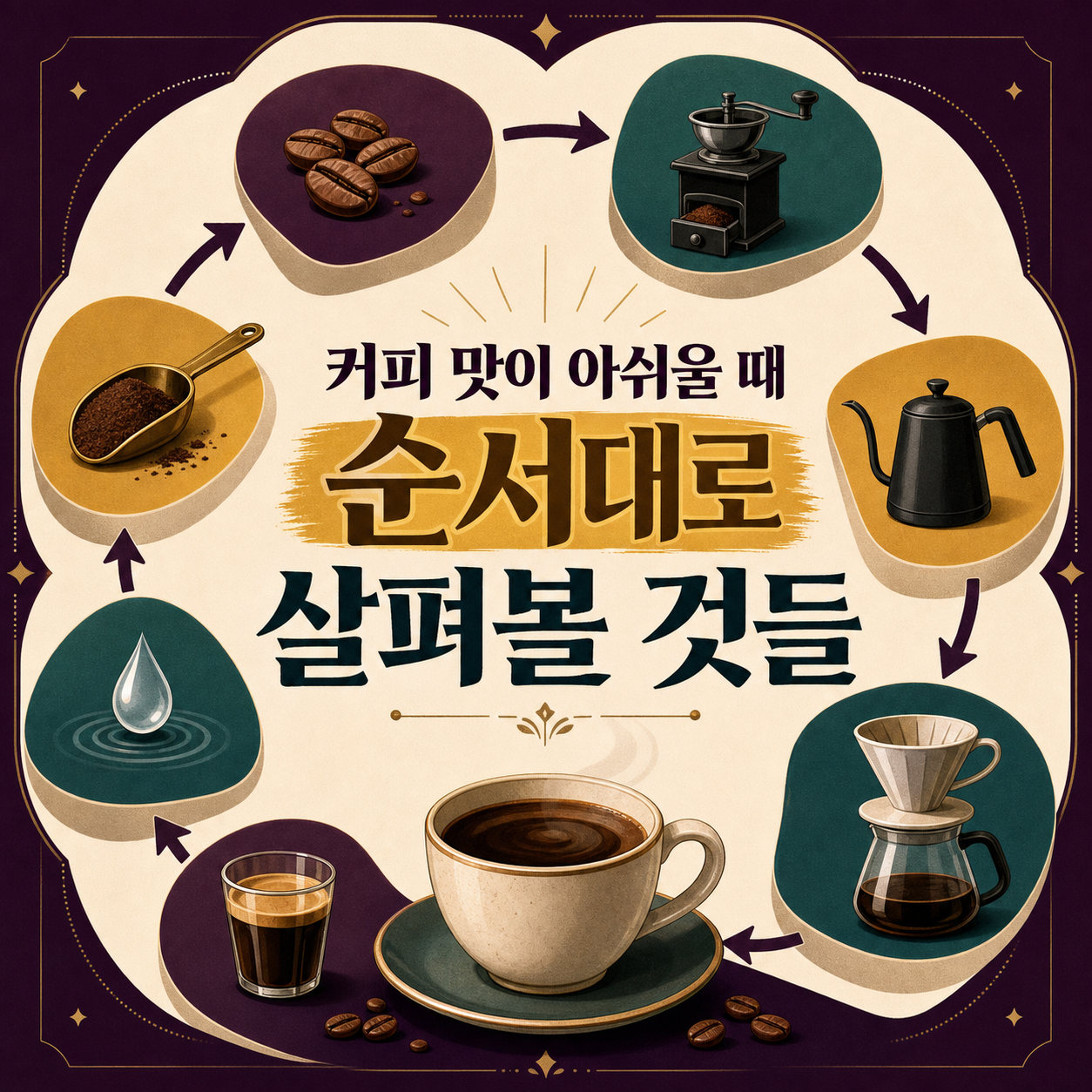
Before You Blame the Beans: A Coffee Troubleshooting Order
When coffee tastes off, check the variables one at a time by symptom instead of swapping beans, and you will find the cause much faster.