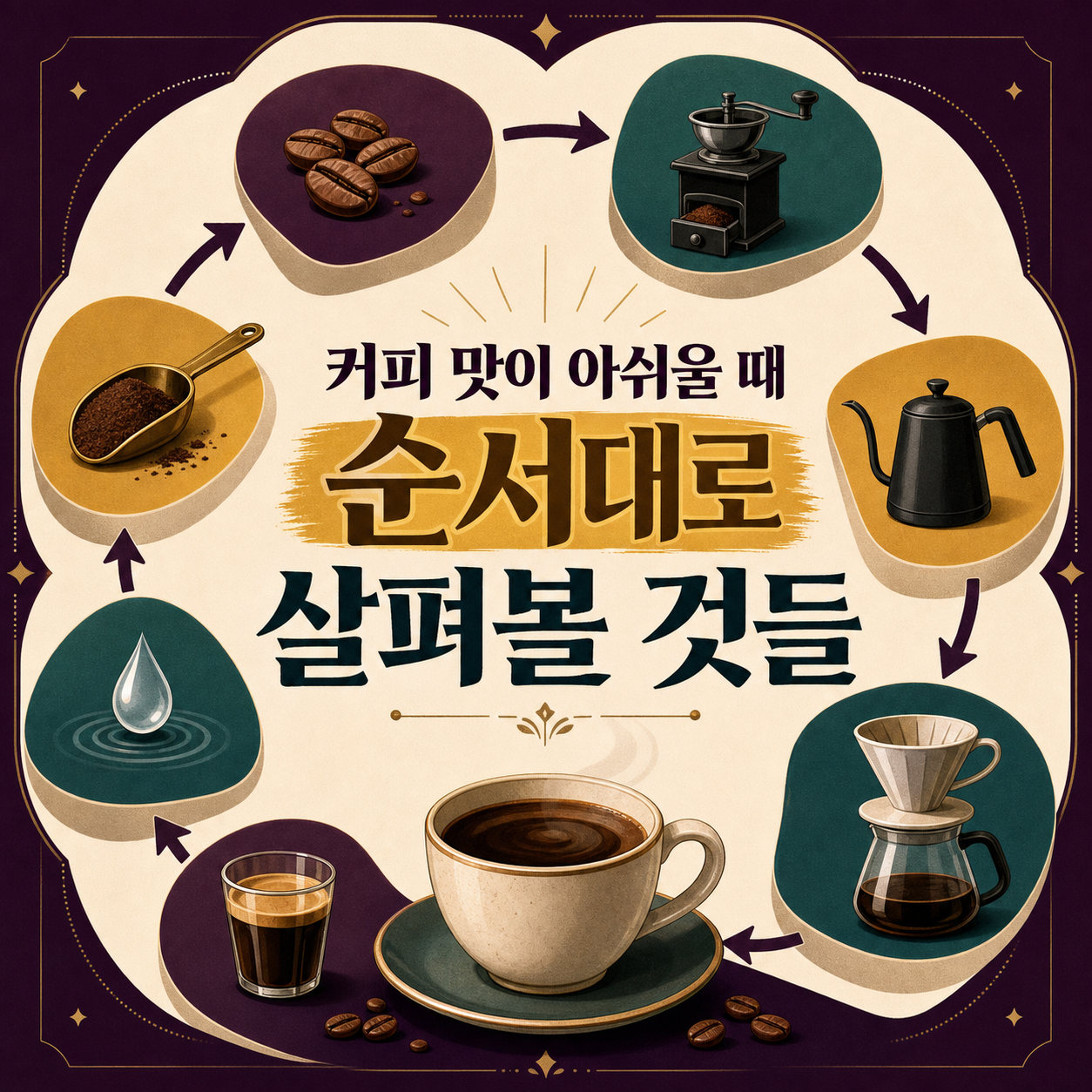
When coffee tastes off, check the variables one at a time by symptom instead of swapping beans, and you will find the cause much faster.
When a cup comes out sour, bitter, thin, or dry, most people suspect the beans first. But a cup is never the work of the beans alone. It is the combined result of the water, grind size, the amount of coffee and water, temperature, brew time, how you pour, and how clean your gear is. That is why the same beans can taste different today than they did yesterday.
This list starts from what bothers you in the cup and sorts it into ten symptoms, each with the variables worth checking and in what order. The more common complaints come first, and the last entry covers a step before brewing even begins: storage.
How to read it
- Open the entry closest to what you are tasting right now.
- Change only one variable at a time, and write down the new value.
- Confirm with the same beans at least twice before you decide.
- If you cannot name the symptom, start with #9 (inconsistent results) and #10 (storage).
When sourness is too sharp

When bitterness lingers too long

When the body is thin and the finish is short

When it feels chalky and dry

When the aroma feels weak

When the temperature makes it hard to drink

When water flows through too fast

When extraction is too slow

When the same method gives different results

When it's time to check bean storage

How to choose
If one flavor clearly bothers you, jump to its entry: #1 for sourness, #2 for bitterness, #3 for a thin cup, #4 for dryness. If results change cup to cup, start with the logging habit in #9. If the aroma stays empty no matter what you adjust, suspect storage in #10 first.
When comparing, keep grind size, amounts, water temperature, and brew time on a chart and change one box at a time. Results vary by bean and gear, so check the seller's and maker's official channels.
Frequently asked questions
What should I check before switching coffee beans?
Start with whichever of grind size, water temperature, dose, or brew time changed most recently. Changing all four at once makes the cause hard to isolate, so roll them back one by one and compare.
How do I handle sourness and bitterness differently?
For sharp sourness, try a slightly coarser grind or a longer brew. For lingering bitterness, try lowering the water temperature or shortening contact time. Do not decide from a single cup; repeat once with the same beans.
Where do I start when my coffee tastes thin and watery?
Weigh the coffee and water with a scale, then log brew time and grind condition in order. If you change several values at once, you will not know which one made the difference.
Why does the same method give different results every time?
Something in the water, beans, grind, or pouring order has probably shifted slightly. Logging with a scale and timer shows where, and one off cup is no reason to judge your skill or the beans.
Does bean storage affect flavor?
Yes. How well the bag is sealed, where it sits, and how long it has been open can noticeably dull the aroma. Check storage before reworking your brew method, and follow the seller's storage guidance.
What if the brew runs too fast or too slow?
If too fast, check grind size, dose, even wetting, and how the gear is assembled. If too slow, check grind size, fines, and the filter. Avoid forcing the brew or going beyond what your equipment recommends.
Get new lists before anyone else
Once a week — only the new lists worth your time.
No spam · unsubscribe in one click