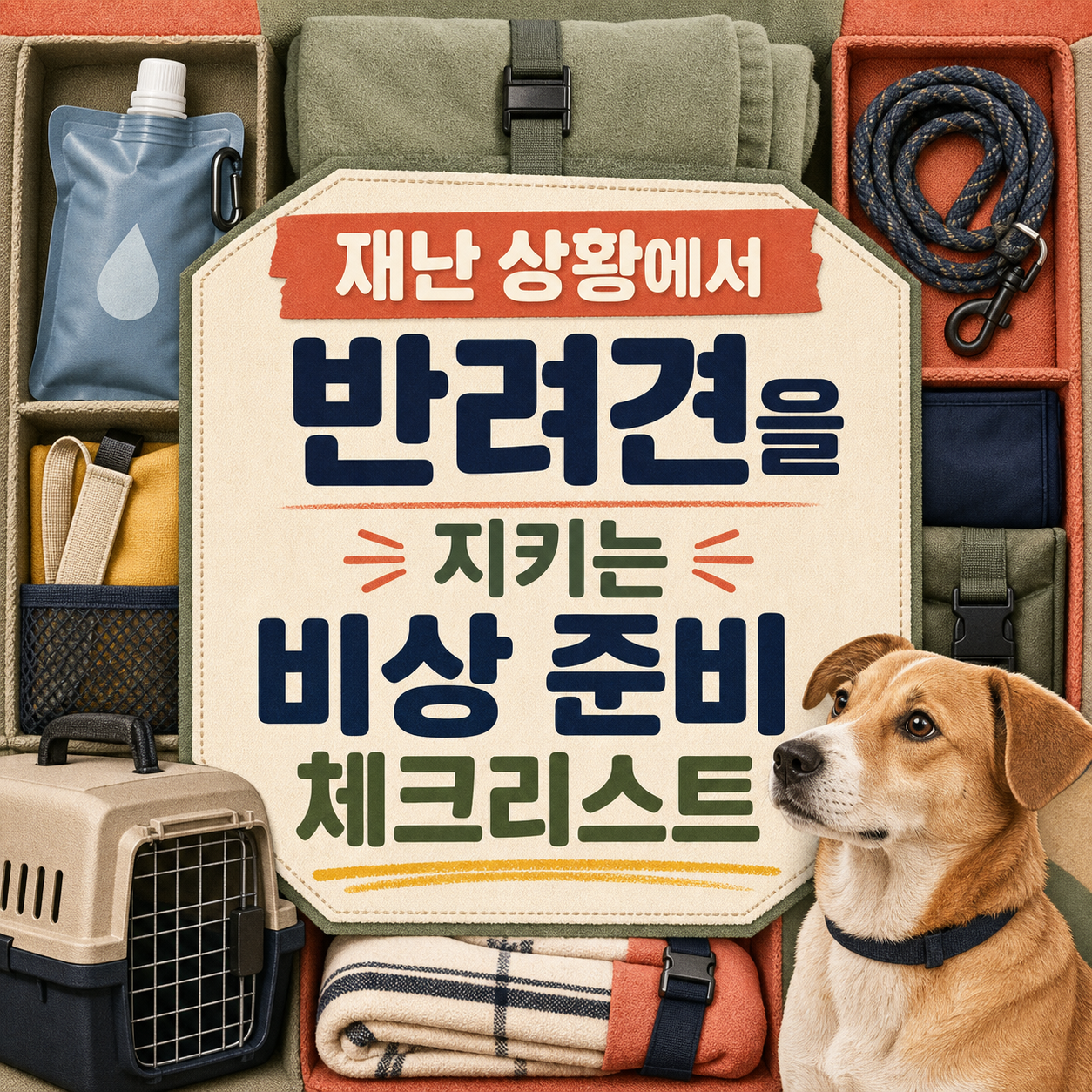
To evacuate with your dog, get the carrier, leash, and ID ready in advance and make sure everyone at home knows where the go-bag is.
To evacuate with your dog in a disaster, check that the carrier, leash, and ID are in place before you worry about food. What trips up most owners is not what to buy but whether what they already own can be pulled out within minutes. A frightened dog behaves unlike itself, and an unprepared kit slows down the entire evacuation.
This is not a shopping list to stockpile. It is a review order: escape prevention, identification, health records, supplies, then contacts. Gear that keeps you from losing your dog comes first, and items for longer stays come later.
Selection criteria
- Is it needed in the first few minutes of leaving?
- Does it help find your dog if you are separated?
- Can something at home substitute for it?
- Does it need regular updating?
If you are starting from zero, cover items 1 through 5 first and fill in the rest as you build your go-bag.
Carrier

Leash and Harness

ID Tag

Registration Record

Vaccination and Medical Records

Emergency Food and Water

Medication

Waste Supplies

A Familiar Blanket

Emergency Contact Network

How to choose
If you are starting out, check the carrier (1) and leash and harness (2) first, then bring the ID tag (3) and registration record (4) up to date in case you are separated. For a dog with a health condition, medication (7) and medical records (5) matter most.
Do not build the go-bag once and forget it. Check food and medication expiration dates regularly, and make sure everyone in the household knows where it is and who is on the contact list (10). In an emergency your own safety comes first, and if a person or your dog is hurt, call 119 for help right away. This information reflects research as of October 2026 and may change, so confirm shelter rules and official procedures through official channels.
Frequently asked questions
What should go in a dog disaster go-bag?
Food and water, medication, waste supplies, a spare leash, copies of medical records, and a familiar blanket are the basics. Add identification and your contact list. Anything with an expiration date needs regular replacing.
When should carrier training start?
Dogs often resist a carrier they first meet during an actual emergency, so practice early. Leave the door open and pair treats and rest with time inside to lower resistance.
How do I know if a shelter will accept pets?
Pet policies vary by shelter, so check your nearest one in advance. Also line up a friend or vet clinic who could take your dog temporarily if the shelter cannot.
Where do I update my dog's registration information?
In Korea, owner contact and address details can be checked through the national animal registration system. Update it whenever you move or change your number so you can actually be reached.
Is an ID tag enough on its own?
No. Tags can fall off or wear down. Pair one with official registration and a microchip for backup.
How often should I check the go-bag?
Regularly check expiration dates on food and medication and confirm contacts have not changed. Update vaccination records after each vet visit.
Get new lists before anyone else
Once a week — only the new lists worth your time.
No spam · unsubscribe in one click
You may also like
A Life Jacket Isn't Permission to Look Away — A Dog's Summer Water Safety Routine
From fitting a life jacket to checking water quality to post-swim ear and skin care, ten habits that carry a dog through water play safely, in order.

Your Dog Just Got Caught in a Downpour — Here's What Actually Matters Next
Getting your storm-spooked dog home is only step one — rinsing paws, full drying, and watching for hypothermia is what prevents infections.