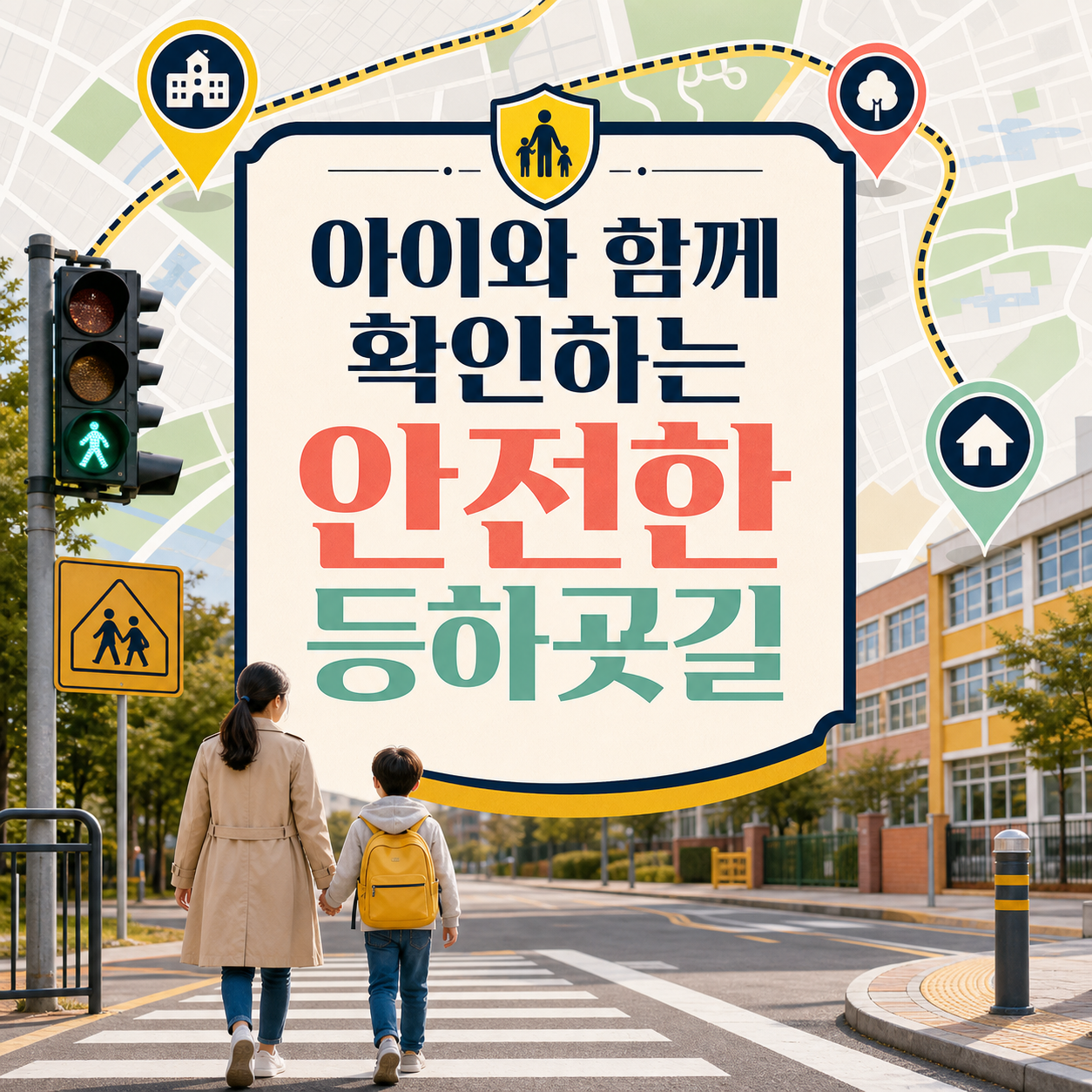
The safest route to school is the one where a child can spot danger on their own, and this list covers 10 checks from a daylight walk-through to emergency contact rules.
A safe route to school isn't the shortest line on a map. It's the one where a kid can spot danger and ask for help without a grown-up beside them. The same street can carry very different risk depending on turning traffic, parked cars, construction, rain, or the time of day. Parents often wonder what to check. This list gives 10 things to verify by walking the route together.
Do the walk-through around the time your kid really leaves for school, and let them lead the way they'd normally go. As a parent, ask questions like "what should we watch for here?" instead of pointing out the answer first. And remember that a location-sharing app is no substitute for walking carefully or agreeing on when to check in.
How to read it
- Higher-risk situations come first.
- Free checks you can do today are favored.
- New walkers: start with ranks 1 to 3. Veterans: start at rank 6.
Walk the route together in daylight

Where to stop at crosswalks

Watching for cars in narrow alleys

Bus and subway stop locations

A backup route for rainy days

Keeping the phone put away while walking

An emergency contact card

Deciding where to go for help

Ground rules for walking with friends

When to call if plans change

How to choose
If your child is starting school, begin with the daylight walk-through at rank 1 and the crosswalk waiting spot at rank 2. If your neighborhood is full of side streets, work on rank 3; if they ride a bus or subway, practice rank 4 first. For a kid who already walks alone, the phone habit at rank 6, the friend rules at rank 9, and the check-in rule at rank 10 are where problems actually show up.
The most important part is not announcing rules from above but listening to your child and setting them together. Ranks 5, 7, and 8 pay off once set, so sort them out early. Information is accurate as of when it was researched and may change, so check transit and school policies through official channels.
Frequently asked questions
How many times should we walk the route before school starts?
Walk the full route together at least once, around the time your child actually leaves for school. Do it again whenever the route changes, such as a new semester or class. Also check a rain-day backup route separately.
How should I react if my kid says they felt unsafe?
Take that feeling seriously even if the reason isn't clear. Tell them ahead of time that it's fine to walk into a public place with people and ask for help. Afterward, listen calmly to what happened instead of leading with a scolding.
Is turning on a location-sharing app enough?
Location sharing only shows where someone was after the fact and doesn't prevent an accident. It means something only alongside real behavior rules: keeping the phone away while walking, an emergency contact card, and agreed places to ask for help.
How should the route change on rainy days?
Plan a backup route along main streets and public buildings for when flooding, slippery ground, or construction blocks the usual path. Riverside paths, underpasses, and alleys that collect water may look like shortcuts, but your child should know not to use them.
What should I tell my child about strangers who approach them?
Be clear that they never follow a stranger's car or go to an isolated spot, whatever reason is given. If they feel threatened, they should head to the school, a police station, or a convenience store with people inside, and call 112 or 119 in an emergency.
What goes on an emergency contact card?
Only what's needed: a parent's number, the school, and a trusted place to get help. Don't hang an address or family details where anyone can read them, and update the card whenever a number changes.
Get new lists before anyone else
Once a week — only the new lists worth your time.
No spam · unsubscribe in one click