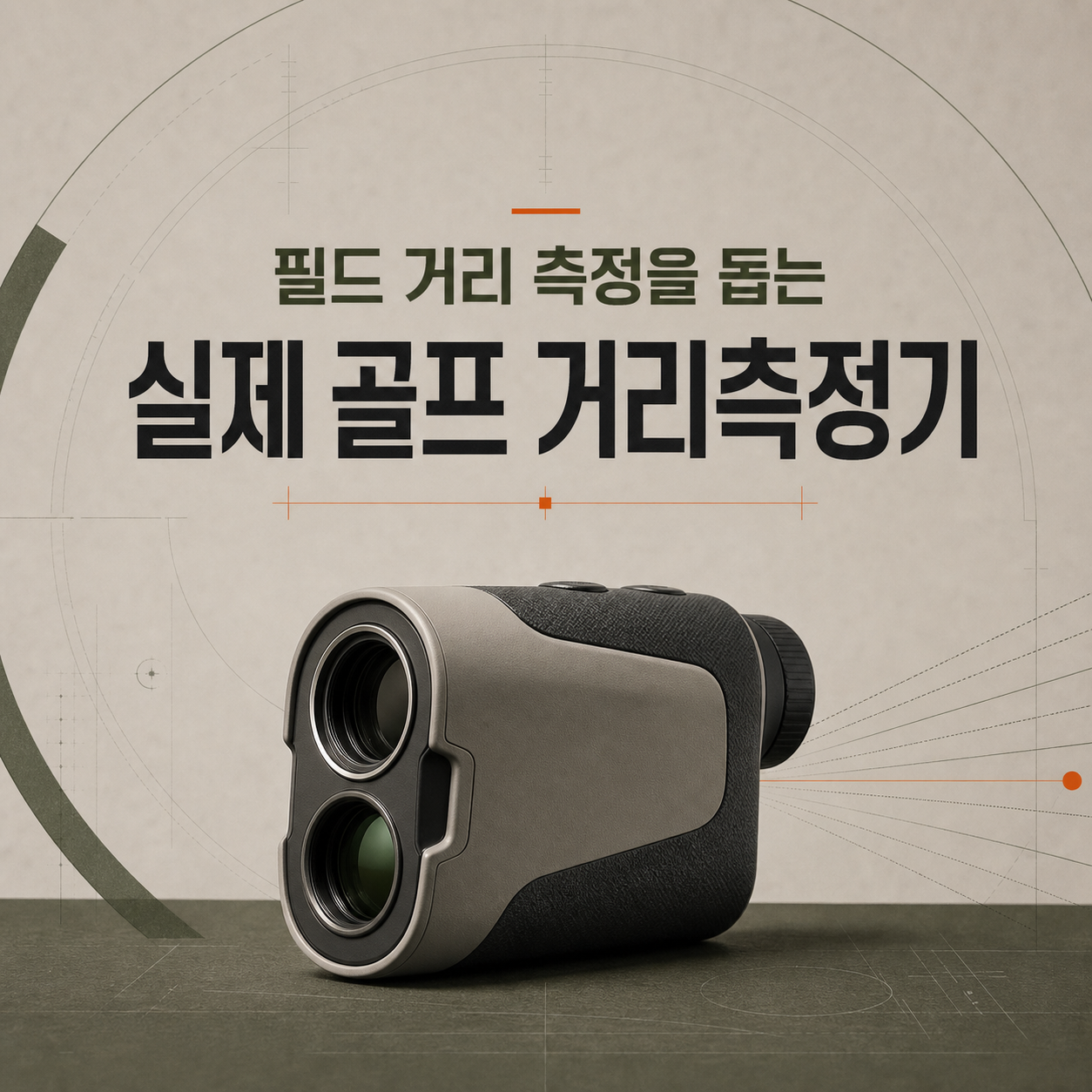
How you toggle slope compensation, how the pin lock feels, and the battery type shape a round more than maximum range.
It is easy to choose a golf rangefinder by how many yards it can reach, yet you rarely feel that number in a real round. What separates one from another is how quickly you can pull it out and lock the pin on every hole, how you turn slope compensation on and off, how it attaches to a cart or bag, and what you do when the battery runs low. This list compares ten models whose specs can be checked on the manufacturers' own pages by those standards.
The order reflects how widely each one covers different situations. If you want a course map and GPS in one view, start at number 1. If watch pairing is the goal, look at number 2, and if tournament rules matter, start with number 4. For something light and simple, begin with numbers 5 and 10.
How we chose
- Is the process for switching slope compensation off clear
- Does it give visual or vibration feedback when it locks the pin
- Does it need a separate cart or bag mount
- Is it rechargeable or does it use replaceable batteries
01
This top-tier unit combines a laser with built-in GPS, so the viewfinder can show a color course map, front, middle and back green distances, and hazard information together. It suits golfers who pick a club by studying the whole hole rather than a single pin number. It is rechargeable, so check the battery runtime and the steps for switching to tournament mode in the official guide before buying (as of October 2026).

02
Its biggest draw is Range Relay, which passes laser readings to a compatible Garmin watch or app. If you already wear a Garmin GPS watch, you spend less time juggling two devices. It has an OLED display, a magnetic cart mount, and a replaceable CR2 battery, which helps anyone who tends to forget to charge. Check the manufacturer's page for the list of compatible watches.

03
The core feature is Elements compensation, which factors temperature and altitude into the slope calculation, and connecting the app adds wind information. It also has a red-and-black dual display and a magnetic BITE mount. With so much data, some functions depend on the app while others work on the unit alone, so sort out where standalone use ends before you buy. For events, also check whether compensation features are allowed.

04
This tour-minded model skips the GPS map and concentrates on locking the pin quickly. Its centerpiece is the Slope-Switch, a physical switch that turns slope compensation on and off, so using it during practice rounds and turning it off for competition is intuitive. If you play events with strict rules, handle the switch in a shop and make sure a gloved hand won't fumble it.

05
One of the smaller units in the Bushnell lineup, it trims the size while keeping slope compensation and pin-lock feedback. It fits in a pocket or a small pouch, which is handy for walkers and anyone with a light bag. Charging over USB-C means you can share a cable with a phone or other gadgets. Because it is compact, test whether the grip and display size feel right in your hand.

06
True to its name, the focus is STABILIZED technology that reduces shake in your hand and in the viewfinder image. Golfers who used to re-shoot a distant pin several times because of a trembling hand will notice the biggest difference. The DUAL LOCKED ON QUAKE alert, which signals a near-target lock with both a visual cue and vibration, and the 6x view are also strengths. How much stabilization helps varies by person, so look through it yourself.

07
It lacks the hand-shake reduction of the higher STABILIZED model, but it offers a magnetic cart mount and visual-plus-vibration alerts when it locks onto a target, making it a solid mid-range package. Its OLED display adjusts to ambient light, so readability stays fairly steady on overcast days or against glare. It balances well for people with steady hands who want only the features they will use. Confirm detailed specs and bundles through official channels.

08
A laser body is paired with a detachable H4 GPS to handle pin distance, front, middle and back green distances, and shot-tracking stats as one set. It fits golfers who do not stop at measuring yardage but want to review data after the round to decide what to practice. The trade-off is carrying the GPS tag and uploading to the app, so ask yourself if that routine feels like a chore. Check the official guide for app terms.

09
Dropping GPS and shot tracking, this model concentrates on a DuraShield hard-shell body, a red-and-black dual display, and target-lock vibration. It suits golfers who toss it in the cart or knock it around in the bag, and anyone who puts fast lock-on first. A cart magnet is built into the body, so there is no separate mounting piece to carry. If you need data logging or a course map, compare higher models in the same family.

10
This entry-level model leaves out upper-tier features such as dual-color display and GPS, bundling just the essentials of laser measurement, slope compensation, and vibration lock. It still covers the basics with yard and meter switching, a replaceable CR2 battery, and a waterproof case. It is a low-pressure way for a first-time buyer to get a feel for a rangefinder. You may miss a bigger screen or GPS later, so weigh how often you play and your budget.
How to choose
If you want to study the whole course and plan strategy, number 1 fits, and if you already wear a Garmin watch, number 2 is the natural choice. For tournament play, favor a model like number 4, where turning slope compensation off becomes second nature, and if shaky hands are your concern, try number 6 in person at a shop. Number 8 suits those who want to manage post-round data, number 9 suits those who put durability first, and number 10 is the low-pressure pick for a first purchase.
When comparing, look first at slope toggling, pin-lock feedback, mounting method, and battery type rather than maximum range, and the choice narrows quickly. The information here reflects the research date and may change, so check official channels before buying.
Frequently asked questions
How do I know if a rangefinder is allowed in official tournaments?
The general condition is that any feature calculating more than raw distance, such as slope, must be fully switchable off, with the off state visible from outside. Learn the tournament-mode steps in the manual beforehand and check the specific rules of the event you are entering.
Do I really need GPS?
If you only need a fast number to the pin, a laser-only model is enough. Consider a GPS-combined unit only when you want front and back green distances, hazards, or a course map in one view.
Which features matter for people who wear glasses?
Beyond magnification and field of view, display color and image stabilization affect how it feels. Try a dual-color display model or a stabilized model at a shop and compare by eye.
Is a rechargeable or replaceable battery better?
Rechargeable units save you from buying batteries but are a problem if you forget to charge. On this list the Z30 and PRO L2 use a replaceable CR2 and the A1-Slope charges over USB-C, so choose by habit.
What should I look for if I walk instead of using a cart?
Size, weight, and how it feels in a pocket matter most. In this list the compact A1-Slope fits this style, while magnetic mounts are more useful if you ride a cart.
NEWSLETTER
Get new lists before anyone else
Once a week — only the new lists worth your time.
No spam · unsubscribe in one click
This page contains affiliate links. We may earn a commission from qualifying purchases.