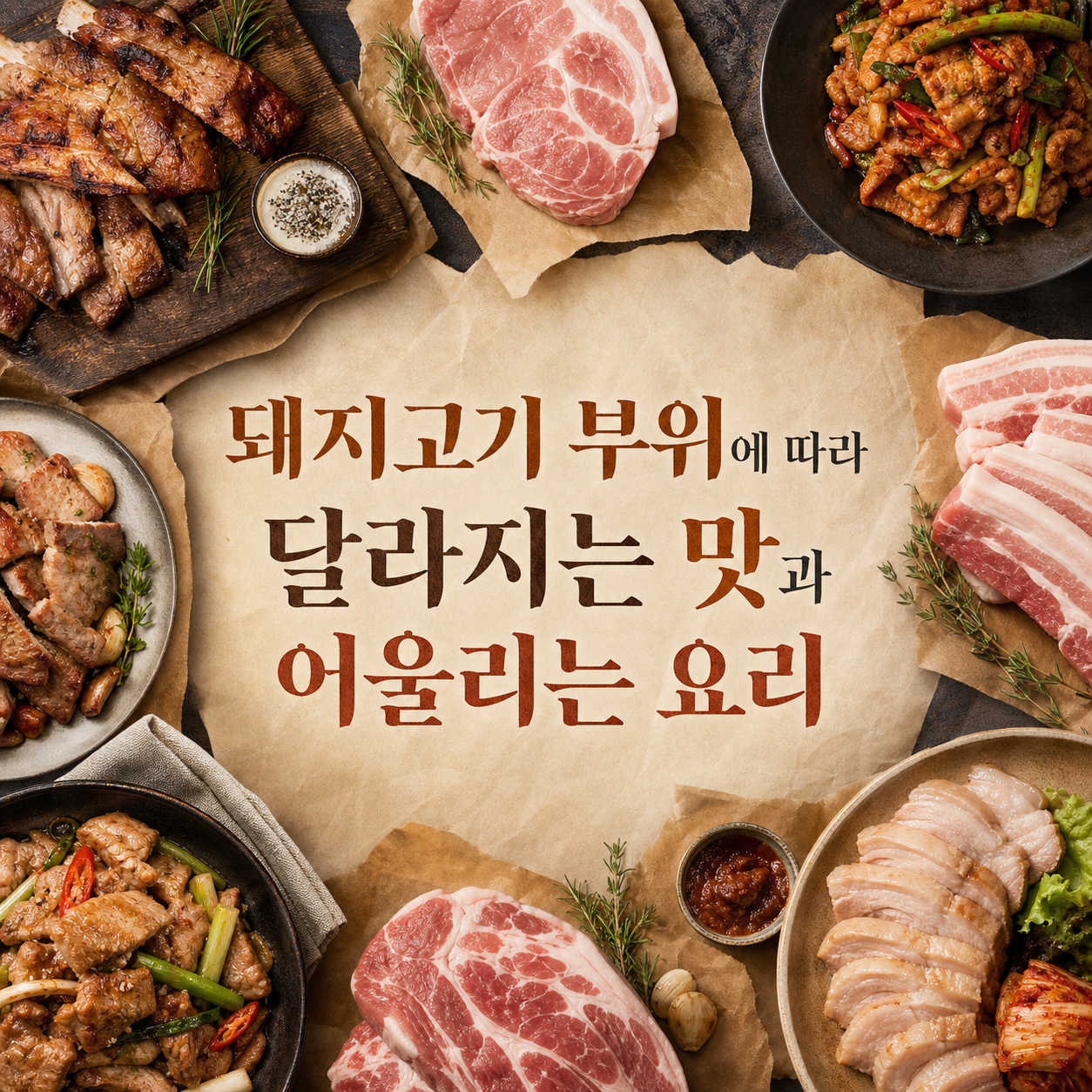
Decide grill, boil, or braise first, then pick the cut by fat distribution and muscle grain — that alone prevents most disappointing results at the table.
Even cuts that share a familiar name can taste completely different depending on how the fat is distributed and how thick the muscle grain runs. Reach for pork belly out of habit and you can miss a cut that's actually better suited to a long simmer, or grill a lean cut and end up disappointed by how dry it turns out.
Selection criteria
- Cooking method first: ordered by which method — grilling, boiling, or braising — actually suits each cut
- Fat distribution: compares whether fat sits in distinct layers, marbles evenly, or is mostly absent
- Muscle grain: notes which cuts have enough connective tissue to get more tender the longer they cook
So instead of ranking cuts as better or worse, this list sorts them by which cooking method brings out their strengths. Decide what you're cooking and how much time you have before you shop. If you're grilling quickly, look for a cut with fat marbled evenly through the meat; if you're simmering for a while, look for one with more connective tissue. The list moves from cuts suited to grilling toward ones suited to boiling and braising.
Pork Belly (Samgyeopsal)
Pork Shoulder Butt (Mokshim)
Pork Foreleg (Apdari)
Pork Hind Leg (Dwitdari)
Pork Loin (Deungsim)
Pork Tenderloin (Ansim)
Pork Ribs (Galbi)
Pork Shank (Satae-sal)
Pick by what you're cooking tonight
For a quick grill, pork belly (#1) or shoulder butt (#2) are the safe picks. For broth or bossam where you have time to spare, foreleg (#3) or shank (#8) actually get more tender the longer they cook. If you want something lean but worry about dryness, try hind leg (#4) shredded along the grain instead of grilled whole.
When choosing a cut, just checking whether the fat sits in layers or marbles evenly, and how much connective tissue it has, makes it much easier to match the cut to tonight's dish.
These are general characteristics — actual trim and grade can vary by butcher or store, so check before you buy.
Frequently asked questions
What's the real difference between pork belly and pork shoulder?
Pork belly alternates in distinct layers of meat and fat, while pork shoulder has fat marbled evenly throughout. Belly crisps up as fat renders out of its layers while grilling, whereas shoulder cooks through more uniformly moist — which is why it works equally well grilled or boiled.
Which cut is best for a Korean-style boiled pork (bossam) or broth?
Cuts with more connective tissue, like the foreleg or shank, get more tender the longer they simmer, which makes them ideal for bossam and broths. Simmering with whole peppercorns, scallion, and doenjang for long enough cuts down any gamey smell and breaks the connective tissue down into a gelatin-like texture.
What food-safety basics matter most when handling raw pork?
Use a separate knife and cutting board for raw pork, and always cook it through to the center. Don't leave leftovers at room temperature for long — refrigerate or freeze according to the storage instructions and use-by date on the packaging.
What's the best cut for a dish like tonkatsu or sanjeok that gets pounded flat?
Pork loin works well thanks to its wide, relatively tender cross-section. Pounding it thin shortens cook time and reduces moisture loss, so keep the thickness even if you're breading it.
Why is tenderloin trickier to cook than other cuts?
It's the least-worked inner muscle, making it the most tender and mild cut, but that also means it turns tough fast if even slightly overcooked. It suits a quick, high-heat finish best, and it's worth using or storing sooner than other cuts once trimmed.
Get new lists before anyone else
Once a week — only the new lists worth your time.
No spam · unsubscribe in one click
You may also like

Stop Picking Chicken Flavors by Popularity — Pick by Who You're Eating With
Fried chicken suits a solo night, half-and-half wins over a mixed group, and soy garlic keeps family dinners peaceful — matching the flavor to the occasion beats chasing what's trending.

Leftover Fried Chicken: How to Store It Safely (and Keep It Tasty)
Leftover fried chicken stays safer and tastier when you limit time at room temperature, vent the steam, separate the sauce, refrigerate it in a single layer, and reheat only once.

Same Fried Chicken, Different Personality — 8 Korean Brands Compared
Instead of ranking who's best, this compares 8 Korean fried chicken brands by flavor personality and which order-night mood each one fits

Home Side Dishes That Save Chicken From Feeling Too Greasy
When pickled radish alone isn't enough, cabbage, cucumber, perilla leaves, pickles, and kimchi from the fridge cut the grease and keep the meal balanced