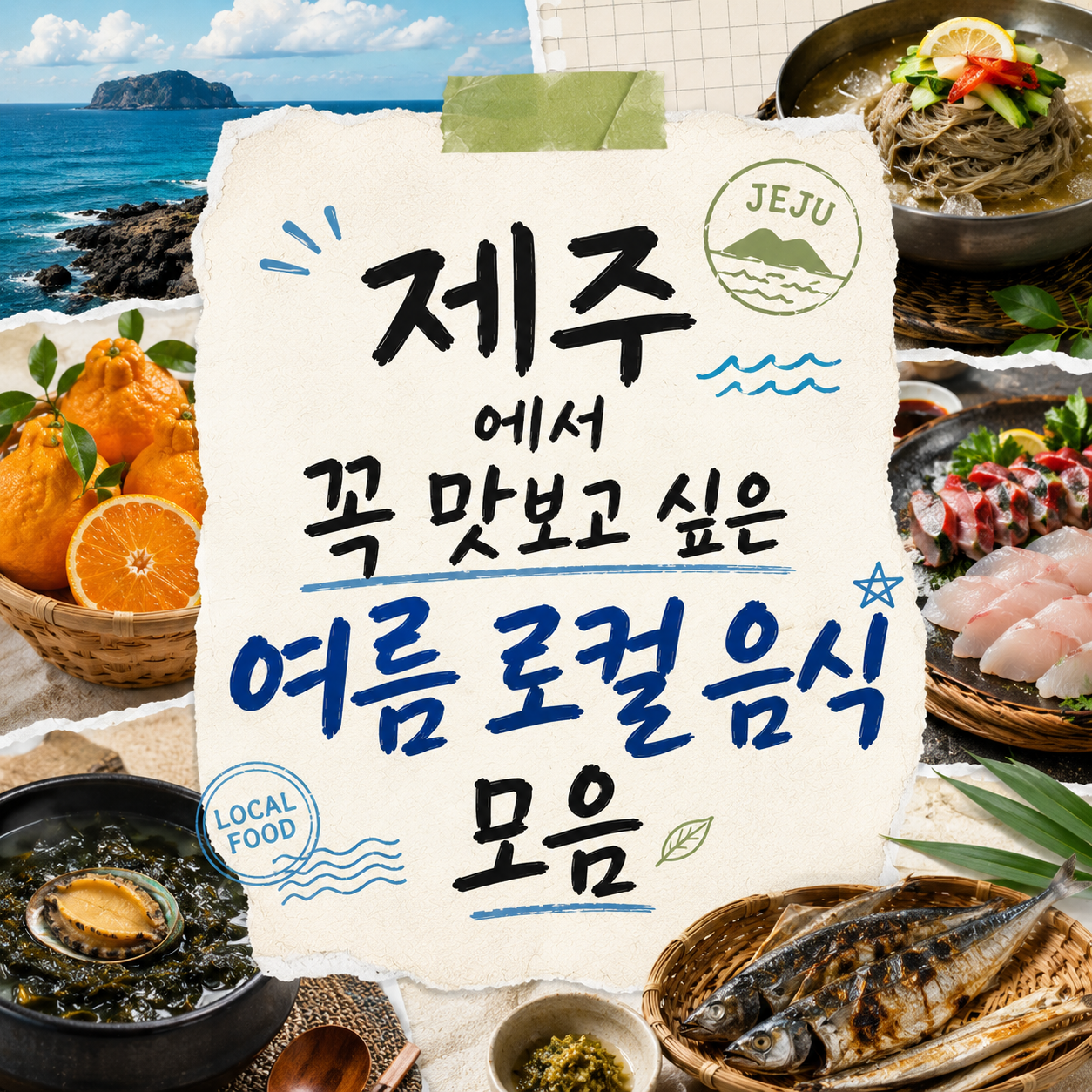
Ten Jeju local dishes to reach for by situation this summer, from cold raw-fish soups to sweet corn and braised hairtail.
Figuring out what to eat on a summer trip to Jeju really comes down to the moment. What you want right after swimming, what cools you down under the midday sun, and what you grab on the move between stops are three completely different dishes.
This isn't a ranking of specific restaurants — it's a list of ten local dishes worth knowing before you look at a menu in Jeju this summer. It mixes bold, unfamiliar options like mulhoe with safe bets like gogi guksu and portable snacks like omegi-tteok, and notes why a first-timer might find certain dishes unusual.
How we picked
How useful the dish is for a specific summer moment — heat, post-swim hunger, or travel between stops
Whether it's distinctly Jeju, or best enjoyed in this particular season
Whether a first-timer needs to know anything before ordering
Seafood dishes shift in price and availability with the season's catch, and some places skip them entirely on a given day, so it's worth checking ahead if you have your heart set on one. The order here reflects how useful each dish is in summer rather than popularity — start from #4 if you've just come out of the water, or #1–2 if you need to cool off first.
01
Jari mulhoe
Jari mulhoe mixes small damselfish with a doenjang-based broth, vegetables, and ice water — a Jeju original that's quite different from the sweeter, tangier mulhoe found elsewhere. The flavor and texture can feel unfamiliar on a first try, which is why opinions on it are sharply divided, but it wakes up an appetite dulled by summer heat. If strong seafood aromas aren't your thing, order one bowl to share and taste before committing. Availability and price can shift with the season's catch, so it helps to check ahead.
02
Hanchi mulhoe
Hanchi mulhoe swaps in squid for a softer, chewier bite alongside the same cold broth and vegetables, making it an easier entry point than jari mulhoe. It's especially satisfying after swimming or a long stretch on the coastal road. Broth style ranges from tangy-sweet to more seafood-forward depending on the restaurant, so it's worth trying more than one to find what suits you. During peak summer, popular spots may have a short wait, so timing your visit outside rush hours can help.
03
Chodang corn
Chodang corn is sweeter and juicier than regular corn, good eaten raw, lightly steamed, or grilled as a summer snack. It's also turned up in cafe form lately — lattes, ice cream, baked goods — making it easy to grab between stops. Some vendors sell it husk-on and others sell it pre-shucked, so pick based on whether you plan to eat it right away or cook it later. If you're buying some to take home, check storage instructions and how long the trip back will take.
04
Gogi guksu
Gogi guksu pairs pork slices with noodles in a rich broth, about as reliable a meal as Jeju offers. It sounds like the wrong call in summer heat, but a hot bowl in an air-conditioned restaurant after swimming can be surprisingly restorative and satisfying. Broth style ranges from deep pork stock to a lighter anchovy base depending on the shop, so first-timers might start with the richer version to get a feel for it. Noodle thickness and topping portions vary too.
05
Galchi jorim
Galchi jorim is hairtail braised in a spicy-sweet sauce with radish and potato, built for sharing over rice at a family-style table. Portion and price vary a lot — whole fish versus cut pieces, sauce heat level, side dish sets — so it's worth checking the menu before you sit down. Served with rice, it makes a filling meal, and it suits a group settling in for dinner. Popular spots can mean a wait during peak season, so timing your visit outside rush hours helps.
06
Heukdwaeji gui
Heukdwaeji gui, Jeju's grilled black pork, is the go-to for a dinner with some occasion to it — thick-cut meat grilled and eaten with meljeot (fermented anchovy sauce), lettuce wraps, and kimchi. It suits a group winding down after a full day outdoors, and a bigger group means more cuts to sample. Prices run higher than a regular meal, so check the cut and weight ahead of time, and try the meljeot in a small amount first if the smell is new to you.
07
Bomal kalguksu
Bomal kalguksu is a noodle soup built on a clean, mild broth from small sea snails, lighter than gogi guksu. It's a good call on a rainy day or after you've cooled down too much in the water, and it's mild enough to suit kids and adults alike. Broth strength and noodle texture differ by shop — a specialist restaurant tends to bring out a stronger sea flavor, while more general spots keep it milder.
08
Jeonbok juk
Jeonbok juk, abalone porridge, is the gentlest option on this list — nutty abalone folded into a soft rice porridge that goes down easy in the morning, including the morning after a heavy dinner or a night of heukdwaeji gui and drinks. It also works when the heat has killed your appetite. Some kitchens cook the abalone innards in for a deeper color and flavor, others keep it plain, so check which style you're getting and how much abalone the bowl actually has.
09
Omegi-tteok
Omegi-tteok works as both a snack and a souvenir — rice cake flavored with cha-jo millet or mugwort, topped with red bean paste or nuts, and easy to find at markets, tteok shops, and near the airport. It's a convenient pick for your last day of travel. Some versions need refrigeration or freezing while others keep at room temperature, so check the packaging if you're taking it home rather than eating it right away.
10
Bingtteok
Bingtteok is a thin buckwheat crepe rolled around julienned radish, plain and mild rather than punchy — an acquired taste that rewards a second bite. It works well as a light counterpoint next to richer, spicier dishes, resetting your palate between bites of something heavier. It's not sold everywhere, so traditional markets, local eateries, and regional festivals are the best places to look for it.
How to choose
If you want to cool down fast, go for #1 jari mulhoe or #2 hanchi mulhoe; if you've just come out of the water and need something filling, #4 gogi guksu or #7 bomal kalguksu rarely disappoint. For a group dinner, #5 galchi jorim or #6 heukdwaeji gui work well, and for something portable or gift-worthy, look at #3 chodang corn or #9 omegi-tteok.
Broth style, portion composition, and price can vary a lot between restaurants even for the same dish, so checking the menu or set options ahead of time makes ordering easier. This information reflects the time of research and may change, so confirm with the restaurant or an official source before you visit.
Frequently asked questions
When's the best time to eat which Jeju summer dish?
Reach for something hearty like gogi guksu or bomal kalguksu after swimming, and something cold like jari mulhoe or hanchi mulhoe during the hottest part of the day. Save shareable dishes like heukdwaeji gui or galchi jorim for dinner with a group.
Is jari mulhoe easy for a first-timer to enjoy?
It can be an acquired taste — the fish has a distinct texture and smell that not everyone loves right away. If you're unsure, order one bowl to share and taste before committing to a full portion.
Do galchi jorim and heukdwaeji gui vary a lot in price?
Yes. Galchi jorim pricing depends on whether it's whole or cut fish and how the sauce is made, while heukdwaeji gui varies by cut and weight. Checking the menu or set composition ahead of time helps with budgeting.
What's the difference between the mulhoe dishes and the noodle soups?
Jari mulhoe and hanchi mulhoe are served in cold broth, built for cooling down, while gogi guksu and bomal kalguksu are hot noodle soups that suit refilling your stomach after time in the water. Pick based on mood and how your body feels that day.
What's good for a snack or a souvenir?
Chodang corn and omegi-tteok both work well. Chodang corn shows up in cafe drinks and desserts too, and omegi-tteok is easy to find at markets or near the airport, making it a convenient pick on your last day. Just check storage instructions and travel time if you're taking it home.
Who are bingtteok and jeonbok juk best suited for?
Bingtteok is plain and mild, good as a palate cleanser next to richer, spicier dishes, while jeonbok juk is soft and gentle, ideal when you want something easy on the stomach. Both work well on a day when heavier food feels like too much.