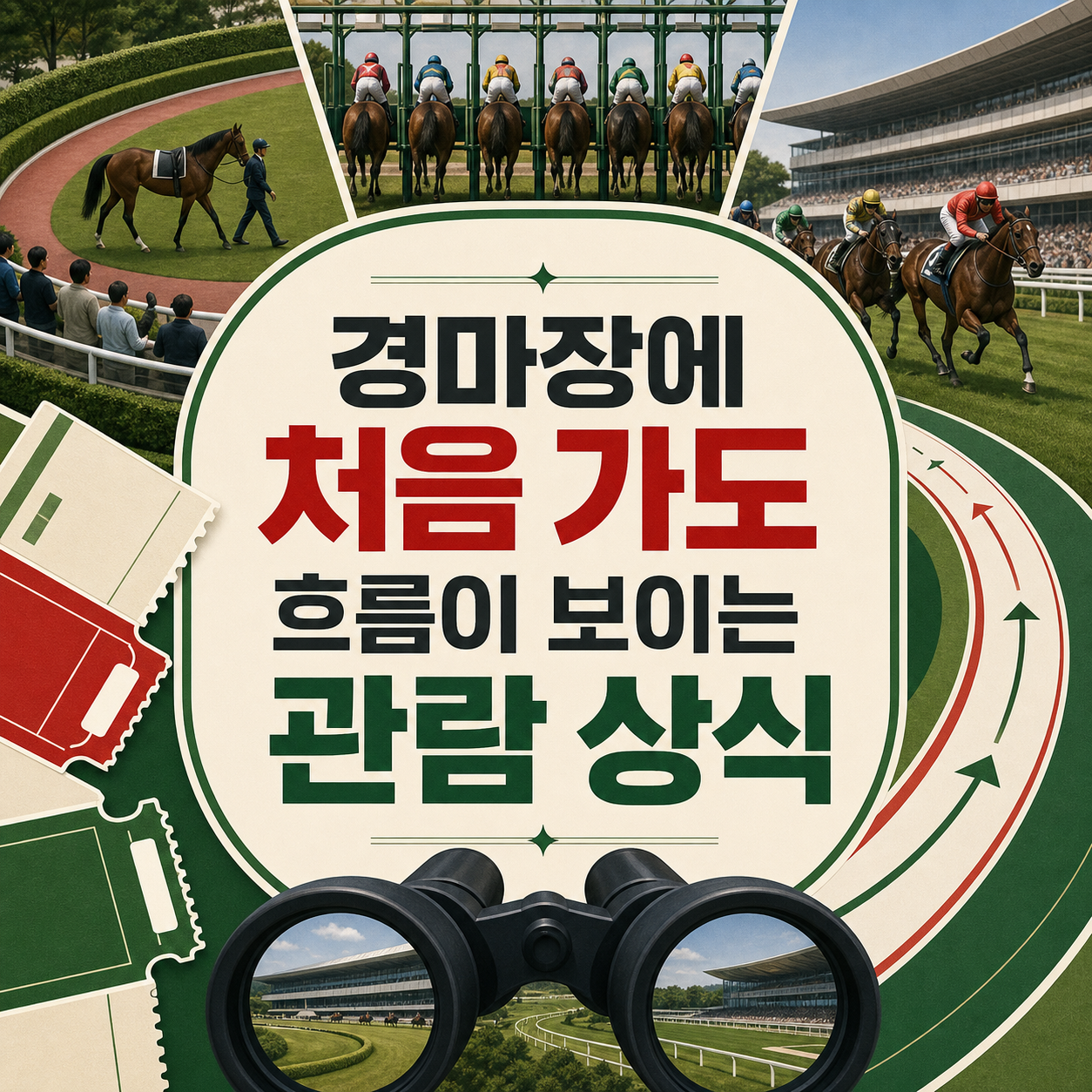
From post parade to photo finish, ten fundamentals that make a race readable on your first trip to the track.
Your first trip to the racetrack can feel overwhelming — horses blur past and the racecard is full of numbers you don't recognize. Match horse numbers to jockey silks, watch the paddock parade before the race, and follow the jostling for position at the start and first turn, and the shape of the race starts to come into focus faster than you'd expect. There's more happening than the final result sheet shows — a pace battle, a fight for position, a closing kick in the stretch. This list follows the order a race actually unfolds in — the paddock, the racecard, weight carried and body weight, track condition, running style, and finally the photo finish — keeping only the concepts that are useful the moment you're standing at the rail.
How we picked these
- Ordered to match what you actually encounter watching a race live, not a random list of terms.
- Chosen as fundamentals for reading a race on your first visit, not a formula for picking winners.
- Each item comes with a caution so you don't read too much into any single number.
- Framed around watching and enjoying the sport, not gambling hype.
Short on time? Start with #4 (jockey silks) and #10 (margin and photo finish). If you have more time, work through the list from #1 (paddock parade) and change your focus each race.
Paddock parade

Racecard and entry list

Horse number and starting gate

Jockey silks and cap colors

Weight carried

Body weight and change

Track condition

Race distance and split times

Running style — front, stalking, closing

Margin and photo finish

How to use this list
If you're pressed for time, the paddock parade (#1) and jockey silks (#4) alone are enough to keep track of your horse through the race. With a bit more time, add weight carried and body weight (#5, #6) and track condition (#7) to read both the horse's condition and how the course is playing. Following more than one race? Add running style (#9) to picture the battle at the first turn and the finish.
Tight finishes are settled by margin and the photo finish (#10), so knowing what the camera actually captures keeps you from being fooled by a broadcast angle. Everything here reflects the information available at the time of writing and can change, so check official channels before your visit.
Frequently asked questions
Can I enjoy horse racing without betting?
Absolutely. Watching the horses in the paddock and following how the race unfolds from start to finish is engaging on its own as a sport. Betting is optional and not the core of the experience.
Do I need to understand numbers like carried weight or body weight?
You can enjoy the races without them, but knowing them gives you a clue for comparing a horse's condition against its past runs. It's best to treat any single number as one factor among several — distance, track condition, and pace matter just as much.
What if the finish looks too close to call from where I'm sitting?
Tight finishes are settled by photo finish, and what looks ahead from your seat isn't necessarily the official result. It's more reliable to wait for the official confirmation than to trust the angle you happened to be watching from.
What order should I watch things in on my first visit?
Start with the paddock parade to check the horse's walk, then check the racecard for horse number, jockey silks, and distance, and follow the jostling for position at the start and first turn. As you get comfortable, add weight carried, track condition, and the running pattern in the final stretch to what you're watching.
Can I tell horses apart without binoculars?
Jockey silks and cap colors are the most reliable way to identify a horse, so you can follow along with the naked eye to some extent. When several horses bunch together, though, binoculars or the display screen make it much easier not to lose track of the one you're rooting for.
Get new lists before anyone else
Once a week — only the new lists worth your time.
No spam · unsubscribe in one click
You may also like
Ten Racecourses Worth Reading Before You Read the Result
From Korea's Letsrun Park to Ascot, Longchamp, and Meydan, ten racecourses ranked by track layout and spectator culture, not by results.

10 Legendary Racehorses Remembered for Their Stories, Not Just Their Numbers
From Secretariat's Belmont margin to Winx's 33-race streak, ten champions from different eras and distances, ranked by what each one overcame rather than raw stats.
Before the Gate Opens: The 10 Stages Behind a Racehorse's Debut
A debut isn't a beginning — it's the outcome of a body and mind slowly readied over time.