TOP 10

Ho Chi Minh City on Foot: 10 Stops Through War, Colonialism, and the Riverfront

Updated 8/18/2026
Ho Chi Minh City on Foot: 10 Stops Through War, Colonialism, and the Riverfront

From the Independence Palace to sunset on the Saigon River, a walkable District 1 history route in order

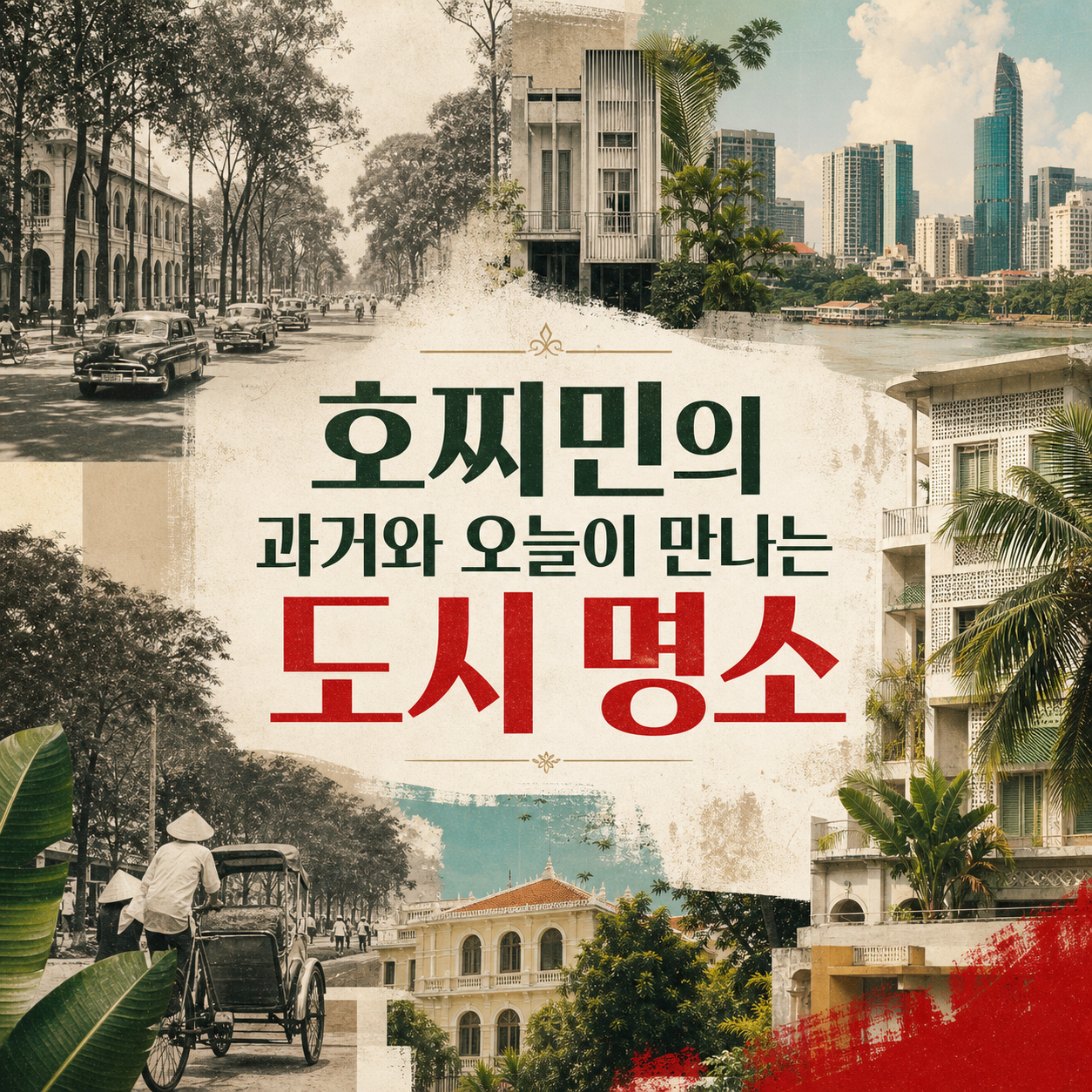
It would be a shame to remember Ho Chi Minh City only for motorbikes and glass towers. Within a few blocks of District 1, war memory, colonial-era architecture, Chinese-Vietnamese devotional spaces, and market and riverfront life sit layered on each other — a history book you can read on foot. First-timers often don't know where to start or which stops to pair so the day doesn't backtrack.

How We Chose

  • Only the ten stops that genuinely connect on foot — anywhere needing a taxi was cut.
  • War, colonialism, religion, and markets are spread through the day, not clustered.
  • Museums and old buildings go indoors during peak heat; plazas and the river come after.
  • Where an exhibit is heavy, we flag what to brace for.

First-timers can just follow the list from rank 1. More curious about how the city formed than about the war? Start at rank 9, the History Museum, and the buildings you meet later will read more clearly. Each entry notes what pairs well with it, so you can build the day straight from this list.

01

Independence Palace

This is where the war ended in 1975, tanks breaking through the gates — the former South Vietnamese president's offices and underground command bunker still sit exactly as they did that day. Work down from the upstairs reception rooms to the basement communications center, and pairing it with the War Remnants Museum the same day sets the seat of power against the record of war. It's a natural pick for a first visit. The grounds run large, so skip arriving right before closing, and some areas close for state events — check ahead if you can.
Independence Palace
02

War Remnants Museum

One of the most sobering museums in the city, facing civilian suffering and international war photography head-on. Rather than starting at the tanks and jets in the courtyard, map out the indoor exhibit order first and build in a rest partway through. Anyone with a serious interest in the war should put this near the top of the list. Some images, including Agent Orange material, are graphic, so look into the content ahead of time if traveling with kids — this isn't somewhere to breeze through, but somewhere to set real time aside for.
War Remnants Museum
03

Notre-Dame Cathedral of Saigon

Twin red-brick towers, the bricks shipped in from Marseille, hold a slice of the colonial era right at the center of District 1. Bundling it with the Central Post Office across the street and Book Street next door makes for the most efficient half-hour loop. It rewards anyone drawn to architecture or photography. Even if scaffolding covers the facade during restoration, the square's overall layout is still worth seeing, and during Mass, visitors should hold off on sightseeing and photos — worth checking Mass times beforehand.
Notre-Dame Cathedral of Saigon
04

Saigon Central Post Office

Real postal business still runs under an arched ceiling built with Eiffel-era French engineering, making this equal parts landmark and working office. Come in right after the cathedral, take in the iron-framed hall and the old Indochina maps on the walls, and mailing yourself a postcard turns the visit into a lasting keepsake. It's quick enough to slot into any route without much detour. Since counters are actively in use, be mindful of people there for real business, and it's worth double-checking souvenir prices and postage on the spot.
Saigon Central Post Office
05

Ho Chi Minh City Museum

Housed in a French colonial mansion, this regional museum gathers the city's founding story, trade history, and independence movement — essentially an explainer for why the city looks the way it does. Sitting between Independence Palace and Nguyen Hue Street, a stop here before walking the street makes the buildings and place names you pass afterward click into place. It suits anyone curious about how the city came together. It also draws wedding photoshoots, so paths can get crowded depending on timing, and arranging your own shoot means checking separate rules and fees.
Ho Chi Minh City Museum
06

Nguyen Hue Walking Street

A plaza-style promenade running from City Hall to the Saigon River, where the city's evening life kicks off as the sun goes down. Walk with the lit-up City Hall behind you toward Bach Dang Wharf and you trace the District 1 night skyline in one line while staying out of the heat. It fits anyone who enjoys an evening stroll or night photography. Routes can shift during major events, so keep bags in front in a crowd and cross streets at the same steady pace as everyone else around you.
Nguyen Hue Walking Street
07

Ben Thanh Market

A clock-tower market that's stood since 1914, packing groceries, souvenirs, and quick meals into one lively hall. The trick is not buying on the first lap — circle once to get a feel for items and prices, then compare before buying, and save the food stalls for last. It works well for anyone who wants souvenir shopping and local food in one stop. Always confirm the price on anything unmarked before agreeing to buy, and treat claims of authentic luxury goods or on-the-spot currency exchange with some skepticism.
Ben Thanh Market
08

Jade Emperor Pagoda

Taoist and Buddhist deities share the incense smoke here, a window into the depth of Saigon's ethnic Chinese heritage. Visit in the quieter morning hours, take each hall's altar slowly, then drift toward the cafe alleys of nearby Da Kao for a relaxed half-day route. It suits anyone looking for a quiet look at religious architecture. Remember this is a working place of worship before it's a sight to see: don't touch the incense or offerings, cover shoulders and knees, and keep photography quiet and respectful.
Jade Emperor Pagoda
09

History Museum of Ho Chi Minh City

An artifact-focused museum spanning prehistory through the Nguyen dynasty, tracing southern Vietnam over a much longer arc than the war alone. If your itinerary leans heavily on war history, put this one earlier — seeing Cham sculpture and dynastic relics first gives a sense that the city's history runs far deeper than 1975. It's especially worth it for anyone into artifacts and ancient history. It sits next to the zoo and botanical gardens, so the two pair well, and it's worth checking which halls are open and the water-puppet show schedule at the entrance.
History Museum of Ho Chi Minh City
10

Bach Dang Wharf Park

River breeze, the District 1 skyline on one side and the rising new city across the water — this makes a natural closing stop to a day of walking. Coming down from Nguyen Hue Street to catch sunset, then boarding the river bus to look back at the city lights from the water, rounds the evening out nicely. It's an easy, satisfying way to end almost any day here. River bus seats and the last departure sell out often, so check the schedule in advance, and for photos, keep your body inside the railing rather than leaning out.
Bach Dang Wharf Park

How to Choose

Short on time? Pairing rank 1 Independence Palace and rank 2 War Remnants Museum with rank 3 Notre-Dame Cathedral and rank 4 Central Post Office covers both the war and colonial threads in half a day. With kids and want to skip heavy exhibits, drop rank 2 and build around rank 5 the City Museum and rank 9 the History Museum instead.

When comparing stops, weigh time needed, indoor versus outdoor, and dress or photo etiquette — Jade Emperor Pagoda and Notre-Dame Cathedral both call for covered shoulders and knees. For a natural close, end at rank 10, Bach Dang Wharf, for sunset.

Details reflect our research date; hours, fees, and renovation status can change, so confirm through official channels before you visit.

Frequently asked questions

Can you see all 10 historic sites in District 1 in one day?

Covering all ten in real depth is a tight fit for one day. Put exhibit-heavy stops like the Independence Palace and War Remnants Museum in the morning, then pair quicker visits like Notre-Dame Cathedral and the Central Post Office into an afternoon walking set to hit the essentials within a day.

Which stop should you visit first?

If you're focused on wartime history, starting at rank 1, the Independence Palace, is the classic move. If you'd rather understand how the city formed first, put rank 9, the History Museum, earlier — the architecture and place names you see afterward read more clearly.

When's the best time to avoid heat and crowds?

Spend the hottest part of the day indoors or semi-indoors — museums and the cathedral — then move outdoors to Nguyen Hue Walking Street and Bach Dang Wharf once the sun eases in the late afternoon.

Is this route okay for kids?

Most of it is fine, but rank 2, the War Remnants Museum, includes graphic material such as Agent Orange exhibits, so check the content in advance if you're bringing children. If that feels like too much, you can simply build the route around the rest.

How do you avoid overpaying at Ben Thanh Market?

Don't buy on your first pass — loop the market once to gauge goods and prices, then compare and buy only what you need. Always confirm the price before ordering anything unmarked, and treat brand-name 'originals' or on-the-spot money-changing offers with a pause.

What etiquette applies at religious sites on this route?

At a working place of worship like Jade Emperor Pagoda, keep hands off incense and offerings and dress with shoulders and knees covered. At Notre-Dame Cathedral, sightseeing entry and photography should stand back during Mass.

NEWSLETTER

Get new lists before anyone else

Once a week — only the new lists worth your time.

No spam · unsubscribe in one click

This page contains affiliate links. We may earn a commission from qualifying purchases.
Top 10 Historic Sites in Ho Chi Minh City: A Walking Route | Golladream