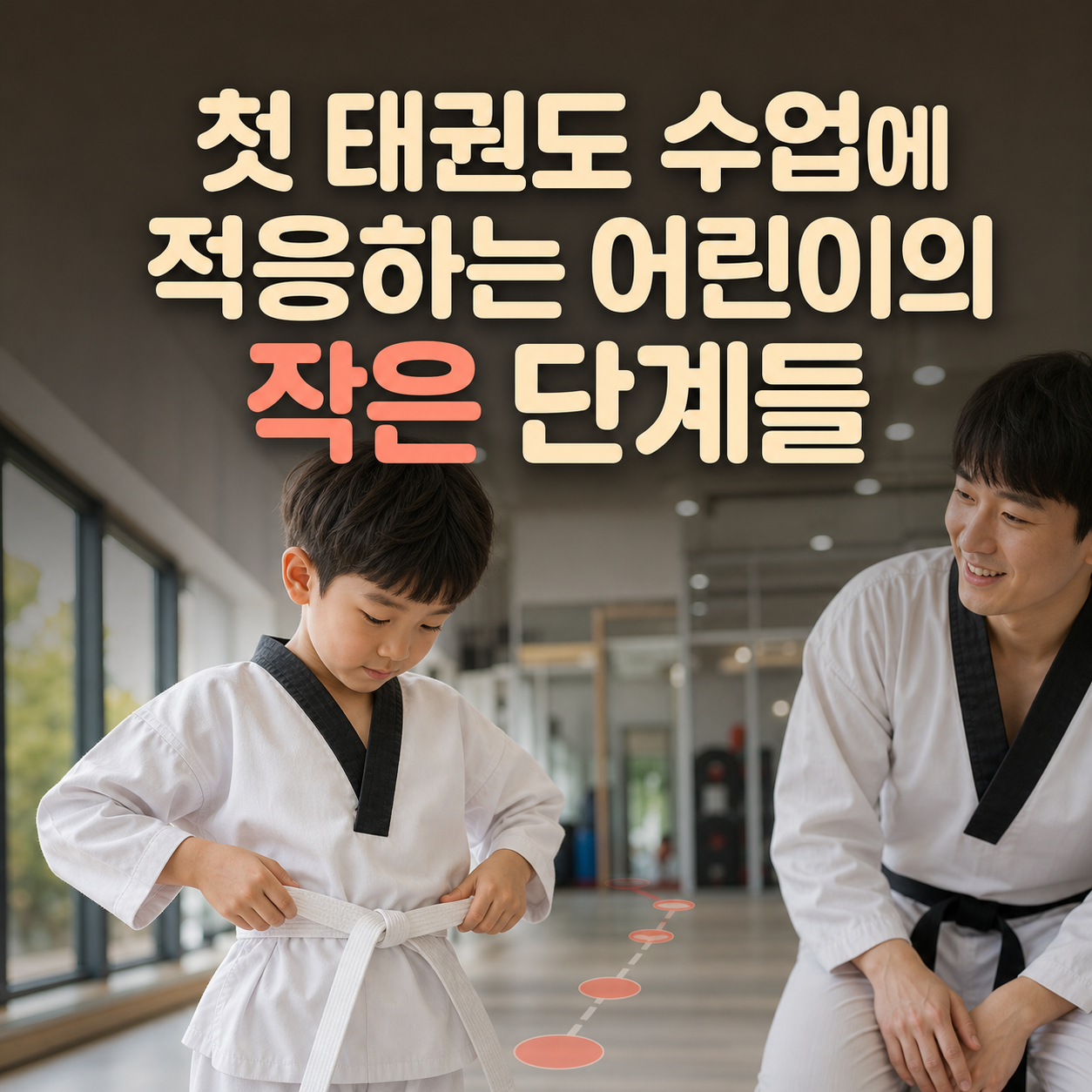
Whether your child is good at taekwondo matters less than whether they feel at ease in the studio. Ten signals to watch from the door to the drive home, in the order they happen.
A child's adjustment to taekwondo doesn't start with the angle of a kick -- it starts the moment they walk through the studio door. It's a lot to take in at once: an unfamiliar room, an unfamiliar adult, unfamiliar rules, and every child works through it at a different pace and stumbles at a different point. The same child can react very differently depending on sleep, mood, and how the day went, so it matters not to judge personality from just one or two moments.
This list walks through ten moments in order, from arrival to pickup. Watch for comfort rather than competence, and it becomes much clearer exactly where your child could use a little more support. You don't need to track every single one every time -- watching one or two closely on a given day is enough.
How to use this list
- For a first class, watch items 1-3, the arrival sequence, closely.
- If peer relationships are a concern, pay attention to item 8.
- If you're gauging enjoyment, use item 10's ride-home conversation.
Pausing at the entrance

Making eye contact with the instructor

Putting on and taking off the uniform

Learning the layout of the studio

Attempting the warm-up

Standing in line and waiting

Following the basic stance and first moves

Partner activities

Drinking water during the break

Talking about one moment after class

How to observe it
If this is still their first class, watching items 1-3 -- arrival, greeting, and putting on the uniform -- is enough to gauge how quickly they're settling in. If peer relationships worry you, track item 8 (partner activities); if expressiveness worries you, track item 10 (the ride-home conversation) over several days.
When comparing days, watch expression and body tension before you watch what they say they learned. A pattern across several days is a far more reliable signal than any single moment.
This list reflects general patterns in child development and adjustment; if resistance or anxiety keeps repeating, consulting the instructor or a child mental health professional is recommended.
Frequently asked questions
What if my child cries or refuses to go in for the first class?
That's a normal reaction. Rather than pushing them in, give them a moment at the entrance and watch how things go over the next few sessions. If the same resistance keeps repeating, that's the point to have a specific conversation with the instructor.
Is it okay to compare them with other kids?
Better not to. The same child's attitude can shift a lot depending on sleep, mood, and how the day has gone. One or two moments in a first class don't reveal a child's personality or aptitude -- tracking your own child's pattern over several sessions is far more accurate.
If they're quiet after class, does that mean they didn't enjoy it?
Not necessarily. Some children go quieter, not louder, after an intense or overstimulating day. Pay attention to their expression and body tension alongside their answers, and watch how they act heading into the next class -- that combination tells you more than words do.
How long does adjustment usually take?
It varies a lot by child -- some settle in within days, others take several weeks. Rather than expecting a fixed timeline, judge by whether resistance or tension signals are gradually easing over time.
Is it okay to tell the instructor about my child's temperament in advance?
It's recommended. If your child is especially shy or uncomfortable with physical contact, letting the instructor know ahead of time lets them adjust eye contact or partner pairing accordingly. Sharing this kind of context helps the adjustment -- it isn't something to feel awkward about.
How do I tell ordinary soreness apart from an injury complaint?
First figure out whether it's general muscle soreness or pain that repeats after a specific movement. If pain recurs, or there's swelling or bruising, ask the instructor to adjust training intensity, and see a doctor if needed.
Get new lists before anyone else
Once a week — only the new lists worth your time.
No spam · unsubscribe in one click
You may also like

When Your Kid Wants to Quit Taekwondo, Don't Just Blame Tiredness
From dreading one specific day to repeating the same complaint about pain, here are 10 observation points that help you tell a passing mood from a real reason.

Choosing a Kids' Taekwondo Studio in Songpa and Gangdong? Map the Commute First
Across 12 studios in Songpa and Gangdong, what matters isn't decor — it's whether your child can walk there or how the pickup van hands them off.

Before the Kicks: A Parent's Checklist for Kids' Taekwondo Safety, Class by Class
From a pre-class health check to a post-class bruise check, ten safety points parents can easily miss at every kids' taekwondo session, in order.

Taekwondo Academies in Mapo and Seodaemun: Check the Instructor's Certification Before the Trophy Case
Watching how an instructor responds to a child's mistake or fear during a trial class reveals more about an academy's real teaching quality than any trophy case or shiny facility.