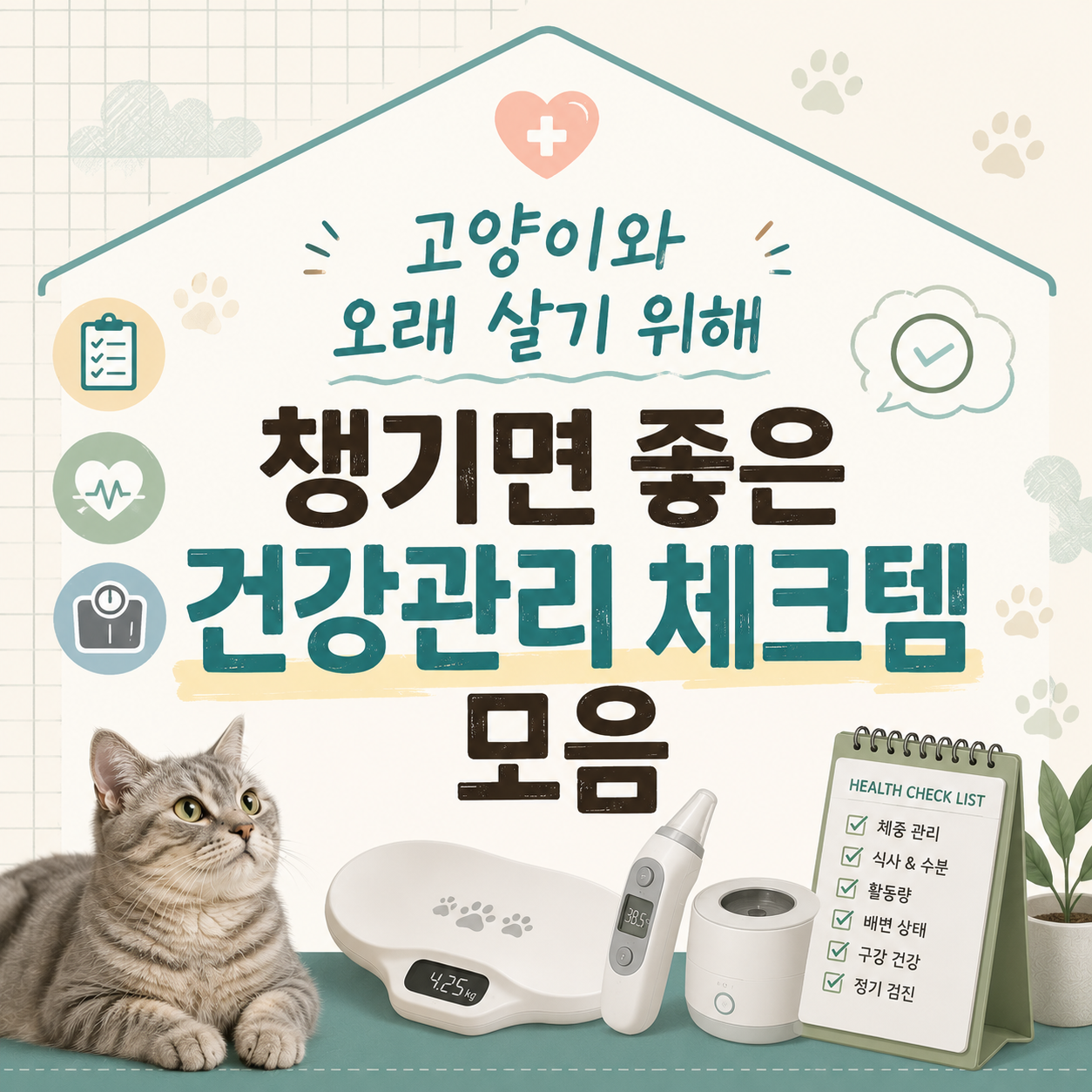
A roundup of home tools — from a pet scale to an emergency kit — that help cat owners track small day-to-day changes and prepare for vet visits.
Cats are good at hiding pain, so noticing something is off usually comes down to consistent observation rather than any single piece of equipment. Details like appetite, water intake, weight, and litter box habits often turn out to be the most useful information at a vet visit.
This list isn't meant to diagnose anything — it's a set of tools that help you track your cat's baseline and get ready for a trip to the vet. If you notice reduced appetite, repeated vomiting, blood in the urine, breathing trouble, or a sudden weight change, a vet visit should come before trying any product.
Pet Scale
Health Log Notebook
Cat Carrier
Cone Collar
Pill-Assist Treats
Cat Probiotics
Omega-3 Supplement
Fountain Filter Refills
Pet Thermo-Hygrometer
Emergency Kit Pouch
Frequently asked questions
How can I tell early that something's wrong with my cat?
Cats tend to mask pain, so it helps to watch trends in appetite, water intake, weight, and litter box habits rather than judging from a single day. Keeping a simple log makes it much easier to pinpoint when a change actually started.
Can these tools replace a vet visit?
No. They're meant to support observation and preparation, not to diagnose or treat anything. If you notice a concerning symptom, a vet visit should always come first.
What matters more for senior cats?
Knowing your cat's normal weight and litter box pattern makes it much easier to catch age-related changes early. Regular weighing and logging become more valuable as cats get older.
Get new lists before anyone else
Once a week — only the new lists worth your time.
No spam · unsubscribe in one click