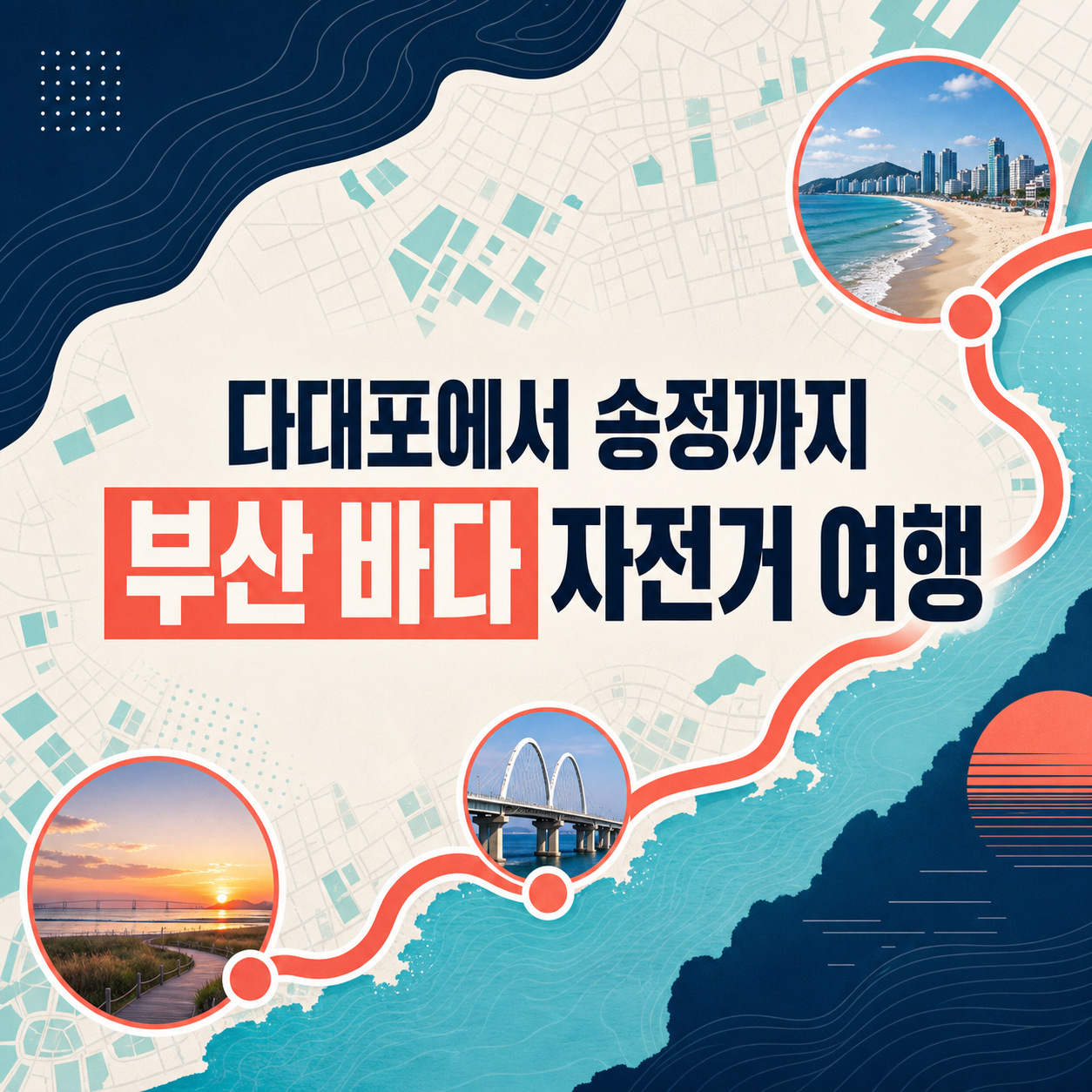
Dadaepo, Yeongdo, and East Busan sit under such different road and traffic conditions that splitting the ride into three separate days beats forcing one long coastal loop.
Most visitors assume Busan's coast is one continuous bike path from Dadaepo to Songjeong, but no such route exists. The Nakdong River mouth at Dadaepo, the cliffside terrain of Yeongdo, the tunnel-and-intersection heavy old downtown, and the mix of riverside and beach roads in East Busan each carry completely different road conditions and traffic. Instead of planning one long ride across the whole coast, this list is organized around three zones — West Busan, Yeongdo, and East Busan — each meant for its own day.
The order runs west to east, from Dadaepo to Songjeong, the direction most riders actually travel. Beach promenades, village alleys, and overlooks are walking spaces even when they rank on this list — dismount the moment you see a posted sign. If you're short on time, pick just one block: stops 1–3 (West Busan), 4–5 (Yeongdo), or 6–10 (East Busan) each work as a half-day ride on their own.
01
Where the Nakdong River meets the sea, this beach has an unusually wide stretch of sand and one of the better sunsets on the west side, making it a natural point to start or end the West Busan leg. From here, most riders head up toward Amisan Observatory. Bike access varies along different sections of the promenade, so check the posted signage before riding through. As of September 2026, rental shop hours can shift with the season, so confirm before you go.

02
From up here, the sandbars at the Nakdong estuary and the whole West Busan route lay out in a single view, which helps if you're new to the area and unsure which way to head next. The approach road climbs and shares space with parking lot traffic, so slow down on the way up. The observatory building and deck are walking-only areas — park your bike at the entrance and continue on foot. Confirm opening hours in advance, since they're subject to change as of September 2026.

03
Sitting between Dadaepo and Yeongdo along the old downtown coast, this is a good spot to use nearby amenities and catch your breath mid-ride. It holds some history as one of Korea's earlier public beaches, which draws its own share of casual walkers. From here on, the coastal road runs through tunnels and intersections with heavier traffic, so stick to walking-only stretches like the Cloud Trail and dismount without exception. Confirm as of September 2026 whether facilities like the skywalk are open.

04
Strung along a cliffside, this village's narrow alleys and stacked houses reward a slow walk more than a ride — much of its charm is in details you'd miss from a saddle. It's also known as a filming location, with several popular photo spots. The alleys are residents' everyday living space, so riding through causes real friction and noise complaints. Park at the entrance lot and explore on foot before moving to the next stop.

05
The dense forest and sheer cliffs at Yeongdo's southern tip give the ride a real change of scenery after the urban coast. The walking trail out to the lighthouse and overlook is rewarding but steep enough to tire you out. The park runs its own shuttle train (Danubi) that can ease the walk — check ahead whether bikes are allowed alongside it. As of September 2026, schedules and fares may change, so confirm through official channels, and walk your bike rather than push through the steepest sections.

06
With Gwangan Bridge directly in view, this is a solid spot on the east side to eat, rest, and take in the night lights, backed by a dense strip of cafes and restaurants that doubles as a good resupply point mid-ride. Pedestrians still fill the promenade well after dark, so dismount there without exception, and never ride after drinking. Bright lights and visible clothing matter more here at night than almost anywhere else on the route.

07
This relatively flat stretch along the Suyeong River is an easy place to pause and decide whether to head toward Gwangalli, Centum City, or Haeundae next. The wide riverside path rides more smoothly than most of this route. Slow down sharply on event or performance days when foot traffic spikes, and check how the bridge approach splits the road from the sidewalk before crossing. Rental facilities inside the park may not always be running — confirm on site as of September 2026.

08
With more transit connections and lodging than anywhere else on this route, Haeundae is the natural place to resupply before pushing on toward Cheongsapo and Songjeong, or to wrap up the urban leg here. In peak season the beach becomes essentially pedestrian-only, so walk your bike, and stay alert for car doors opening from vehicles parked illegally nearby. As of September 2026, beach season dates and facility hours shift with the calendar, so check ahead.

09
Between Haeundae and Songjeong, this overlook frames both the Sky Capsule railway and the waters off Cheongsapo in one view, with a bridge-shaped structure that's become a popular photo spot. The observatory deck itself is walking-only, so lock your bike at the designated rack and continue on foot. Stay well back from the rail safety line running alongside it, and keep photo spots outside that line as well.

10
With the train station, bus stops, and a strip of restaurants all close by, this is a clean place to end a one-way East Busan ride and plan the trip home. The beach is also known for surfing, so expect surfers moving gear through the entrance area depending on swell conditions. Slow well down near the entrance, where pedestrians, surfers, and parking cars all cross paths, and turn your lights on early if you're heading back after dark.

How to Choose
With only half a day, stick to stops 1–3 in West Busan and ride one-way from Dadaepo to Songdo — it's the lowest-commitment option. If you want cliffside scenery paired with walking stops, give Yeongdo (4–5) its own day. For night views and city convenience, work outward from Haeundae (8) through the East Busan stops (6–10). First-timers should slow down especially at the old downtown stretch (3) and the urban beaches (6, 8), where bike paths and pedestrian zones overlap most often.
All hours, prices, and facility details here reflect research done in September 2026 and may change — confirm with official channels or posted signage before you visit.
Frequently asked questions
Can I ride the entire Busan coast in one continuous route?
It's possible on a map, but the old downtown stretch runs through tunnels and intersections with heavy traffic, making it genuinely risky to ride straight through. Skip that section by transit and stick to segments with dedicated coastal bike paths.
Is riding at night around Gwangalli and Haeundae safe?
The night views are worth it, but pedestrians still crowd the promenades well after dark, so dismount there without exception. Never ride after drinking, and bright lights with visible clothing cut down the risk considerably.
Can I bring a bike onto Busan's subway?
Yes, but the rules differ by line and time of day, so check Busan Transportation Corporation's current announcements before you build a plan around it.
How many days does a Busan coastal bike trip need?
Splitting the three zones across separate days takes about three days; compressing each into a half-day ride can cover the highlights in two. Skipping between zones by subway or bus saves time you'd otherwise spend riding through heavy traffic.
Where can I rent a bike along this route?
Rental shops cluster near major beaches like Dadaepo, Gwangalli, and Haeundae, but hours and rates vary by operator and season. As of September 2026, confirm current details directly with the shop or through Busan's public bike programs before you go.
NEWSLETTER
Get new lists before anyone else
Once a week — only the new lists worth your time.
No spam · unsubscribe in one click
This page contains affiliate links. We may earn a commission from qualifying purchases.