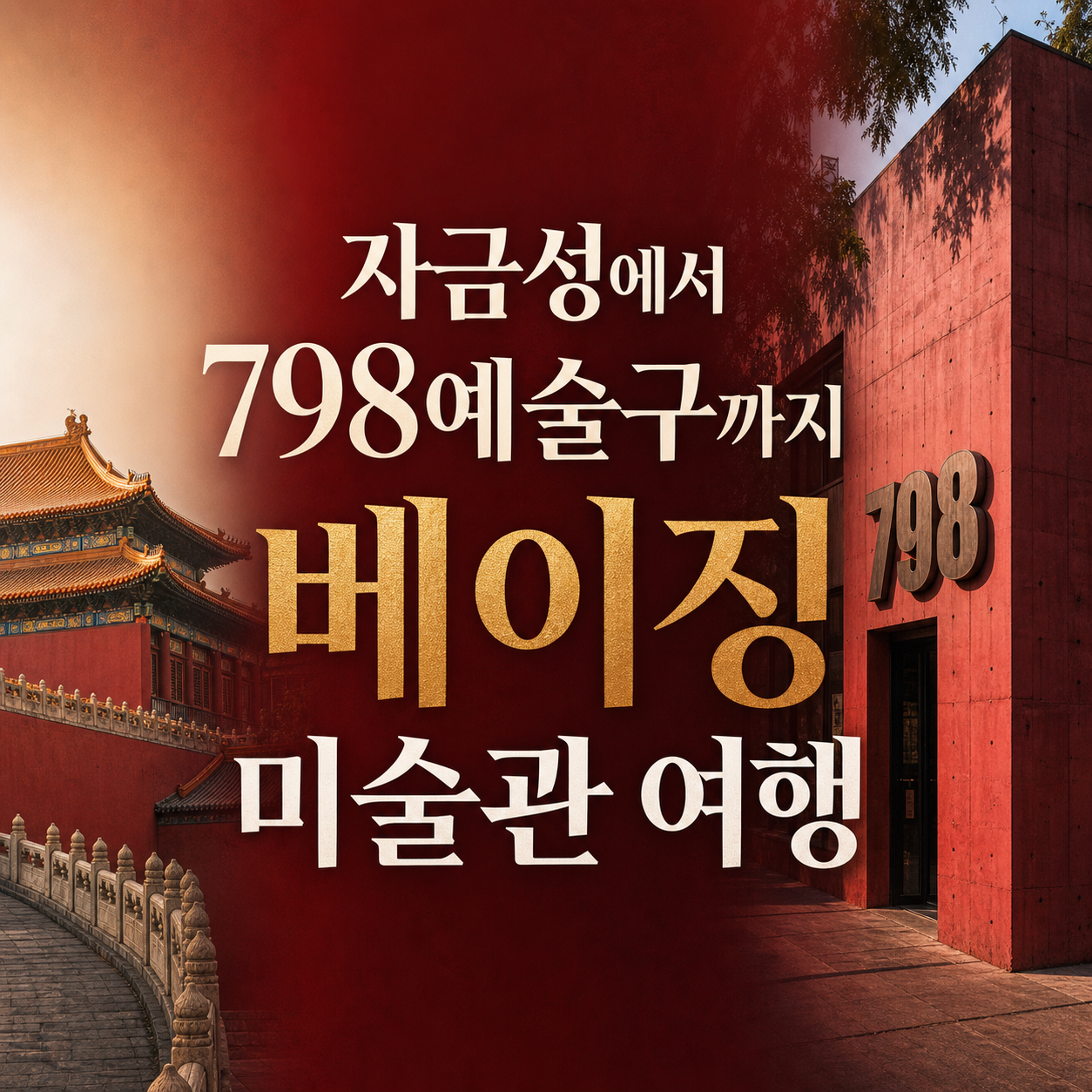
From the Forbidden City's imperial collections to the experimental galleries of 798, Beijing's museums tell very different stories depending on who did the choosing. Here are 10 stops organized by district.
Beijing's museums split roughly into two camps: institutions that present a state-sanctioned canon, and spaces where artists speak for themselves outside that frame. The National Art Museum of China and the Palace Museum represent the former; UCCA and the galleries of 798 lean toward the latter. Watching how these two currents develop in dialogue — sometimes in tension — within the same city is what makes this list worth reading in order.
Three things shaped the selection: whether the collection or program represents a specific era or movement, whether current operating status is verifiable through official sources, and whether the stops can be grouped by district for an efficient route. Move from the national museums downtown, to the Palace Museum area around the Forbidden City, then east to the 798 Art District to minimize backtracking. Always check opening hours and special exhibitions before you go.
National Art Museum of China (NAMOC)

The Palace Museum

UCCA Center for Contemporary Art

Today Art Museum

Red Brick Art Museum

CAFA Art Museum (Central Academy of Fine Arts)

Tsinghua University Art Museum

Qingyuan Art Museum

798 Gallery

Times Art Museum

See Both the State's View and the Individual's
Short on time? #1 and #2 alone give you the core of Beijing's state-sanctioned art narrative. With more time, pair #3 and #9 to hear the voices operating outside that frame. A personal-collection space like #10 lands with more contrast when you visit it after the others, not before.
Admission fees, booking requirements, and special exhibition schedules change often, so use this as a starting point and confirm current details on each museum's official channel right before you go.
Frequently asked questions
How many days should I plan?
Four days covers the highlights; six or seven lets you slow down. A rough split: two days for the downtown national museums, one to two for the Palace Museum, and one for the 798 Art District. Pairing this with other historical sites nearby makes for a denser, more rewarding trip.
Where's admission cheapest?
Most national museums are either free or cost 10–20 yuan. The Palace Museum, at roughly 60 yuan, is the priciest stop on this list, but booking online in advance saves you both time in line and a bit of money. Individual galleries in 798 are almost all free to enter.
Is 798 actually worth the hype?
Yes, on both counts that matter: the converted munitions-factory buildings are worth seeing on their own, and it's still the closest you'll get to experimental galleries and emerging Chinese artists in one place. Commercialization is moving fast, though, so don't just skim the big-name galleries — the small spaces tucked in the side alleys are where it still feels authentic.
Is English signage available?
Large national sites like the Palace Museum and NAMOC often provide English signage and audio guides, but smaller 798 galleries sometimes offer Chinese-only descriptions. Asking staff or a curator directly is usually the fastest way to find out.
Do I need to book everything in advance?
The Palace Museum requires online booking in practice, and most national museums recommend it during peak season. Individual 798 galleries are often walk-in, though major curated shows there can require separate reservations.
Get new lists before anyone else
Once a week — only the new lists worth your time.
No spam · unsubscribe in one click
You may also like
Lisbon Put Its Identity in Tile, Not Just Paint — 10 Museums to Prove It
Lisbon's museums read best through tile, architecture, and private collections, and these 10 stops run from Ancient Art and Gulbenkian to Paula Rego in Cascais.
See Only the Uffizi and You've Seen Half of Florence
From the Uffizi to the Accademia and Pitti Palace, ten Florence Renaissance museums ranked by booking rules and how to route between them.

Booking Timing Is Half the Trip: Cracking Amsterdam's 10 Art Museums
From Golden Age painting to street art, a booking strategy and route that make an Amsterdam museum trip actually work.